Pi RPC Server Is LIVE — Will This Push Pi Coin Price Higher?
Pi Network has spent years positioning itself as a mobile-first crypto project with an ambitious goal: building a widely accessible, utility-driven blockchain economy. It attracted tens of millions of users through its mining model, but questions around real utility, open infrastructure, and developer access persisted. For a long time, Pi operated more like a closed ecosystem than a conventional blockchain platform. That perception is now beginning to change as the network rolls out more advanced technical components.
In early April 2026, Pi Network introduced a public RPC server on its Testnet, a step that brings it closer to the architecture used by established smart contract platforms. The update arrives at a time when Pi Coin remains range-bound, with price action shaped by supply dynamics and an evolving roadmap. The key issue is whether this infrastructure milestone can translate into real adoption and, eventually, price movement. In this article, we will examine what the RPC server launch means for Pi Network, how it affects developer activity, and whether it could play a role in shaping Pi Coin’s future price trajectory.
Pi Network Just Made a Big Move — What Happened?
Pi Network’s latest update centers on the launch of a public RPC (Remote Procedure Call) server on its Testnet, first announced by the Core Team in early April 2026. This release follows a series of protocol upgrades, including Protocol 20 and Protocol 21, which laid the groundwork for smart contract functionality and improved network performance. The RPC endpoint is now accessible to developers, allowing them to interact directly with the Pi blockchain using standard JSON-RPC methods.
This development marks a shift from a largely closed system toward a more open, developer-friendly environment. Instead of relying solely on Pi’s internal tools, developers can now query blockchain data, simulate transactions, and begin integrating Pi into external applications. While the RPC server is currently limited to Testnet, its availability signals that Pi Network is entering a new phase focused on programmability and ecosystem expansion rather than just user growth.
Pi Network RPC Server Is LIVE — Here’s What It Means
The launch of the Testnet RPC server represents a foundational infrastructure upgrade for Pi Network. At a basic level, it enables external applications to communicate with the blockchain through a standardized interface. This brings Pi closer to how established networks such as Ethereum operate, where developers rely on RPC endpoints to read data and submit transactions in real time.
From a technical standpoint, the RPC server introduces several core capabilities:
-
Direct blockchain access: Developers can now connect to Pi Network without running a full node, using standard JSON-RPC requests.
-
Read-only calls (no fees): Applications can fetch balances, account states, and blockchain data instantly without affecting the network.
-
State-changing transactions (fee-based): Actions that modify the blockchain, such as executing logic or updating data, require transaction processing and fees.
-
Standardized development environment: The use of JSON-RPC aligns Pi with industry norms, making it easier for developers familiar with Ethereum-like systems to get started.
The implications extend beyond basic functionality. By exposing its blockchain through an RPC layer, Pi Network lowers the barrier for developers to experiment, build, and integrate services. It also creates the conditions necessary for future smart contract deployment, since contracts require a reliable interface for interaction. While this rollout is still confined to Testnet, it establishes the technical framework that future applications will depend on once similar capabilities are introduced on Mainnet.
What Is a Pi Network RPC Server?
A Pi Network RPC server is essentially the communication layer between external applications and the Pi blockchain. It allows developers to send requests to the network and receive responses in real time, without needing to manage the underlying node infrastructure. This is a standard approach across modern blockchain ecosystems, where RPC endpoints act as gateways for wallets, decentralized applications, and backend services.
In practical terms, the RPC server enables a range of interactions that were previously difficult or impossible within Pi’s closed environment. Developers can query blockchain data, monitor network status, and simulate transactions using simple HTTP requests. For example, a basic call can check whether the network is operational, while more advanced requests can retrieve account balances or interact with smart contract logic once available.
The introduction of this interface is significant because it standardizes how Pi Network can be accessed and integrated. Instead of relying on custom tools or limited internal APIs, developers can now use widely adopted methods and existing Web3 tooling. This reduces friction, shortens development time, and makes Pi more compatible with the broader blockchain ecosystem.
Why the Pi Network RPC Server Matters for Pi Coin
The introduction of the RPC server is a technical milestone, but its importance lies in what it enables over time. For Pi Coin, the key factor is not the RPC itself, but the ecosystem activity that may follow once developers begin to build on top of this infrastructure.
Several areas highlight why this matters:
-
Foundation for smart contracts: The RPC server provides the interface needed to test and eventually execute smart contract logic. Without it, decentralized applications cannot function in a meaningful way.
-
Lower barrier for developers: By using standard tools and protocols, Pi Network becomes more accessible to external developers who are already familiar with Web3 environments.
-
Potential ecosystem expansion: As more developers experiment on Testnet, the likelihood of dApps, marketplaces, and services emerging on Pi increases.
-
Early signal of infrastructure maturity: The move suggests that Pi Network is progressing from a closed system toward a more open blockchain platform, which may improve long-term confidence.
At the same time, it is important to separate infrastructure progress from immediate economic impact. The RPC server does not directly create demand for Pi Coin, nor does it introduce new utility on Mainnet at this stage. Its role is preparatory. The actual effect on Pi Coin will depend on whether developers use this access to build applications that attract users and generate real transaction activity.
Pi Coin Price Today — Where Does Pi Stand Now?
Pi (PI) Price
Source: CoinMarketCap
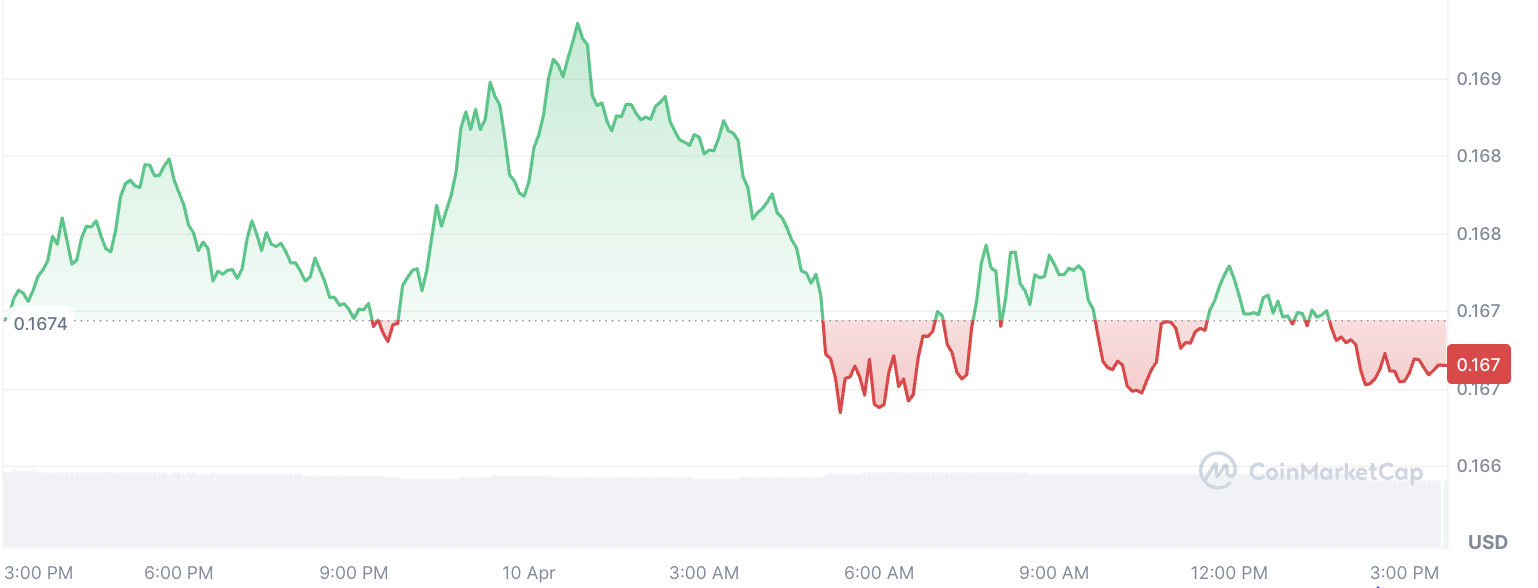
As of this writing, Pi Coin is trading at approximately $0.17, continuing to move within a relatively tight range that has defined its price action for several months. Based on an estimated circulating supply of around 10 billion tokens, this places Pi’s market capitalization near $1.6–$1.7 billion. Despite ongoing technical developments, the market response has remained measured rather than reactive.
Over the past six to twelve months, Pi has largely fluctuated between $0.15 and $0.28, with occasional short-term spikes that have not been sustained. A brief rally in March 2026 pushed the price toward the upper end of this range, but selling pressure quickly returned, bringing it back to current levels. This pattern suggests that traders are still uncertain about near-term catalysts and are not pricing in aggressive growth.
A key factor behind this muted performance is ongoing token unlocks, which continue to increase circulating supply. At the same time, the absence of a fully developed on-chain ecosystem limits organic demand. Without active smart contracts, decentralized applications, or significant transaction volume on Mainnet, Pi Coin’s valuation remains largely speculative.
In its current state, Pi Coin reflects a network in transition. Technical progress is evident, but the market is waiting for clearer signs of real-world usage and sustained demand before reassessing its price potential.
Will the Pi Network RPC Server Push Pi Coin Price Higher?
The launch of the RPC server introduces a key piece of infrastructure, but its impact on Pi Coin’s price is likely to be indirect and gradual rather than immediate. In most blockchain ecosystems, price appreciation tends to follow actual usage and demand, not just technical upgrades. The RPC server enables that future activity, but it does not create it on its own.
There are several arguments that support a potentially positive long-term impact:
-
Improved developer access: Easier integration may attract more builders, increasing the likelihood of new applications on Pi Network.
-
Foundation for utility-driven demand: As smart contracts and dApps emerge, Pi Coin could gain real use cases beyond simple transfers.
-
Progress toward open ecosystem: The shift from a closed environment to a more open blockchain model may strengthen investor confidence over time.
At the same time, there are clear limitations that suggest no immediate price catalyst:
-
Testnet-only deployment: The RPC server is not yet live on Mainnet, meaning it does not directly affect real economic activity.
-
Lack of active dApps: Without live applications, there is no meaningful increase in transaction volume or demand for Pi Coin.
-
Ongoing supply pressure: Token unlocks continue to add selling pressure, which can offset positive sentiment from upgrades.
In practical terms, the RPC server should be viewed as an enabling layer rather than a trigger for price movement. It reduces technical barriers and prepares the network for future growth, but the market will likely wait for tangible outcomes such as deployed applications, increased on-chain activity, or broader exchange access before reacting.
What Pi Network Needs Next Before Pi Coin Price Can Surge
For Pi Coin to experience a sustained upward move, infrastructure alone will not be sufficient. The RPC server is an important step, but several additional milestones need to be reached before the network can generate meaningful demand and support higher valuations.
Key developments to watch include:
-
Smart contracts on Mainnet: The transition from Testnet experimentation to fully functional smart contracts on Mainnet is critical. This would allow real economic activity, not just simulation.
-
Active dApp ecosystem: Applications such as decentralized exchanges, marketplaces, or payment services must launch and attract users. Utility is the primary driver of long-term value.
-
Increased on-chain activity: Growth in transactions, active addresses, and contract interactions would signal real adoption rather than speculative interest.
-
Exchange listings and liquidity: Broader access through major exchanges could improve price discovery and attract new capital into the ecosystem.
-
Improved tokenomics balance: Mechanisms that reduce circulating supply pressure, such as staking, fee burning, or slower unlock schedules, could help stabilize and support price.
At present, Pi Network is still building toward these conditions. The roadmap suggests progress is ongoing, but the gap between infrastructure readiness and actual usage remains significant. Until that gap narrows, price movements are likely to remain constrained within a defined range.
In essence, the next phase for Pi is not about adding more technical components, but about turning those components into real-world activity that can sustain demand for Pi Coin.
Conclusion
The launch of the Pi Network Testnet RPC server marks a clear step forward in the project’s technical development. It opens the network to external interaction, aligns Pi with standard blockchain architecture, and lays the groundwork for smart contracts and decentralized applications. From an infrastructure perspective, this is a necessary progression if Pi Network aims to evolve into a functional Web3 platform.
However, the impact on Pi Coin’s price remains limited in the short term. The RPC server operates on Testnet, and its benefits will only materialize once they translate into real activity on Mainnet. At present, price dynamics continue to be influenced by supply factors, limited utility, and cautious market sentiment.
For investors and observers, the key takeaway is that this update should be viewed as part of a broader transition rather than a standalone catalyst. The next phase will depend on execution. If Pi Network successfully enables smart contracts, supports a growing ecosystem of applications, and increases on-chain usage, the foundation created by the RPC server could become meaningful for valuation. Until then, the market is likely to remain in a wait-and-see mode.
Disclaimer: The opinions expressed in this article are for informational purposes only. This article does not constitute an endorsement of any of the products and services discussed or investment, financial, or trading advice. Qualified professionals should be consulted prior to making financial decisions.