
ZK Atlas Upgrade: Pioneering the Future of Blockchain Infrastructure for Enhanced DeFi Scalability
- ZKsync's 2025 Atlas Upgrade revolutionizes DeFi scalability via zero-knowledge rollups, boosting transaction throughput to 43,000 TPS and slashing costs to $0.0001 per transfer. - Modular architecture with Atlas Sequencer and Airbender Prover enables real-time execution, while zkSync OS supports EVM/WASM compatibility and cross-chain liquidity unification. - Post-upgrade DeFi metrics show 300% transaction volume growth and $0.28–$1.32 ZK token price projections, positioning ZKsync as a key Layer 2 infras
ZKsync Atlas Upgrade: Transforming DeFi Scalability and Infrastructure
The blockchain sector is undergoing a significant transformation, with the future growth of decentralized finance (DeFi) relying heavily on the strength and flexibility of its foundational technologies. The introduction of the ZKsync Atlas Upgrade in 2025 marks a major leap forward, tackling persistent challenges such as transaction speed, cost-effectiveness, and seamless cross-chain operations. By reimagining zero-knowledge (ZK) rollup architecture, ZKsync is emerging as a pivotal element in Ethereum’s pursuit of a unified, high-performance financial network. For investors, this upgrade not only accelerates the mainstream adoption of DeFi but also reshapes the competitive dynamics among Layer 2 solutions.
Breakthroughs in Scalability and Performance
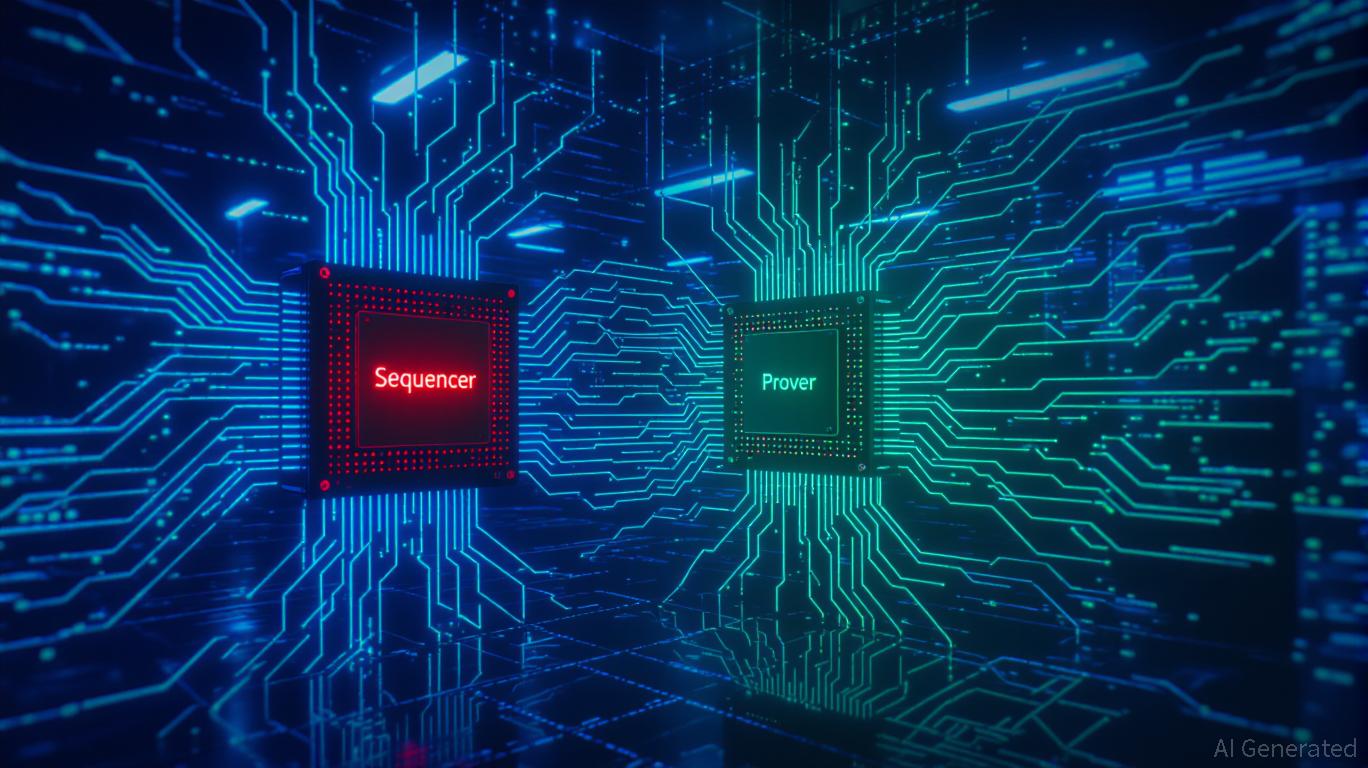
Central to the Atlas Upgrade is the Atlas Sequencer, a next-generation transaction engine capable of processing between 15,000 and 43,000 transactions per second, with confirmation times ranging from just 1 to 500 milliseconds. This remarkable efficiency is achieved through a modular system that separates transaction sequencing from proof generation, allowing each component to specialize and operate asynchronously. This design significantly reduces delays and boosts throughput, which is essential for DeFi platforms that demand instant execution.
Supporting the sequencer is the Airbender Prover, an open-source zkVM built on RISC-V architecture. It can produce zero-knowledge proofs in about one second, streamlining development by removing the need for dual implementation for execution and proof. As a result, transaction costs have plummeted to as low as $0.0001 per transfer, and a single GPU can handle over a million transactions daily. These advances make DeFi more accessible, enabling microtransactions and high-frequency trading at negligible costs.
The zkSync OS further enhances the upgrade’s impact by providing a flexible operating system layer that supports multiple execution environments, including compatibility with the Ethereum Virtual Machine (EVM) and future integration with WASM or RISC-V programs. Its “one program, two targets” approach ensures that both transaction execution and proof generation remain consistent, reducing security risks and simplifying audits. Collectively, these innovations bridge the gap between Ethereum’s security and the scalability requirements of modern DeFi.
DeFi’s Evolution: Practical Outcomes of the Atlas Upgrade
The Atlas Upgrade’s influence is already visible in the operational metrics of DeFi. Since its implementation, ZKsync has enabled smooth cross-chain transactions using succinct ZK proofs, eliminating the reliance on trust-based bridges and reducing transaction times. This has paved the way for a truly interconnected financial network, allowing liquidity to move effortlessly between Ethereum’s mainnet and Layer 2 solutions—a vision long advocated by Ethereum co-founder Vitalik Buterin, who has praised the upgrade as both underrated and highly valuable.
Real-world examples from 2025 and 2026 illustrate ZKsync’s transformative effect. DeFi platforms utilizing the Atlas Upgrade have reported transaction fees dropping to $0.0001 per transfer, making high-frequency trading strategies viable on Ethereum for the first time. Additionally, the consolidation of liquidity across different chains has fueled the expansion of cross-chain yield farming and automated market makers, with transaction volumes soaring by more than 300% in the first quarter following the upgrade. These developments align with Ethereum’s broader ambition to establish a real-time, global financial infrastructure, with ZKsync playing a crucial role as a Layer 2 solution.
Market Outlook and Investment Opportunities
For investors, the ZKsync token (ZK) and the wider zero-knowledge proof (ZKP) sector offer promising prospects. Projections for 2025 through 2030 indicate a strong upward trend for ZK, with estimates placing its value at $0.28 by the end of 2025 and potentially reaching $1.32 by 2030, assuming favorable economic conditions and widespread technological adoption. These optimistic forecasts are supported by ZKsync’s expanding ecosystem, which includes collaborations with DeFi protocols, NFT platforms, and Web3 infrastructure projects.
Nonetheless, ZKsync faces stiff competition from other Layer 2 solutions such as Arbitrum (ARB) and Optimism (OP), all vying for dominance in Ethereum’s scalability landscape. Despite this, ZKsync’s unique blend of high throughput, minimal fees, and cross-chain compatibility positions it to capture a significant share of the growing ZKP market. Institutional adoption of zk-rollups, especially anticipated in 2026, could further propel ZK’s value, with some forecasts suggesting a potential price range of $0.70 to $1.00 if Ethereum’s Layer 2 ecosystem matures as expected.
Conclusion: Shaping the Next Generation of DeFi
The ZK Atlas Upgrade stands as more than just a technical enhancement—it is a driving force for the next wave of DeFi innovation. By overcoming barriers related to scalability, cost, and interoperability, ZKsync is redefining the possibilities of blockchain infrastructure. For investors, this upgrade presents a strategic chance to benefit from the intersection of ZKP advancements and the expanding applications of DeFi. As Vitalik Buterin has emphasized, the true value of the Atlas Upgrade lies not only in its impressive performance but also in its capacity to unify Ethereum’s fragmented ecosystem into a cohesive, scalable network. In this new era, ZKsync is set to become the backbone of a decentralized financial future.
Disclaimer: The content of this article solely reflects the author's opinion and does not represent the platform in any capacity. This article is not intended to serve as a reference for making investment decisions.
You may also like
BTC breaks $90,000
Harvard University holds more Bitcoin ETFs than it holds Google stock.
Billionaire Andy Beal receives approval to launch new crypto bank
The top 100 publicly traded companies holding BTC collectively hold over 1.05 million BTC.





