The Revival of Industrial Properties in Webster, NY, Driven by Major Infrastructure Improvements and the Transformation of the Xerox Campus
- Webster , NY, is revitalizing industrial real estate through infrastructure upgrades and Xerox campus redevelopment, creating a high-tech industrial hub. - A $9.8M FAST NY grant transformed a 300-acre brownfield, reducing vacancy rates to 2% and attracting $650M in projects like fairlife® dairy. - EPA-approved remediation and a solar garden project highlight sustainability efforts, aligning with ESG goals and boosting investor confidence. - Statewide infrastructure funding and tax incentives are projecte
Webster, NY: A Model for Industrial Renewal
Webster, New York, is rapidly becoming a standout example of industrial revitalization, fueled by targeted infrastructure upgrades, collaborative efforts between public and private sectors, and a strong focus on environmental restoration. Central to this progress is the FAST NY Shovel-Ready Grant Program, which has dedicated $9.8 million to transform the former Xerox campus—a 300-acre brownfield—into a cutting-edge industrial center. This initiative, alongside innovative urban planning and strategic partnerships, is positioning Webster as a leading destination for long-term industrial investment and a template for post-industrial transformation in Upstate New York.
Infrastructure Investments Driving Growth
The FAST NY grant has played a crucial role in converting underused properties into development-ready sites. Investments in road realignment, expanded sewer systems, and upgraded electrical infrastructure have brought Webster’s industrial vacancy rate down to just 2%, a significant improvement compared to the national average of 8.5%. These foundational improvements are attracting advanced manufacturing and logistics companies. For example, the $650 million fairlife® dairy facility, expected to generate 250 new jobs by 2025, highlights the region’s appeal to major industries. Empire State Development reports that these infrastructure enhancements are expected to draw over $1 billion in private investment between 2023 and 2025, reflecting strong demand for industrial real estate.
Xerox Campus: Redevelopment and Environmental Progress
The transformation of the Xerox campus illustrates the value unlocked through collaboration between corporations and local government. The reclassification of 300 acres of brownfield land, combined with EPA-approved cleanup efforts, has turned the site into a hub for logistics and manufacturing.
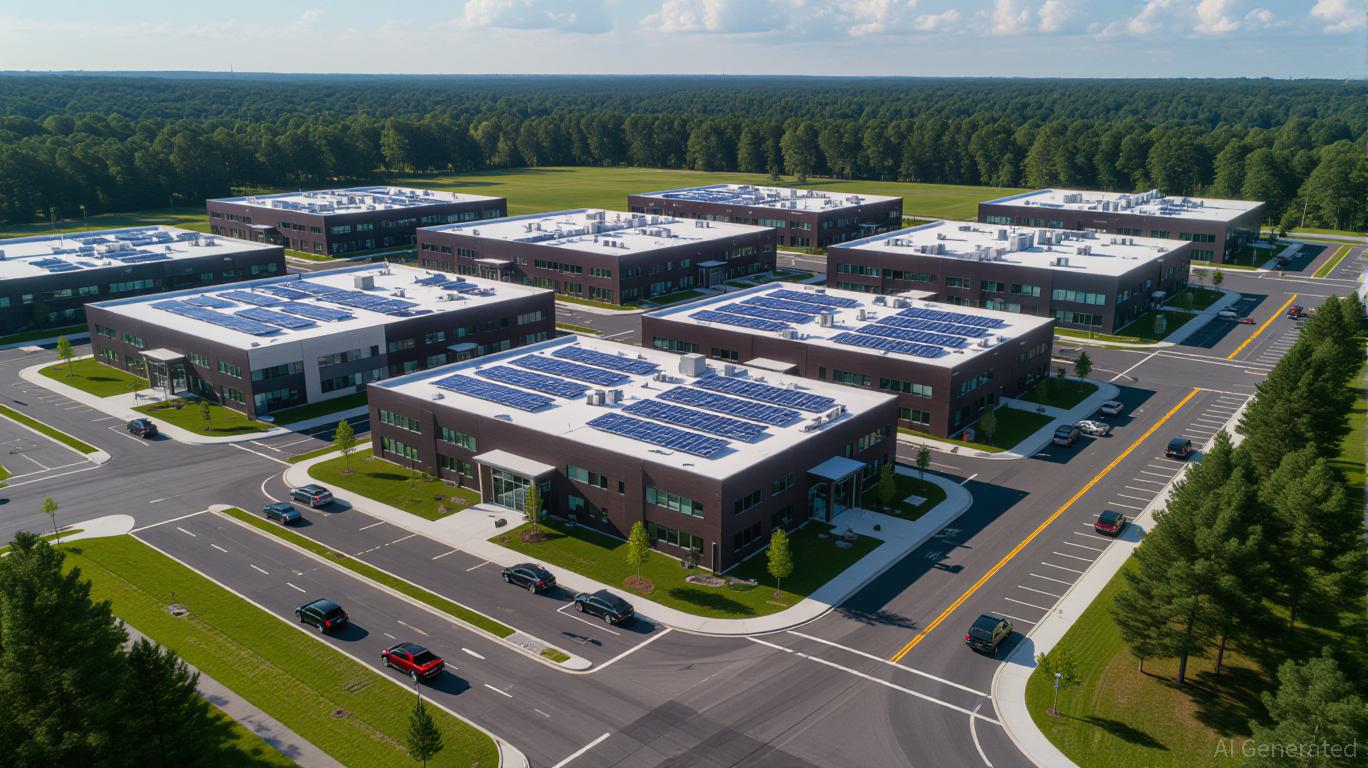
Additionally, a separate 20-acre solar garden project, currently in the early stages of approval, demonstrates a commitment to sustainability and adherence to ESG standards. These projects align with the Brownfield Opportunity Area (BOA) initiative, which provides tax breaks and regulatory flexibility to encourage redevelopment. By proactively addressing environmental concerns, Webster reduces risks for future investors and ensures compliance with modern regulations.
Economic Outlook and Urban Revitalization
Experts recognize Webster as a leading example of urban renewal. The Reimagine Webster Master Plan, finalized in 2024, designates the Xerox campus as a Brownfield Opportunity Area, making it a priority for future investment and redevelopment. At the same time, the Webster Forward initiative, backed by $4.5 million from the NY Forward Program, aims to improve walkability and foster community engagement in the Village of Webster. These efforts work together to create a positive ripple effect. For instance, residential property values in Webster have risen by 10.1% annually, driven by better infrastructure and job opportunities. Urban economists emphasize that the synergy between industrial and residential development is essential for lasting economic prosperity.
Municipal and Corporate Partnerships: Broader Impact
Webster’s achievements are rooted in its effective use of public-private partnerships. The statewide FAST NY program has allocated $283 million, preparing 7,700 acres for industrial use and demonstrating how targeted grants can stimulate private investment. Governor Hochul’s proposed $100 million expansion of the program for FY2025 further highlights the state’s dedication to infrastructure-driven growth. For investors, this indicates a stable policy environment and promising long-term prospects. Projects like the Sandbar Waterfront Revitalization, which improves public access to Lake Ontario, showcase Webster’s comprehensive approach to community development, balancing economic advancement with social benefits.
Why Webster Stands Out for Industrial Investment
Webster’s ongoing transformation showcases the effectiveness of coordinated infrastructure improvements, environmental cleanup, and strong corporate partnerships. By tackling legacy issues such as brownfield contamination and aligning with statewide initiatives like FAST NY, the town has established itself as a competitive location for advanced manufacturing and logistics companies. For investors, the combination of ready-to-develop sites, attractive tax incentives, and a projected $1 billion industrial hub by 2026 makes Webster a compelling choice for value creation. As the town continues to enhance its infrastructure and urban planning, it serves as a replicable model for other post-industrial communities seeking renewal in the modern era.
Disclaimer: The content of this article solely reflects the author's opinion and does not represent the platform in any capacity. This article is not intended to serve as a reference for making investment decisions.
You may also like
Timeless Investment Strategies: Why Insights from 1927 Continue to Shape Today’s Investors
- McNeel's 1927 "Beating the Market" prefigured Buffett's value investing and modern behavioral finance principles. - He advocated emotional discipline and long-term faith in U.S. economic resilience, echoed by Buffett's "margin of safety" strategy. - Modern behavioral finance (2020–2025) validates these insights, showing disciplined investors outperforming during crises like 2008 and 2020. - Algorithmic trading and meme stocks highlight the enduring relevance of McNeel's principles in countering speculati

ICP Network Expansion and Its Impact on Web3 Infrastructure Investments
- ICP Protocol's 2025 growth highlights its role as a hybrid cloud/Web3 infrastructure leader through cross-chain integration and enterprise partnerships. - Unverified 10M node claims contrast with 1.2M wallets, creating transparency concerns for investors assessing network legitimacy. - 22.5% TVL growth and 2,000 new developers signal institutional confidence, yet Q3 dApp usage fell 22.4%, exposing adoption gaps. - Regulatory risks and Web3's user experience challenges question ICP's long-term viability d

SOL Price Forecast and Solana's Market Strength in Late 2025: A Two-Factor Assessment
- Solana (SOL) faces pivotal 2025 juncture with Fed easing and blockchain upgrades driving price resilience. - Fed rate cuts and $421M institutional inflows via ETFs (e.g., REX-Osprey) boost crypto adoption amid low yields. - Firedancer/Alpenglow upgrades cut validator costs by 80%, enabling 100-150ms finality and $10.2B DeFi TVL growth. - $133 support level and bullish TD Sequential signals suggest $150-$165 target by year-end despite inflation risks.

The Federal Reserve's Change in Policy and Its Effects on Rapidly Growing Cryptocurrencies Such as Solana
- Fed's 2025 rate cut and QT halt injected $72.35B liquidity, briefly boosting crypto markets and Solana (+3.01%) amid easing monetary policy. - Prolonged US government shutdown and $19B October liquidation event exposed crypto's liquidity risks, despite Fed support for speculative assets. - Solana saw $3.65B trading volume but 6.1% price drop in November, with TVL falling 4.7% as regulatory pressures and macro volatility offset institutional inflows. - SIMD-0411 proposal aims to reduce Solana issuance by