
HKMA Faces Stablecoin Challenge: Managing Risks While Fostering Innovation
- HKMA warns against unregulated stablecoin issuance under new framework, targeting AnchorX's AxCNH. - Regulator enforces strict licensing rules requiring AML/CTF compliance and public issuer registry. - Extra-territorial provisions apply to overseas issuers referencing Hong Kong dollars, expanding regulatory reach. - Only "handful" licenses expected initially due to high standards for capital, governance, and use-case viability. - Regulatory caution aligns with China's broader crypto crackdown, balancing
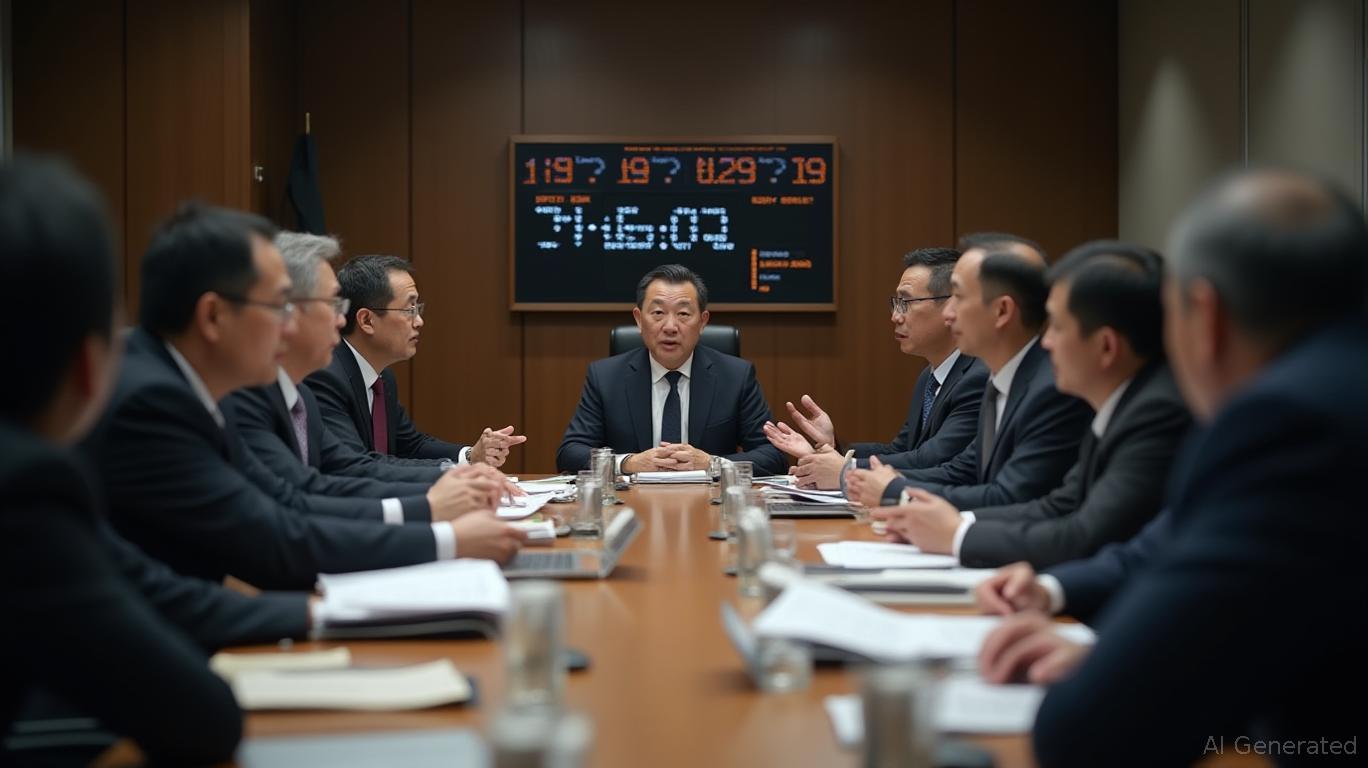
The Hong Kong Monetary Authority (HKMA) has strongly cautioned against the issuance of stablecoins without regulatory approval in the region, putting its new regulatory system to the test for the first time. This warning comes after AnchorX, a Hong Kong-based company, introduced AxCNH—a stablecoin tied to the offshore Chinese yuan—without securing authorization from local authorities. Through an announcement on its official WeChat account, the HKMA made it clear that no organization has been granted permission to issue stablecoins in Hong Kong, and urged the public to be vigilant regarding unregulated offerings Francisco Rodrigues, [ 1 ].
This notice from the HKMA highlights the rigorous licensing standards established under the Stablecoins Ordinance, which took effect on August 1, 2025 Hong Kong Monetary Authority, [ 2 ]. The new rules require stablecoin issuers to adhere to strict criteria concerning licensing, capital reserves, and governance. Essential elements include anti-money laundering (AML) and counter-terrorism financing (CTF) protocols, as well as a publicly accessible list of licensed issuers. At the time of the announcement, no licenses had been issued, and the HKMA stressed that dealing with unapproved stablecoins involves considerable risk Hong Kong Monetary Authority, [ 2 ].
AxCNH, the stablecoin from AnchorX, has come under particular examination. The company asserts it holds a license from Kazakhstan’s Astana Financial Services Authority and claims the token will support cross-border transactions and tokenization of real-world assets Francisco Rodrigues, [ 1 ]. Despite this, the HKMA’s response demonstrates its power to enforce compliance, even for foreign entities referencing the Hong Kong dollar, in line with the Ordinance’s provisions that require overseas issuers to obtain local approval if they mention Hong Kong dollars Cooley, [ 3 ].
The timing of this alert is significant. Recently, China’s securities regulator recommended that brokerages suspend real-world asset (RWA) tokenization activities in Hong Kong due to concerns over risk management Francisco Rodrigues, [ 1 ]. This broader regulatory caution reflects a unified approach to addressing potential systemic threats within the crypto industry. HKMA’s chief executive, Eddie Yue, has also criticized the “unwarranted surges in trading activity and stock prices” associated with stablecoin speculation, emphasizing the necessity to “curb excessive enthusiasm” Cointelegraph, [ 4 ].
For those seeking a license, applications must be submitted by September 30, 2025, to be considered in the initial round. The HKMA has set a high threshold for approval, with Yue indicating that only a select few licenses will be granted at first. Prospective issuers are required to present credible use cases, technical proficiency, and robust operational systems. The regulator has also cautioned against deceptive public statements, warning that falsely claiming to be licensed or to have applied is a criminal act under the Stablecoins Ordinance Hong Kong Monetary Authority, [ 2 ].
The HKMA’s recent actions reflect a broader move toward formalizing oversight of Hong Kong’s digital asset sector. By bringing stablecoin regulation in line with established financial industry standards, the authority aims to protect investors while encouraging technological progress. Nonetheless, initial applicants may face obstacles such as intricate ownership structures and the need to coordinate with foreign regulators, illustrating the complexities of the new system Cooley, [ 3 ].
As the regulatory landscape continues to evolve, industry participants are encouraged to consult the HKMA’s online register of approved issuers. The authority’s proactive measures highlight its dedication to safeguarding financial stability in a rapidly changing environment. With regulatory scrutiny tightening across China, Hong Kong’s approach to stablecoins may become a blueprint for balancing innovation with effective risk controls.
Disclaimer: The content of this article solely reflects the author's opinion and does not represent the platform in any capacity. This article is not intended to serve as a reference for making investment decisions.
You may also like
Solana's Abrupt Decline: Underlying Factors and What It Means for Investors
- Solana’s Q3 2025 sell-off reflects strong network performance (80M daily transactions) but a $352.8M company net loss from derivatives and financing costs. - Market sentiment diverged: $113.5B market cap growth vs. 6.87% stock drop post-earnings, driven by macroeconomic risks and regulatory uncertainty. - Upgrades like Alpenglow (150ms finality) and ZK Compression v2 (5,200x cost reduction) position Solana for institutional adoption despite short-term volatility. - Investors face a dilemma: 32.7% DeFi TV

DASH Price Increases by 1.78% Following Significant Insider's Share Sale Filing
- DoorDash’s stock rose 1.78% on Dec 2, 2025, despite a 20.32% weekly drop, showing long-term investor confidence. - Officer Lee Gordon S filed to sell 2,159 shares via Rule 10b5-1 plan, part of routine insider trading strategy . - Director Alfred Lin bought $100M in DASH shares, contrasting with 90-day insider sales of $174.5M. - Institutional investors showed mixed activity, with Panagora buying and Spyglass, Arrowstreet reducing stakes. - Analysts maintain "Moderate Buy" rating, projecting growth amid v

What's Causing the Latest BTC Price Swings: Is It a Macro-Fueled Reevaluation?
- Bitcoin's late 2025 volatility reflects macroeconomic pressures, Fed policy shifts, and regulatory changes impacting institutional demand. - Sharp price swings from $126k to $87k highlight sensitivity to inflation, interest rates, and leveraged trading risks amid delayed economic data. - New U.S. crypto laws and ETF approvals boosted institutional participation, but geopolitical risks and token unlocks maintained uncertainty. - A potential Fed rate cut and stabilizing inflation could reignite risk appeti
The ChainOpera AI Token Collapse: A Cautionary Tale for AI-Powered Cryptocurrency Markets?
- ChainOpera AI (COAI) token's 96% collapse in late 2025 exposed systemic risks in AI-blockchain markets, mirroring 2008 crisis patterns through centralized governance and speculative hype. - COAI's extreme centralization (96% supply in top 10 wallets) and tokenomics (80% locked until 2026) created liquidity crises, undermining blockchain's decentralized ethos. - Regulatory actions intensified post-crash, with SEC/DOJ clarifying custody rules and targeting fraud, yet CLARITY/GENIUS Acts created compliance
Trending news
MoreCrypto prices
More






