
XRP News Today: XRP Faces a Defining Moment in 2026—Will Institutional Excitement or Practical Use Prevail?
- Grayscale XRP Trust (GXRP) launches on NYSE, joining 3 XRP ETFs as institutional adoption accelerates post-SEC legal resolution. - Ripple's XRP gains traction in cross-border payments via partnerships with Santander , SBI, and Amex , competing with stablecoins/CBDCs. - XRP faces challenges: declining ledger transaction volume, banks favoring ODL corridors over direct XRP holdings, and stablecoin competition. - ETF allocations remain in cold storage, limiting on-chain demand, while 2026 price forecasts hi
XRP Advances Toward Legal Tender Status Amid Institutional Growth
XRP is making significant strides toward recognition as both legal tender and a reserve currency, fueled by increasing institutional interest. The debut of the Grayscale XRP Trust (GXRP) on the NYSE stands out as a major milestone, joining three other XRP-focused ETFs that launched in late 2024. This surge in institutional products reflects growing confidence in XRP’s regulatory standing and practical use cases, especially following Ripple’s resolution of its longstanding legal battle with the U.S. Securities and Exchange Commission (SEC) in August 2025. The outcome of this case has laid the groundwork for broader acceptance of XRP in mainstream markets.
XRP’s Role in Global Payments and Financial Partnerships
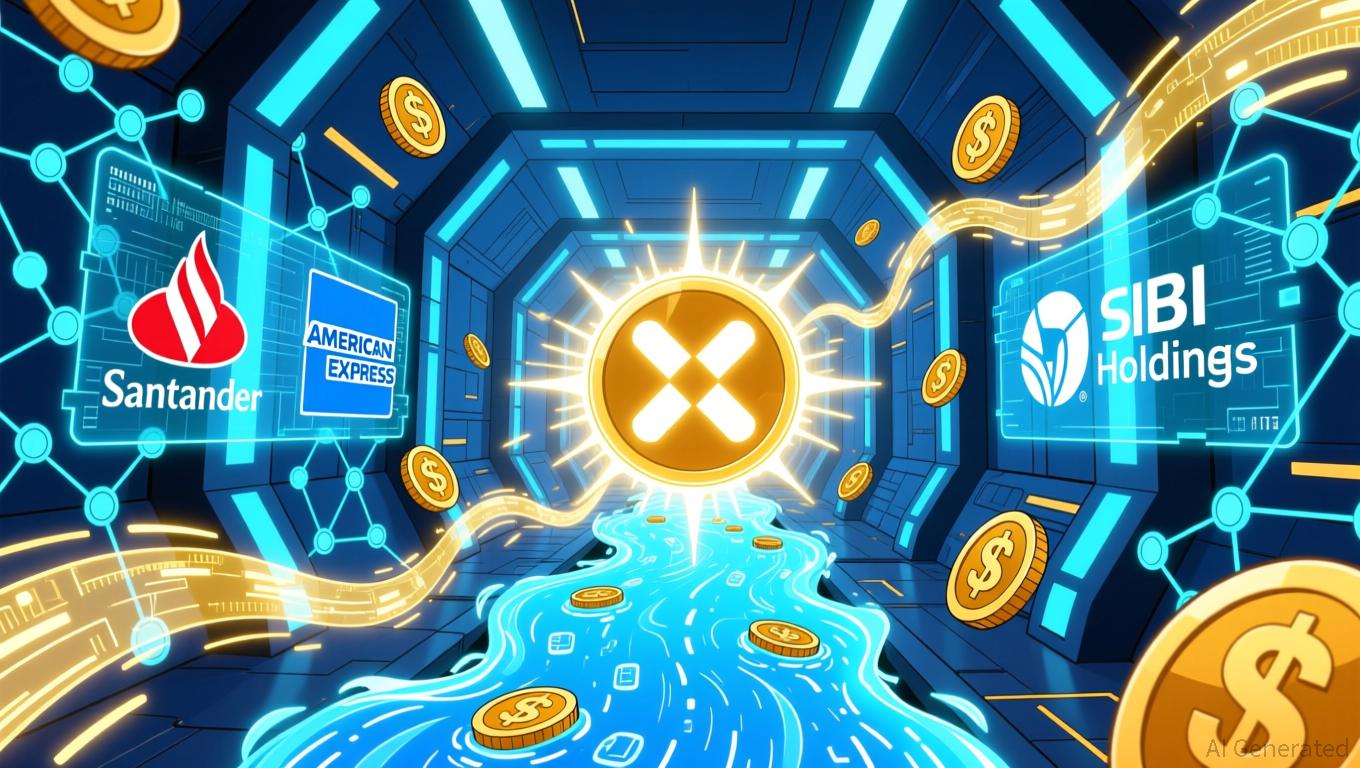
Designed to streamline international payments, XRP offers rapid settlement and minimal transaction fees, positioning itself as a strong competitor to conventional banking systems. Its collaborations with major financial institutions such as Santander, SBI Holdings, and American Express highlight its adoption in real-world financial operations, particularly for remittances and liquidity management. Experts point out that XRP’s capability to enable instant, cost-effective transfers makes it a compelling alternative to both stablecoins and central bank digital currencies (CBDCs), although it continues to face stiff competition in the sector.
Challenges on the Road to Widespread Use
Despite RippleNet’s network expanding to over 300 banking partners, XRP’s journey is not without obstacles. Recent data shows a decline in transaction activity on the XRP ledger, raising concerns about its practical utility. Many banks leverage RippleNet’s infrastructure without directly holding XRP, instead utilizing On-Demand Liquidity (ODL) services that instantly convert XRP to fiat currency. This method reduces exposure to price fluctuations but also limits ongoing on-chain engagement. The introduction of regulated stablecoins like RLUSD, which are pegged to the U.S. dollar, offers banks a more stable option for testing cross-border payment corridors, potentially delaying broader XRP adoption.
Impact of ETFs and Market Outlook
The arrival of XRP ETFs, including GXRP, has not immediately translated into increased on-chain activity. While these investment vehicles provide regulated access for institutions, the underlying XRP is often kept in cold storage rather than circulating on public exchanges. This approach helps stabilize the market but does little to drive transaction volume. Market analysts suggest that XRP’s future price movements will depend on tangible adoption metrics, such as the uptake of RLUSD in Asia-Pacific payment corridors and the scaling of RippleNet’s settlement capabilities. Optimistic forecasts predict XRP could reach values between $3.20 and $3.80 by 2026 if institutional participation and corridor expansion continue apace, while more cautious projections warn of a possible drop to $1.95–$2.20 should regulatory or technical issues arise.
Path Forward: From Speculation to Reserve Asset
For XRP to evolve from a speculative investment to a recognized reserve currency, it must prove its effectiveness in facilitating large-scale settlements. Ripple’s efforts to connect traditional and digital assets through RLUSD and its growing network of partners may help bridge this gap. Nevertheless, XRP’s long-term success will depend on overcoming skepticism from established financial institutions, which prioritize stability and regulatory compliance over speculative potential. As 2026 progresses, XRP’s ability to transform institutional interest into widespread, scalable use will be the ultimate measure of its progress.
Disclaimer: The content of this article solely reflects the author's opinion and does not represent the platform in any capacity. This article is not intended to serve as a reference for making investment decisions.
You may also like
Solana's Abrupt Decline: Underlying Factors and What It Means for Investors
- Solana’s Q3 2025 sell-off reflects strong network performance (80M daily transactions) but a $352.8M company net loss from derivatives and financing costs. - Market sentiment diverged: $113.5B market cap growth vs. 6.87% stock drop post-earnings, driven by macroeconomic risks and regulatory uncertainty. - Upgrades like Alpenglow (150ms finality) and ZK Compression v2 (5,200x cost reduction) position Solana for institutional adoption despite short-term volatility. - Investors face a dilemma: 32.7% DeFi TV

DASH Price Increases by 1.78% Following Significant Insider's Share Sale Filing
- DoorDash’s stock rose 1.78% on Dec 2, 2025, despite a 20.32% weekly drop, showing long-term investor confidence. - Officer Lee Gordon S filed to sell 2,159 shares via Rule 10b5-1 plan, part of routine insider trading strategy . - Director Alfred Lin bought $100M in DASH shares, contrasting with 90-day insider sales of $174.5M. - Institutional investors showed mixed activity, with Panagora buying and Spyglass, Arrowstreet reducing stakes. - Analysts maintain "Moderate Buy" rating, projecting growth amid v

What's Causing the Latest BTC Price Swings: Is It a Macro-Fueled Reevaluation?
- Bitcoin's late 2025 volatility reflects macroeconomic pressures, Fed policy shifts, and regulatory changes impacting institutional demand. - Sharp price swings from $126k to $87k highlight sensitivity to inflation, interest rates, and leveraged trading risks amid delayed economic data. - New U.S. crypto laws and ETF approvals boosted institutional participation, but geopolitical risks and token unlocks maintained uncertainty. - A potential Fed rate cut and stabilizing inflation could reignite risk appeti
The ChainOpera AI Token Collapse: A Cautionary Tale for AI-Powered Cryptocurrency Markets?
- ChainOpera AI (COAI) token's 96% collapse in late 2025 exposed systemic risks in AI-blockchain markets, mirroring 2008 crisis patterns through centralized governance and speculative hype. - COAI's extreme centralization (96% supply in top 10 wallets) and tokenomics (80% locked until 2026) created liquidity crises, undermining blockchain's decentralized ethos. - Regulatory actions intensified post-crash, with SEC/DOJ clarifying custody rules and targeting fraud, yet CLARITY/GENIUS Acts created compliance
Trending news
MoreCrypto prices
More






