What Is Fluent (BLEND)? The Multi-VM Layer 2 Driving Web3 Interoperability
Blockchain has grown into a multi-chain ecosystem, but fragmentation remains a core limitation. Networks built on different virtual machines, such as EVM, SVM, and WASM, still struggle to communicate efficiently. While bridges and cross-chain solutions have improved connectivity, they often introduce added complexity, security concerns, and slower execution. As a result, developers and users continue to face friction when moving assets and building across ecosystems.
Fluent (BLEND) enters this landscape as a Layer 2 project that takes a different approach. Instead of connecting separate chains, it aims to unify them at the execution level through a multi-VM design. Built on top of Ethereum, Fluent seeks to enable smart contracts from different environments to operate within a single system. In this article, we will learn how Fluent (BLEND) works, its core technology, and what role it may play in the future of Web3.
What Is Fluent (BLEND)?
Fluent (BLEND) is a Layer 2 blockchain built on Ethereum that introduces a multi-VM execution environment, often described as “blended execution.” Its core objective is to reduce fragmentation in Web3 by allowing different virtual machine standards, such as EVM, WASM, and SVM, to operate within a single, unified system. Rather than relying on external bridges to connect separate chains, Fluent integrates compatibility at the execution layer itself.
This design allows developers to deploy and interact with smart contracts written for different environments without leaving the Fluent ecosystem. In theory, it enables applications to access shared liquidity and user bases across multiple blockchain standards, while maintaining the security and settlement guarantees of Ethereum. The BLEND token supports this ecosystem by facilitating coordination mechanisms such as staking, incentives, and governance, rather than serving as the primary gas token.
Who Created Fluent (BLEND)?
Fluent (BLEND) was founded in 2022 as a Layer 2 infrastructure project focused on multi-VM execution. It was co-founded by Dmitry Savonin and DinoEggs. They have played key roles in shaping the early Fluent ecosystem, particularly its execution-layer architecture and focus on interoperability.
In terms of funding, Fluent has attracted backing from several crypto-focused investment firms, including Polychain Capital, dao5, and Primitive Ventures. The project reportedly raised around $8 million in early 2025, followed by an additional $2.2 million later that year, reflecting early institutional interest. Despite this progress, Fluent remains in an early stage, and further transparency around its team, roadmap, and ecosystem development will be important as adoption grows.
How Fluent (BLEND) Works
Fluent (BLEND) operates as a Layer 2 network built on Ethereum, with a focus on unifying different blockchain execution environments. Its core concept, known as multi-VM or blended execution, allows multiple virtual machines to function within a single system. Instead of separating ecosystems by design, Fluent integrates them at the execution layer, which may reduce the need for external bridges and simplify cross-chain interactions.
Key components of how Fluent works include:
-
Multi-VM Execution: Supports environments such as EVM, WASM, and SVM within one network, allowing diverse smart contracts to run side by side
-
Unified Execution Layer: Enables direct interaction between applications built on different virtual machines without switching chains
-
Ethereum Settlement: Relies on Ethereum for final settlement and security, aligning with existing Layer 2 architectures
-
Reduced Bridge Dependency: Minimizes reliance on cross-chain bridges, which have historically introduced security risks
-
Shared Liquidity Potential: Allows applications across different ecosystems to access a common pool of users and capital
While this design introduces a more integrated approach to interoperability, its long-term effectiveness will depend on developer adoption, performance under scale, and the maturity of its tooling and infrastructure.
Fluent (BLEND) Tokenomics
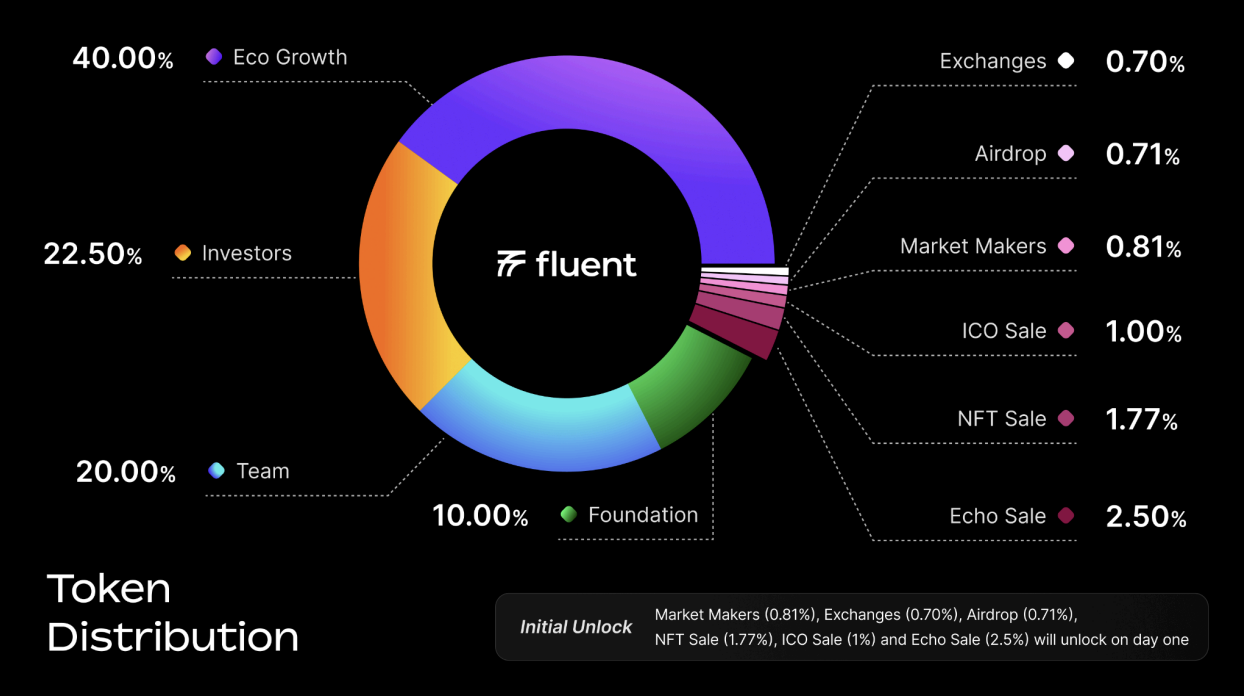
Fluent (BLEND) Token Allocation
The BLEND token is the native utility token of the Fluent Network, a Layer 2 built on Ethereum. It is designed to support network participation, staking, and ecosystem coordination rather than representing ownership or equity. According to official disclosures, BLEND does not grant rights to profits, dividends, or governance over any legal entity. Its value and utility are tied to usage within the Fluent ecosystem.
Token Details
-
Token Ticker: BLEND
-
Blockchain: Ethereum (Layer 2)
-
Initial Total Supply: 1,000,000,000 BLEND
-
Token Type: Utility token (non-equity, non-revenue sharing)
-
Public Sale Price: $0.10 per token
-
Initial Sale Allocation: 10,000,000 tokens (1% of total supply)
Token Distribution
-
Ecosystem Growth (40.0%): Largest allocation, used for incentives, developer support, and network expansion. 25% unlocked at TGE, remainder vested over 36 months
-
Investors (22.5%): Allocated to early backers, subject to 1-year cliff and 24-month vesting
-
Team (20.0%): Reserved for contributors, also with 1-year cliff and 24-month vesting
-
Foundation (10.0%): Supports long-term development and operations, partially unlocked at TGE with vesting schedule
-
NFT Sale (1.77%) and Echo Sale (2.5%): Allocations tied to prior community sales with partial unlocks and vesting
-
Public Sale (1.0%): Fully unlocked at TGE (with restrictions for U.S. participants)
-
Airdrop (0.71%): Distributed to early community members and users
-
Market Making and Exchange Fees (~1.5% combined): Allocated to liquidity providers and exchange listings
Token Utilities
-
Transaction Fees: While ETH is the base gas token, BLEND can be used within applications via account abstraction mechanisms
-
User Staking: Enables participation in ecosystem incentives, reputation systems (Prints), and access to new applications
-
Protocol Staking: Planned delegated staking model (FluentBFT) to support network security and validator participation
-
Community Signaling: Token holders can provide input on ecosystem decisions through structured feedback mechanisms
Additional Mechanisms
-
Buyback and Burn: A portion of network fees may be used to repurchase and burn BLEND, reducing circulating supply over time
-
No Inflation Model: Staking rewards are sourced from existing allocations rather than new token issuance
-
Vesting Structure: Most allocations follow long-term vesting schedules to manage circulating supply and reduce early sell pressure
Fluent (BLEND) Goes Live on Bitget
We are thrilled to announce that Fluent (BLEND) will be listed in the spot market. Check out the details below:
-
Deposit: Open
-
Trading: Opens on April 24, 2026, 13:00 (UTC)
-
Withdrawal: Opens on April 25, 2026, 14:00 (UTC)
-
Spot trading link: BLEND/USDT
Convert: Opens within 10 minutes after trading begins. You can exchange tokens for BTC, USDT, and other tokens supported by Bitget Convert, with no transaction fees.
Fluent (BLEND) Price Prediction for 2026, 2027-2030
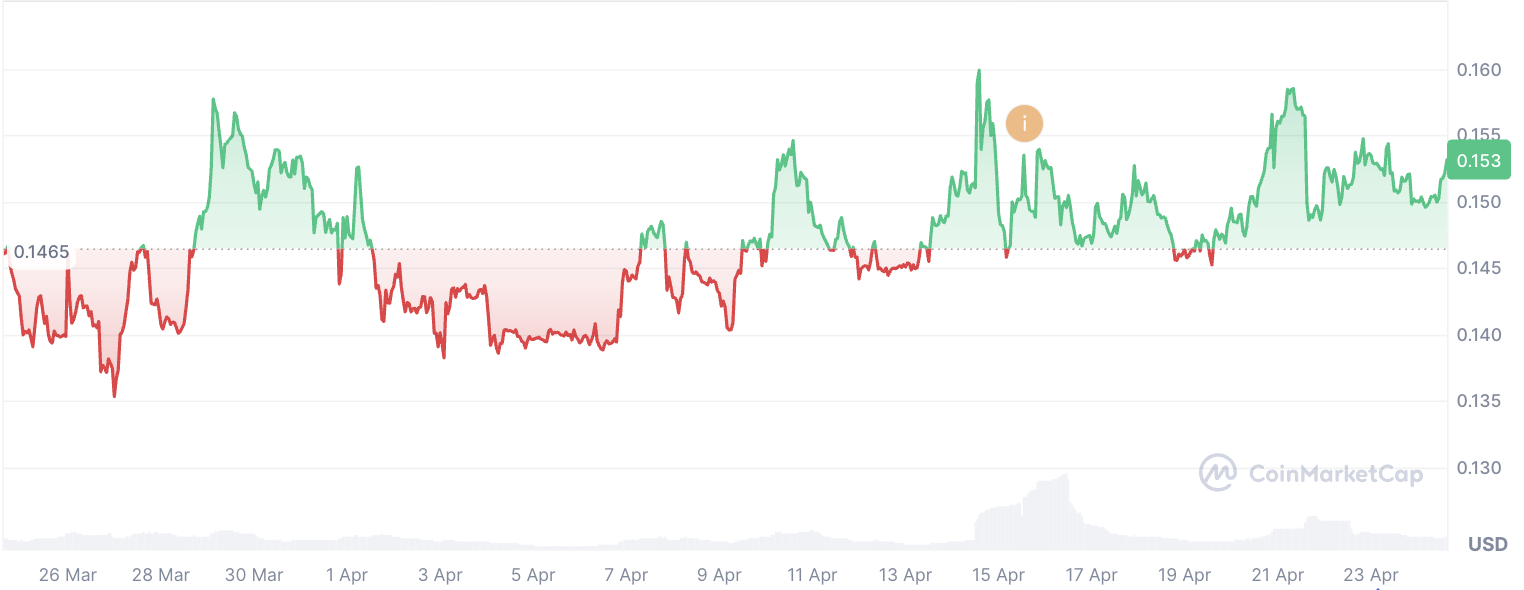
Fluent (BLEND) Price
Source: CoinmarketCap
As of this writing, Fluent (BLEND) is trading at $0.1137, although the token remains in an early price discovery phase following its initial exchange listings. Short-term volatility is expected as liquidity builds and market participants react to token unlocks and ecosystem developments.
-
2026 Price Prediction: In the short term, BLEND is likely to remain volatile as the market stabilizes. Based on current levels and early trading behavior, the token may fluctuate within a $0.08–$0.15 range throughout 2026, with an average price around $0.11–$0.12 if adoption remains steady.
-
2027 Price Prediction: With gradual ecosystem growth and increased developer activity, BLEND could see moderate appreciation. A reasonable range is $0.12–$0.20, assuming improved liquidity, staking participation, and continued Layer 2 relevance.
-
2028–2030 Price Prediction: Over the longer term, projections diverge depending on adoption. In a conservative scenario, BLEND may reach $0.18–$0.30 by 2030. In a more optimistic case, where Fluent achieves strong multi-VM adoption and ecosystem expansion, prices could extend toward $0.30–$0.50, though such outcomes remain highly speculative.
Conclusion
Fluent (BLEND) takes aim at one of Web3’s most persistent problems: fragmented ecosystems that struggle to work together. By introducing a multi-VM Layer 2 built on Ethereum, it attempts to bring different execution environments under one roof. If successful, this approach could make it easier for developers to build across chains and for users to interact with a more connected on-chain experience.
That said, Fluent is still early in its journey. Its long-term impact will depend on whether its technology can move beyond theory and attract real usage. Developer adoption, ecosystem growth, and competition in the Layer 2 space will all shape its future. For now, BLEND stands as an interesting project to watch, one that reflects where Web3 infrastructure may be heading, but also one that carries the uncertainty typical of emerging blockchain networks.
Disclaimer: The opinions expressed in this article are for informational purposes only. This article does not constitute an endorsement of any of the products and services discussed or investment, financial, or trading advice. Qualified professionals should be consulted prior to making financial decisions.