Can You Trade Gold Futures on Bitget? Futures vs CFDs Explained (2026 Guide)
Key Takeaways
-
Bitget does not support traditional gold futures trading; instead, gold is available through CFDs (Contracts for Difference) on its TradFi platform.
-
Gold CFDs on Bitget allow you to trade gold price movements without owning the asset, with no expiry and settlement in USDT.
-
The platform offers high leverage (up to 500×), making it accessible for traders looking to increase exposure with lower capital requirements.
-
The main differences between gold futures and gold CFDs include contract structure, expiry, settlement method, leverage, and ease of access, with CFDs designed for flexible, crypto-native trading.
Can You Trade Gold Futures on Bitget?
Bitget does not offer traditional gold futures contracts, which are typically traded on regulated exchanges with fixed contract sizes, expiry dates, and standardized settlement terms.
Instead, Bitget provides access to gold through CFDs (Contracts for Difference) on its TradFi platform. These instruments are designed to track real-time gold prices, allowing users to trade price movements without dealing with futures contracts, expiries, or physical delivery.
-
Trade gold price movements without owning the asset
-
No expiry dates or contract rollovers
-
Open long (buy) or short (sell) positions
-
Use USDT as margin for all trades
-
Access trading via the MT5 (TradFi) platform
While the structure differs from futures, gold CFDs on Bitget offer a more flexible and accessible way to gain exposure to global gold markets within a single account.
Sign up on Bitget and start trading gold CFDs today. Access global markets in minutes with one account.
What Are Gold Futures?
Gold futures are agreements to buy or sell gold at a set price on a future date. Instead of buying gold today, you are making a contract based on what you think the price will be later. These contracts are traded on regulated exchanges such as CME and require a futures brokerage account to access.
-
Each contract has a fixed size (usually 100 ounces of gold)
-
It has a specific expiry date
-
You can buy (long) if you expect prices to rise
-
Or sell (short) if you expect prices to fall
-
Most traders close the trade before expiry instead of taking delivery
For example, if gold is priced at $2,000 and you think it will go up, you can open a trade. If the price rises to $2,100, you earn the $100 difference per ounce. Since one contract represents 100 ounces, that means a profit of $10,000, excluding fees and margin.
What Are Gold CFDs?
Gold CFDs (Contracts for Difference) are financial products that allow you to trade the price of gold without owning the physical asset. Instead of buying gold, you open a position based on whether you think the price will go up or down, and your profit or loss comes from the difference in price.
On Bitget, gold CFDs are designed to be more flexible than traditional futures. They do not have expiry dates, and trades are settled in USDT, making them easier to access for crypto users.
-
No expiry date, so positions can be held as long as margin allows
-
Trade price movements without owning gold
-
Open long (buy) or short (sell) positions
-
Use leverage to control larger positions with less capital
-
Settled in USDT within the Bitget platform
For example, if gold is trading at $4,300 and you expect the price to rise, you can open a long position. If the price increases to $4,350, you profit from the $50 difference. If you expect the price to fall, you can open a short position and profit if the price drops.
Gold Futures vs Gold CFDs on Bitget
Gold futures and gold CFDs both provide exposure to gold prices, but they differ significantly in how they are structured, traded, and used.
| Feature | Gold Futures | Gold CFDs on Bitget |
| Contract type | Standardized contract | Flexible derivative (CFD) |
| Expiry | Fixed expiry dates | No expiry (perpetual) |
| Trading venue | Regulated exchanges (e.g. CME) | Bitget TradFi (MT5 platform) |
| Account required | Futures brokerage account | Bitget account (crypto-native) |
| Settlement | Cash or physical delivery | Settled in USDT |
| Contract size | Fixed (e.g. 100 troy ounces) | Flexible (lot-based, can trade smaller size) |
| Leverage | Moderate (varies by exchange and margin rules) | High leverage (up to 500×) |
| Margin currency | Fiat (USD) | USDT |
| Trading hours | Limited to exchange hours (almost 24/5) | Extended hours (crypto-style access) |
| Rollover | Required when contracts expire | Not required |
| Ownership | No ownership unless held to delivery | No ownership |
| Fees | Exchange fees + brokerage fees | Commission per lot + swap (overnight) fees |
In simple terms, gold futures are more structured, making them suitable for large-scale or institutional trading. Gold CFDs on Bitget, on the other hand, are designed to be more flexible and accessible, especially for retail and crypto-native users who want to trade gold price movements without dealing with contract expiry or traditional brokerage systems.
What Gold Markets Are Available on Bitget?
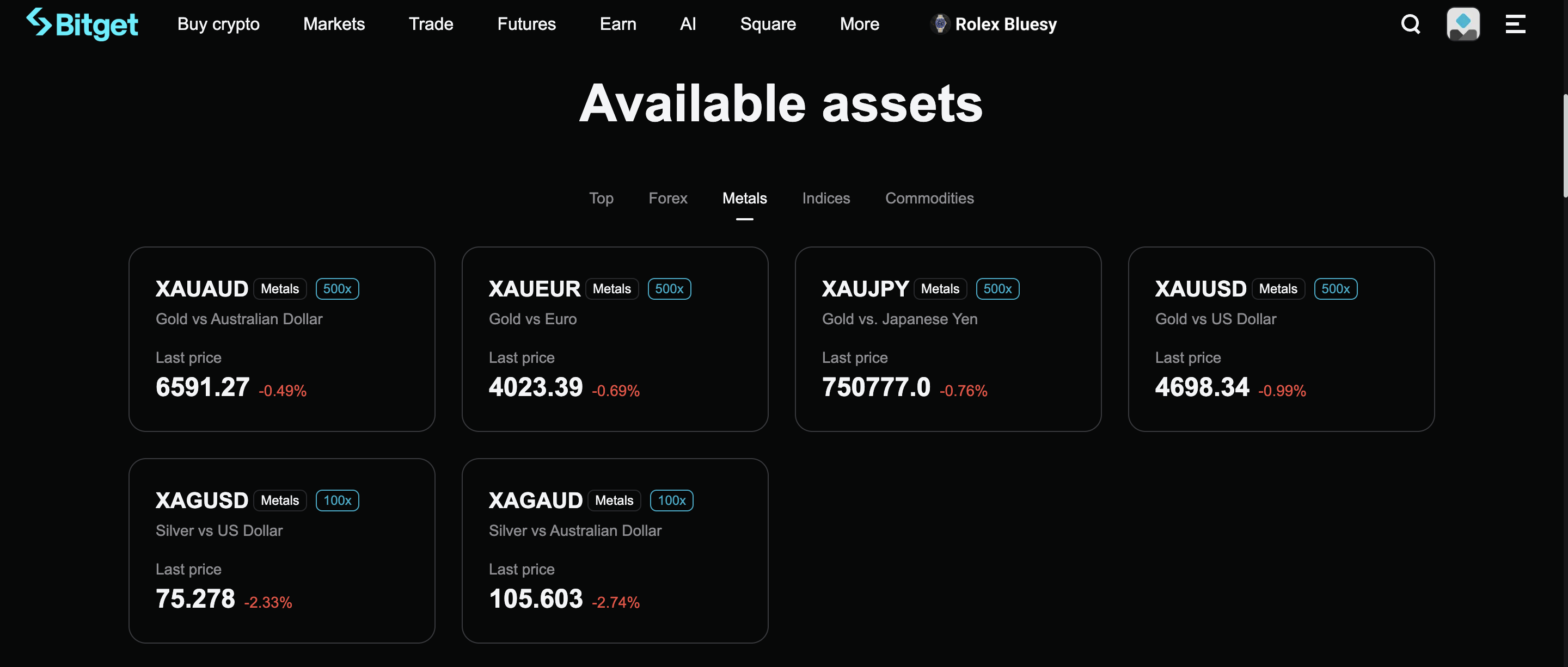
Bitget provides access to gold trading through its CFD platform, where instruments are based on global gold prices and quoted against major currencies. These markets are designed to reflect real-time pricing while offering flexibility for different trading strategies.
The most commonly traded gold market on Bitget is XAUUSD (gold vs US dollar), which serves as the global benchmark for gold pricing. This pair is widely used due to its high liquidity and close alignment with international gold markets.
-
XAUUSD — Gold vs US Dollar (primary market)
-
XAUEUR — Gold vs Euro
-
XAUJPY — Gold vs Japanese Yen
-
XAUAUD — Gold vs Australian Dollar
All gold CFD trades on Bitget are executed using USDT as margin, regardless of the quoted currency. This allows users to access different gold markets while maintaining a consistent settlement system.
Fees and Leverage for Gold CFDs on Bitget
Trading gold CFDs on Bitget involves two main components: fees and leverage, both of which directly affect your trading costs and risk exposure.
How much are the trading fees for gold CFDs on Bitget?
The main trading cost is a fixed commission per lot. For gold (precious metals), Bitget typically charges around $6 per lot for standard users, with lower fees available for higher VIP levels. One lot usually represents 100 ounces of gold, and the fee is calculated based on your position size.
-
Fee formula: Fee = position size (lots) × fee per lot
-
Example: Opening 1 lot costs about $6
| Futures type | Leverage | Transaction fee (VIP2 and below) | Transaction fee (VIP3 and above) |
| Precious metals | Up to 500:1 | $6 per lot | $5.4 per lot |
In addition to transaction fees, swap (overnight) fees apply if you hold a position beyond the daily settlement time. These fees vary depending on market conditions and whether your position is long or short.
What is the maximum leverage for gold CFDs on Bitget?
Leverage allows you to control a larger position with a smaller amount of capital. On Bitget, gold CFDs support leverage of up to 500:1, which is significantly higher than most traditional futures markets.
For example, with 100× leverage, a $1,000 margin can control a $100,000 position. While this increases potential returns, it also increases risk. Even small price movements in gold can lead to large gains or losses.
Because of this, it is important to manage risk carefully when using leverage, including monitoring margin levels and using stop-loss orders to protect your positions.
How to Trade Gold CFDs on Bitget: A Step-by-Step Guide
Trading gold on Bitget is done through the CFD (MT5) platform. The setup process is straightforward and can be completed in a few steps.
Step 1: Open your CFD account
Log in to your Bitget account, go to Futures → CFD, and create your MT5 account by following the setup instructions. Make sure your account has completed identity verification (KYC).
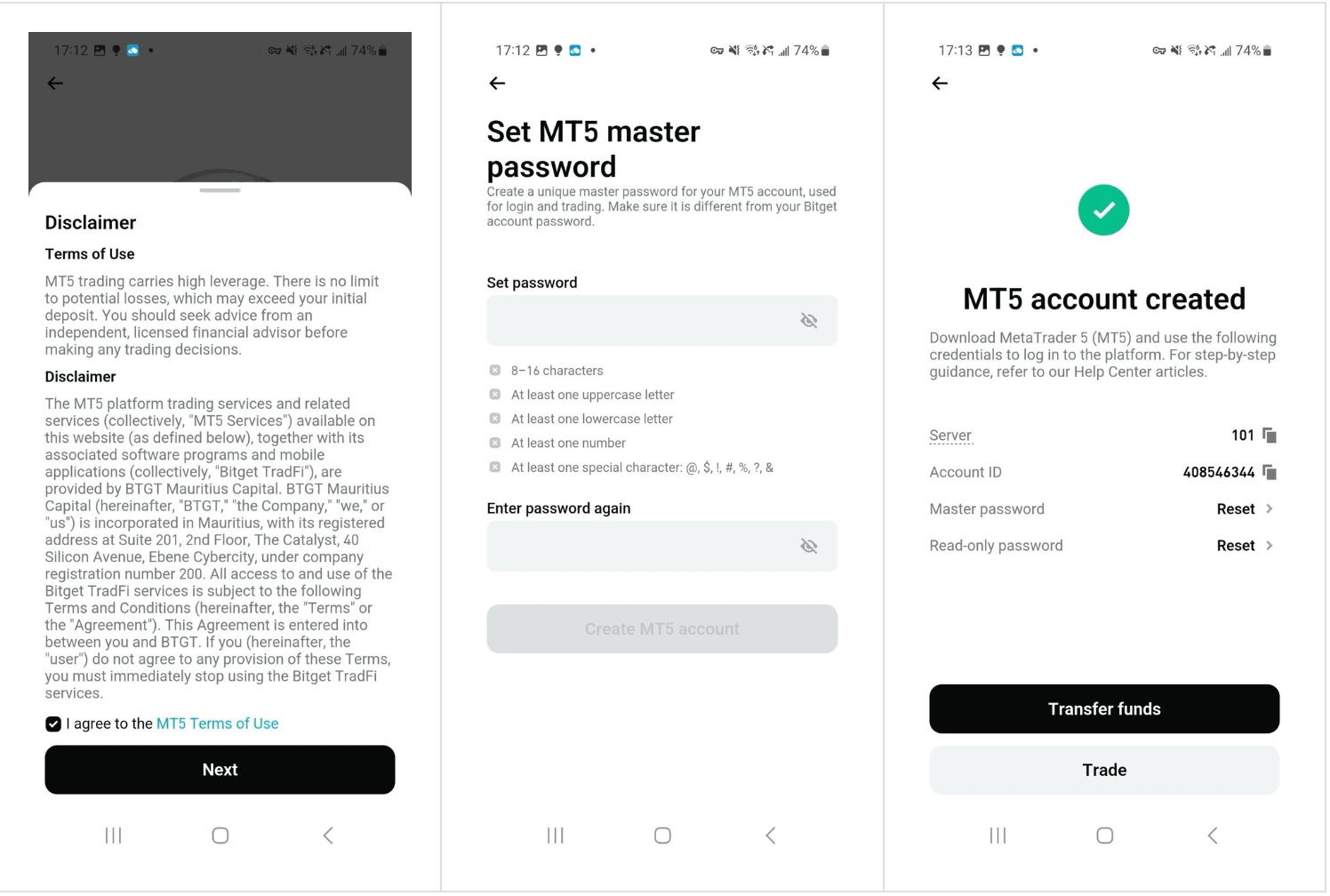
Learn more: How to sign up for a Bitget MT5 account?
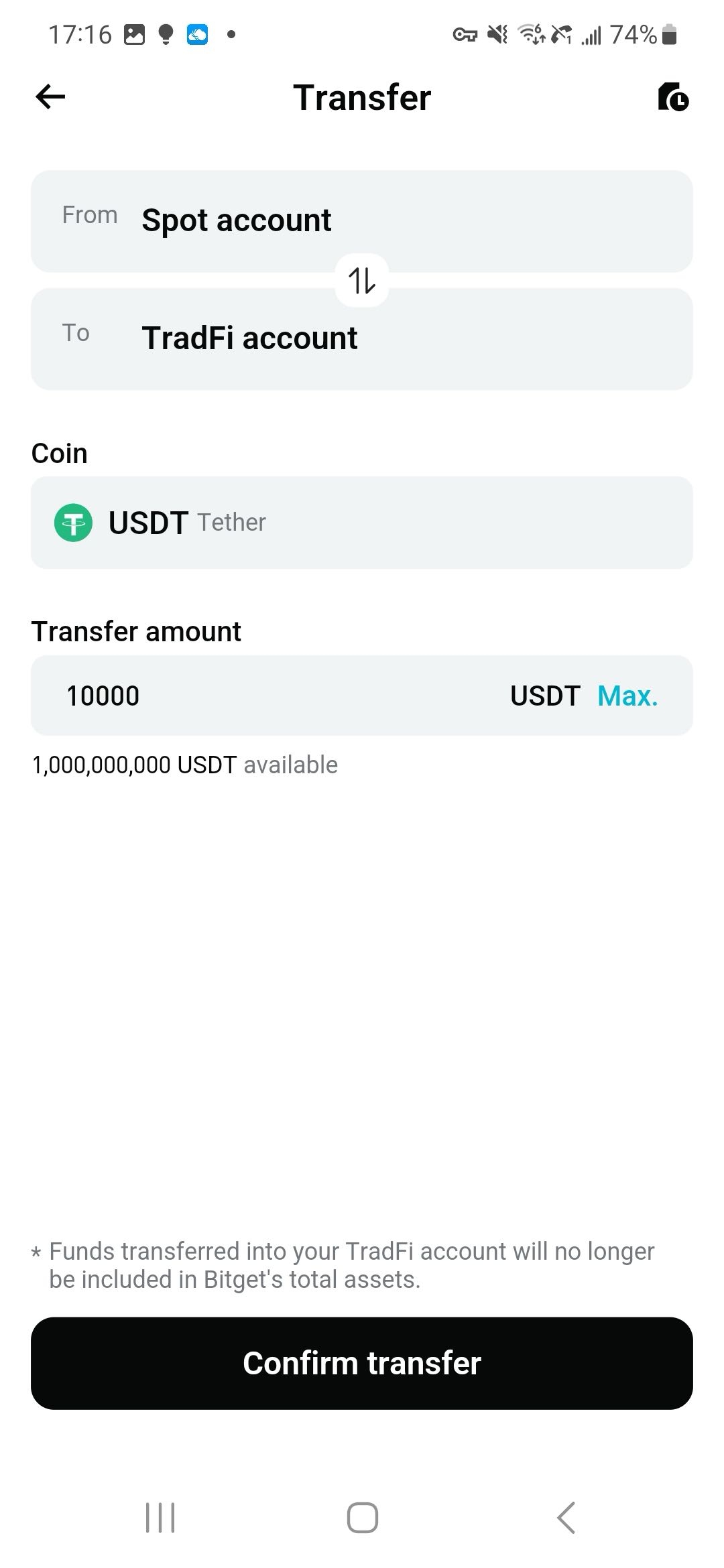
Step 2: Fund your CFD account
Go to Assets → Transfer, move USDT into your CFD account, and confirm the transfer. USDT is the only supported margin for CFD trading.
Step 3: Select a gold CFD market
Navigate to the CFD trading interface and choose a gold pair, such as XAUUSD, which tracks global gold prices.
Step 4: Set up your trade
Enter your position size (lots), adjust leverage if needed, and set risk parameters such as stop-loss or take-profit.
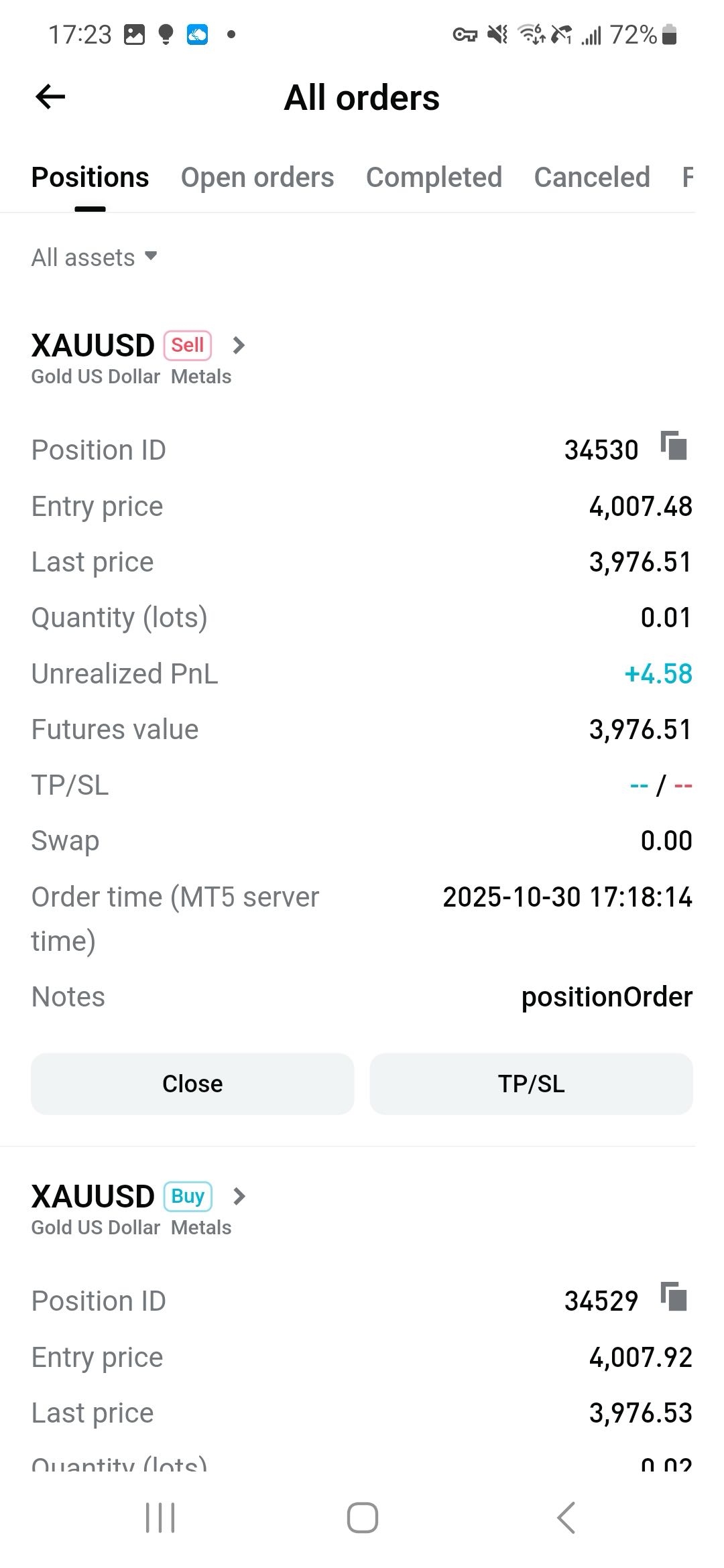
Step 5: Place and manage your trade
Execute a buy (long) or sell (short) order and monitor your position in real time. You can adjust or close your trade at any time based on market conditions.
CFDs vs Futures: Which One Fits You Better?
Choosing between gold CFDs and gold futures comes down to how you prefer to trade. Both give you exposure to gold prices, but the experience can feel very different depending on your setup, capital, and trading style.
For many traders, CFDs offer a more straightforward and flexible approach. Instead of dealing with contract expiries and fixed contract sizes, you can focus purely on price movements. On Bitget, this is further simplified by using USDT as margin and managing everything within a single account.
-
Easier to get started with no separate futures broker required
-
No expiry dates or contract rollovers to manage
-
Trade directly with USDT in one platform
-
Better suited for short-term and active trading
-
More flexible position sizing compared to fixed futures contracts
Futures, on the other hand, are better suited for structured trading environments, especially for larger positions or hedging strategies. If you prefer flexibility and simplicity, CFDs are often the better fit.
Final Thoughts
Gold futures are not available on Bitget, as these contracts are typically traded on regulated exchanges with fixed structures and expiry dates. Instead of following that traditional model, Bitget offers a more flexible alternative through gold CFDs, allowing users to trade gold price movements without dealing with contract rollover or delivery requirements.
For many traders, especially those already active in crypto, this approach feels more intuitive. You can use USDT as margin, open positions without worrying about expiry, and manage everything within a single account. No need to switch platforms. The result is a smoother trading experience, where accessing gold markets becomes simpler, faster, and easier to fit into a broader strategy.
Disclaimer: The opinions expressed in this article are for informational purposes only. This article does not constitute an endorsement of any of the products and services discussed or investment, financial, or trading advice. Qualified professionals should be consulted prior to making financial decisions.
Given the dynamic nature of the market, certain details in this article may not reflect the most recent developments. For inquiries or feedback, please contact us at geo@bitget.com.