
Babylon unveils trustless BTC vaults for DeFi and staking

Babylon Labs has introduced a breakthrough in decentralized finance with the launch of trustless Bitcoin vaults.
- Babylon launched trustless Bitcoin vaults on Aug. 6, enabling native BTC to interact with DeFi without bridges or custodians.
- Vaults use BitVM3 and zero-knowledge proofs to enforce smart contract logic while BTC remains on-chain.
- The feature expands BTC’s role in DeFi and complements Babylon’s Bitcoin staking ecosystem.
Announced via an Aug. 6 post on X, these vaults allow native Bitcoin ( BTC ) to be used in decentralized finance applications, such as lending, stablecoin minting, and perpetual futures, without wrapping, bridging, or relying on custodians.
Bitcoin in DeFi without leaving Bitcoin
The vaults function by locking Bitcoin UTXOs under preset cryptographic rules. To unlock BTC, users must submit zero-knowledge proofs that validate smart contract logic without exposing private data. Babylon leverages BitVM3, a Bitcoin-native proof verification framework using ZKPs and garbled circuits, to ensure BTC never leaves the Bitcoin blockchain.
This design enforces DeFi logic, including liquidations and redemptions, without the need for intermediaries, allowing native Bitcoin to function as collateral on Ethereum ( ETH ), Cosmos ( ATOM ), and other chains.
A borrower might, for example, receive $50,000 in Ethereum stablecoins and lock Bitcoin in a vault. A liquidator can claim the collateral by submitting a legitimate ZKP in the event that the value of Bitcoin declines.
Use cases for the vaults include lending, stablecoin issuance, perpetual decentralized exchange collateral, and liquid staking, all while BTC remains self-custodied.
Powering BTCFi and expanding Babylon’s vision
The trustless vaults are part of Babylon’s broader push to integrate Bitcoin into decentralized economies. DeFi uses less than 1% of the roughly $1.8 trillion market capitalization of Bitcoin as of August 2025. Babylon’s solution, which supports native yield generation and aligns with Bitcoin’s philosophy, can unlock this capital.
Additionally, the vaults are connected to Babylon’s $5 billion Bitcoin staking protocol, which went live on mainnet in Aug. 2024. Babylon positions Bitcoin as a core asset for securing proof-of-stake networks by fusing vault functionality with staking rewards, such as BABY tokens.
Future developments in Babylon’s roadmap include multi-staking support, EVM integration, and a cross-chain Bitcoin liquidity layer expected in Q1 2026.
Disclaimer: The content of this article solely reflects the author's opinion and does not represent the platform in any capacity. This article is not intended to serve as a reference for making investment decisions.
You may also like
Five charts to help you understand: Where does the market go after each policy storm?
After this regulatory crackdown, is it a harbinger of an impending downturn, or the beginning of a new cycle where all negative news has been fully priced in? Let’s examine the trajectory after the storm through five key policy milestones.

Mars Morning News | The crypto market rebounds across the board, Bitcoin rises above $94,500; The "CLARITY Act" draft is expected to be released this week
The crypto market has fully rebounded, with bitcoin surpassing $94,500 and US crypto-related stocks rising across the board. The US Congress is advancing the CLARITY Act to regulate cryptocurrencies. The SEC chairman stated that many ICOs are not securities transactions. Whales are holding a large number of profitable ETH long positions. Summary generated by Mars AI. The accuracy and completeness of the content generated by the Mars AI model is still being iteratively updated.

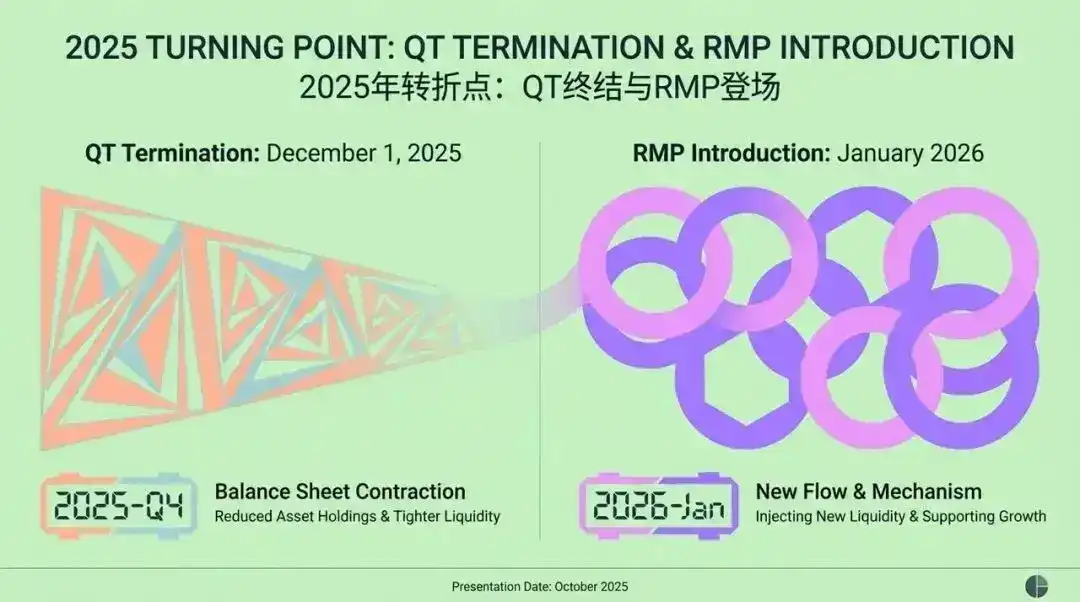
Federal Reserve’s Major Shift: From QT to RMP, How Will the Market Transform by 2026?
The article discusses the background, mechanism, and impact on financial markets of the Federal Reserve's introduction of the Reserve Management Purchases (RMP) strategy after ending Quantitative Tightening (QT) in 2025. RMP is regarded as a technical operation aimed at maintaining liquidity in the financial system, but the market interprets it as a covert easing policy. The article analyzes RMP's potential effects on risk assets, the regulatory framework, and fiscal policy, and provides strategic recommendations for institutional investors. Summary generated by Mars AI This summary was generated by the Mars AI model, and the accuracy and completeness of its content are still in the process of iterative improvement.
Rate Hike in Japan: Will Bitcoin Resist Better Than Expected?

Trending news
MoreCrypto prices
More





