
California’s $500 Billion Pension Fund Split Over Bitcoin Exposure

California state pension fund CalPERS recorded mixed reactions from board candidates on crypto investments during Wednesday's forum, despite the system holding shares in Bitcoin treasury company Strategy, previously known as MicroStrategy.
The six candidates vying for seats on the California Public Employees' Retirement System Board of Administration expressed divided views when asked whether Bitcoin should be included in the $506 billion fund's portfolio.
CalPERS holds 410,596 Strategy shares valued at $165.9 million according to its Q2 13F filing, giving the pension system substantial indirect Bitcoin exposure through the company.
The forum opened with tensions as incumbent David Miller attacked challenger Dominick Bei during opening statements, saying "cryptocurrency should not have a seat on our board and never should," while referencing Bei's Bitcoin education nonprofit, Proof of Workforce.
CalPERS "owns shares in the largest bitcoin holding company in the world, MicroStrategy," Bei rebuked, questioning why the fund maintains substantial indirect exposure while candidates oppose direct investment.
Michael Saylor’s Strategy holds over 636,505 BTC worth over $70 billion, making it a popular vehicle for institutional crypto exposure without direct purchases.
Miller attempted to reconcile this apparent contradiction, saying "investing in a business that's working with Bitcoin transactions is a very different game than direct investment in buying Bitcoin."
Kadan Stadelmann, Chief Technology Officer at Komodo Platform, told Decrypt that "Bitcoin is certainly not too volatile for pensions, especially in light of inflation." The market has "clearly chosen Bitcoin as a store of value," he said.
He noted CalPERS is "basically too scared to invest directly into Bitcoin" and has "a duty to hold Bitcoin in self-custody so the public is actually holding bitcoins, and not promises from middlemen."
Meanwhile, challenger Steve Mermell declared "Hell no!" when asked about crypto's place in CalPERS.
He compared crypto to past financial disasters such as Orange County bankruptcy and Enron, calling it "opaque" and saying "it has no place in a pension system."
Challenger Troy Johnson took a more nuanced stance, acknowledging concerns while remaining open to future consideration.
"I'm very wary of hyper-sensitive investments like crypto," he said, but added he wouldn't "close the door entirely on it."
The split extended to how candidates viewed blockchain technology versus direct crypto investment.
Incumbent Jose Luis Pacheco rejected the possibility of Bitcoin as an investment while calling blockchain "an emerging technology with promise," suggesting CalPERS "should study this opportunity through partnerships and research."
Meanwhile, other state pension funds have increased their crypto exposure, with Michigan's state pension tripling its Bitcoin ETF holdings to $11.4 million in Q2, Wisconsin's Investment Board holding over $387 million in Bitcoin ETF shares, and Florida's retirement system maintaining 240,026 Strategy shares worth $97 million.
The November election will determine whether CalPERS continues its current approach of indirect crypto exposure or potentially opens discussions about direct digital asset investment.
Disclaimer: The content of this article solely reflects the author's opinion and does not represent the platform in any capacity. This article is not intended to serve as a reference for making investment decisions.
You may also like
Economic Truth: AI Drives Growth Alone, Cryptocurrency Becomes a Political Asset
The article analyzes the current economic situation, pointing out that AI is the main driver of GDP growth, while other sectors such as the labor market and household finances are in decline. Market dynamics have become detached from fundamentals, with AI capital expenditure being key to avoiding a recession. The widening wealth gap and energy supply are becoming bottlenecks for AI development. In the future, AI and cryptocurrencies may become the focus of policy adjustments. Summary generated by Mars AI This summary was generated by the Mars AI model, and its accuracy and completeness are still in the process of iterative improvement.

AI unicorn Anthropic accelerates IPO push, taking on OpenAI head-to-head?
Anthropic is accelerating its expansion into the capital markets, initiating collaboration with top law firms, which is seen as an important signal toward going public. The company's valuation is approaching 300 billions USD, and investors are betting it could go public before OpenAI.
Did top universities also get burned? Harvard invested $500 million heavily in bitcoin right before the major plunge
Harvard University's endowment fund significantly increased its holdings in bitcoin ETFs to nearly 500 million USD in the previous quarter. However, in the current quarter, the price of bitcoin subsequently dropped by more than 20%, exposing the fund to significant timing risk.

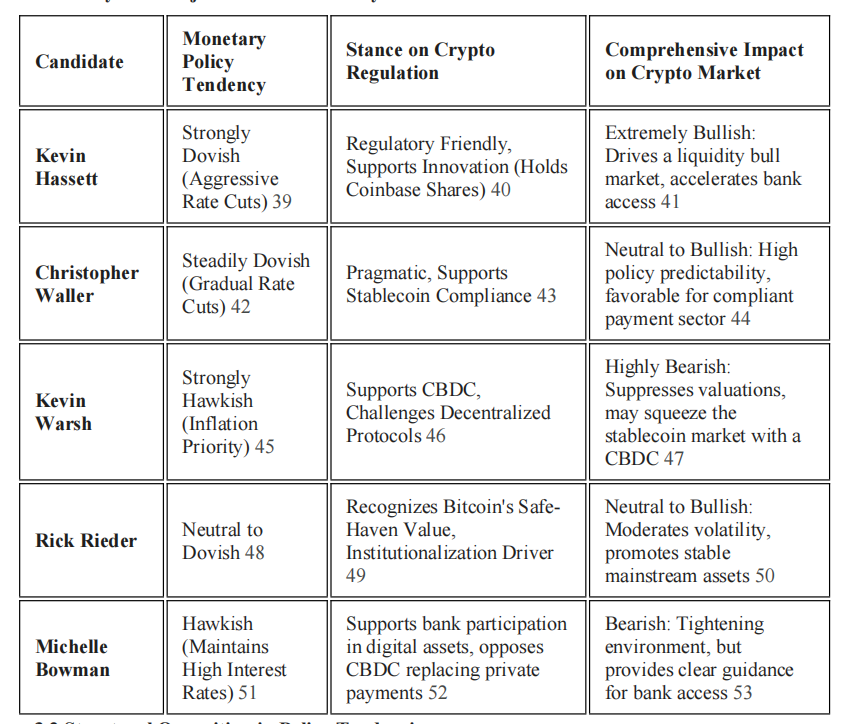
The Structural Impact of the Next Federal Reserve Chair on the Cryptocurrency Industry: Policy Shifts and Regulatory Reshaping
The change of the next Federal Reserve Chair is a decisive factor in reshaping the future macro environment of the cryptocurrency industry.
Trending news
MoreCrypto prices
More






