
Ethereum is poised to replace Wall Street infrastructure but remains undervalued

Ethereum represents an emerging and fundamentally new type of public infrastructure, almost like the internet in the Web1 era, and constitutes an investment category.
Ethereum represents an "emerging, fundamentally new type of public infrastructure, almost like the internet in the Web1 era, and is an investment category."
Written by: Blockchain Knight
Investors have yet to fully recognize Ethereum’s (ETH) potential to replace Wall Street’s outdated settlement infrastructure, a point discussed by SharpLink CEO Joseph Chalom and EigenLayer founder Sreeram Kannan on the September 15 episode of the Milk Road podcast.
Chalom, who previously led BlackRock’s digital asset initiatives, outlined the fundamental frictions present in traditional finance.
The current system requires settlement cycles that take several days, introduces counterparty risk, and forces market participants to post collateral for overnight financing, while intermediaries profit from these inefficiencies.
He stated: "The current ecosystem is quite inaccessible and full of friction, with intermediaries collecting rent within it."
The SharpLink CEO then contrasted this situation with Ethereum’s atomic settlement capabilities, which can execute trades within seconds and without counterparty risk.
He believes Ethereum represents "an emerging, fundamentally new type of public infrastructure, almost like the internet in the Web1 era, and is an investment category." He positions the blockchain as a universal settlement layer for financial and economic systems.
Ethereum’s programmability enables portfolio rebalancing via smart contracts, dividend distribution in minutes instead of days, and composable trading, allowing any asset to be traded with any other asset at any time.
Chalom described these capabilities as the "winning formula" for institutions seeking to surpass the efficiency of current systems.
Kannan extended this vision beyond finance, describing Ethereum as a "platform for verifiable trust," resolving counterparty risk through cryptographic verification rather than institutional guarantees.
He noted that EigenLayer enables Ethereum to support networks beyond its base protocol, explaining: "Verifiability is the cornerstone of society itself."
He cited examples such as AI agent verification, prediction markets like Polymarket, and autonomous systems that require trust without human supervision.
Both executives emphasized that institutional investors are undergoing a shift from education to acceptance. Chalom pointed out that while bitcoin requires an explanation of the digital gold concept, Ethereum requires a deeper explanation of infrastructure, which takes more time but leads to stronger conviction once understood.
The launch of the Ethereum ETF in July 2024 marks a turning point in acceptance, with financial management firms currently accumulating approximately $14-15 billions worth of ETH holdings.
Chalom predicts that as institutional participants recognize Ethereum’s productive asset characteristics through staking and DeFi yields, its accumulation rate will surpass that of MicroStrategy’s accumulation of bitcoin.
Disclaimer: The content of this article solely reflects the author's opinion and does not represent the platform in any capacity. This article is not intended to serve as a reference for making investment decisions.
You may also like
Economic Truth: AI Drives Growth Alone, Cryptocurrency Becomes a Political Asset
The article analyzes the current economic situation, pointing out that AI is the main driver of GDP growth, while other sectors such as the labor market and household finances are in decline. Market dynamics have become detached from fundamentals, with AI capital expenditure being key to avoiding a recession. The widening wealth gap and energy supply are becoming bottlenecks for AI development. In the future, AI and cryptocurrencies may become the focus of policy adjustments. Summary generated by Mars AI This summary was generated by the Mars AI model, and its accuracy and completeness are still in the process of iterative improvement.

AI unicorn Anthropic accelerates IPO push, taking on OpenAI head-to-head?
Anthropic is accelerating its expansion into the capital markets, initiating collaboration with top law firms, which is seen as an important signal toward going public. The company's valuation is approaching 300 billions USD, and investors are betting it could go public before OpenAI.
Did top universities also get burned? Harvard invested $500 million heavily in bitcoin right before the major plunge
Harvard University's endowment fund significantly increased its holdings in bitcoin ETFs to nearly 500 million USD in the previous quarter. However, in the current quarter, the price of bitcoin subsequently dropped by more than 20%, exposing the fund to significant timing risk.

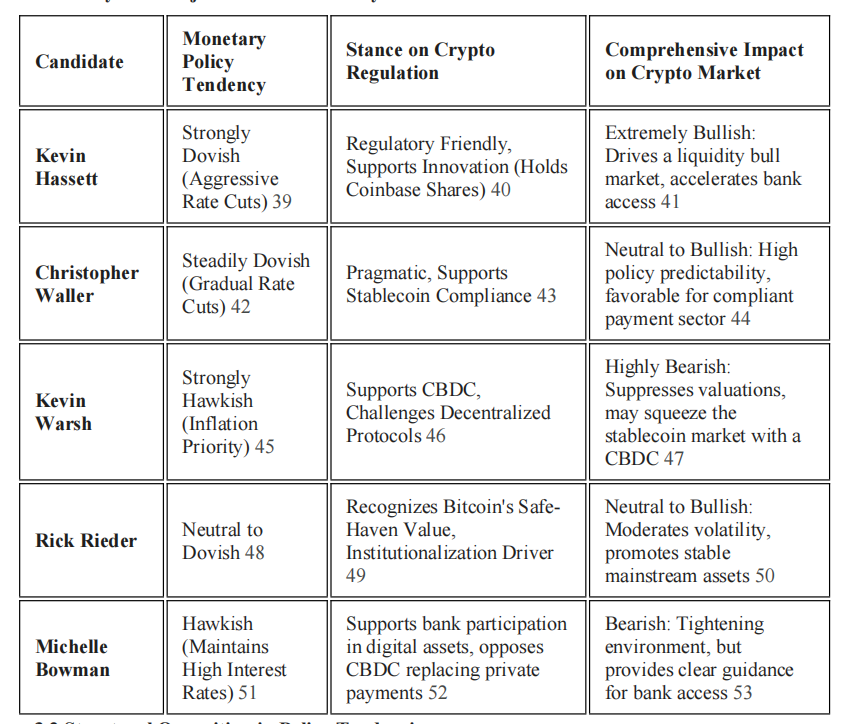
The Structural Impact of the Next Federal Reserve Chair on the Cryptocurrency Industry: Policy Shifts and Regulatory Reshaping
The change of the next Federal Reserve Chair is a decisive factor in reshaping the future macro environment of the cryptocurrency industry.
Trending news
MoreCrypto prices
More






