
Why did the epic crash happen, and when is the bottom?

Chainfeeds Guide:
Why was this liquidation so intense? Has the market bottomed out? BlockBeats has compiled the views of several market traders and well-known KOLs, analyzing this epic liquidation from the perspectives of macro environment, liquidity, and market sentiment, for reference only.
Source:
BlockBeats
Opinions:
Mindao: On October 11, Mindao, founder of the DeFi protocol dForce, posted on social media that this crash is similar to the Luna collapse in that both occurred when major trading platforms began accepting illegal stablecoins as high LTV collateral, causing risks to penetrate across platforms. At that time it was UST, today it is USDe. The combination of "stability" and high collateralization rate misled most people. The worst combination when introducing illegal stable assets as collateral is using market prices for price feeds while allowing high collateralization rates; coupled with the fact that CEXs themselves do not have a fully open arbitrage environment, arbitrage efficiency is low and risks are further amplified. LSD-type assets face the same problem. These assets are essentially volatile assets disguised as "stable".
Haotian: To be honest, this 1011 black swan event made me, an originally optimistic industry observer, feel a hint of despair. I thought I understood the current "Three Kingdoms" situation in the crypto industry, thinking that while the giants fight, retail investors could follow and get a piece of the action. But after this bloodbath, peeling back the underlying logic, I realized that's not the case. Frankly, I used to think the tech side was innovating, exchanges were driving traffic, and Wall Street was deploying capital, each playing their own game. As retail investors, we just needed to catch the wave during tech innovation, hop on the hot topics, and rush in when capital enters, and we could always get a share. But after experiencing this 1011 bloodbath, I suddenly realized that these three parties might not be competing in an orderly way at all, but are instead ultimately harvesting all the liquidity in the market?
Kyle: Judging by current market sentiment, the last time we saw something like this was during the FTX or Celsius collapse. This crash is basically a "cycle-ending event," but this time BTC and ETH remained rock solid. The evolution of the crypto industry complex is truly astonishing, but altcoins are clearly repeating the same tragedy—despite my repeated warnings over the past few months, I didn't expect it to be this brutal. In short, this is not the "best" time to bottom fish, but it is definitely the time when you "should" be bottom fishing. Extreme panic has been released, and the market is building a bottom, though there may still be room to fall. In the bigger picture, we are definitely closer to the bottom than the top. Asset selection is crucial at this moment; many projects may never recover.
Disclaimer: The content of this article solely reflects the author's opinion and does not represent the platform in any capacity. This article is not intended to serve as a reference for making investment decisions.
You may also like
Economic Truth: AI Drives Growth Alone, Cryptocurrency Becomes a Political Asset
The article analyzes the current economic situation, pointing out that AI is the main driver of GDP growth, while other sectors such as the labor market and household finances are in decline. Market dynamics have become detached from fundamentals, with AI capital expenditure being key to avoiding a recession. The widening wealth gap and energy supply are becoming bottlenecks for AI development. In the future, AI and cryptocurrencies may become the focus of policy adjustments. Summary generated by Mars AI This summary was generated by the Mars AI model, and its accuracy and completeness are still in the process of iterative improvement.

AI unicorn Anthropic accelerates IPO push, taking on OpenAI head-to-head?
Anthropic is accelerating its expansion into the capital markets, initiating collaboration with top law firms, which is seen as an important signal toward going public. The company's valuation is approaching 300 billions USD, and investors are betting it could go public before OpenAI.
Did top universities also get burned? Harvard invested $500 million heavily in bitcoin right before the major plunge
Harvard University's endowment fund significantly increased its holdings in bitcoin ETFs to nearly 500 million USD in the previous quarter. However, in the current quarter, the price of bitcoin subsequently dropped by more than 20%, exposing the fund to significant timing risk.

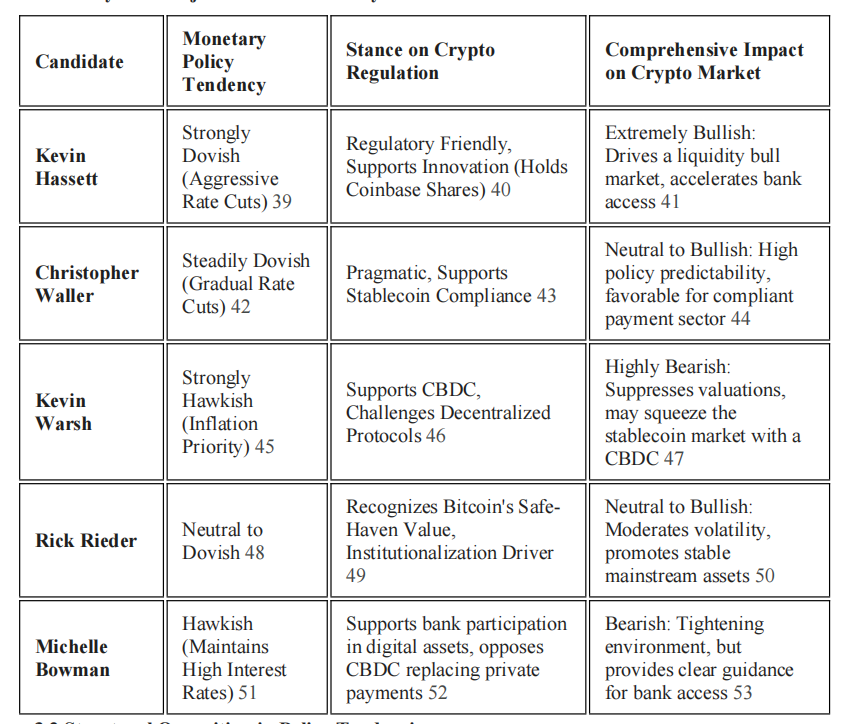
The Structural Impact of the Next Federal Reserve Chair on the Cryptocurrency Industry: Policy Shifts and Regulatory Reshaping
The change of the next Federal Reserve Chair is a decisive factor in reshaping the future macro environment of the cryptocurrency industry.
Trending news
MoreCrypto prices
More






