
'Get these done on time:' Rep. Steil presses regulators on stablecoin law ahead of July 2026 deadline

Quick Take The Guiding and Establishing Innovation for U.S. Stablecoins Act, or GENIUS, was passed into law over the summer. Next, agencies need to write rules to implement the new law. “I just want to make sure that we get these done on time,” Rep. Bryan Steil said during Tuesday’s hearing.
After passing a major stablecoin bill into law, federal agencies are charging forward to write the rules, intensifying Washington’s latest effort to put rules in place for the digital asset market.
On Tuesday, during a House Financial Services Committee hearing, Rep. Bryan Steil, R-Wis., asked regulators testifying for updates on their progress in implementing the Guiding and Establishing Innovation for U.S. Stablecoins Act, or GENIUS, which was passed into law over the summer. Language throughout the bill says rules have to be put in place a year after GENIUS becomes law, which was passed on July 18.
"I just want to make sure that we get these done on time," Steil said during the hearing. "I think that's just really important. We've seen instances across years in this committee where sometimes bills are passed, [but] we don't see the regulations come out on time."
The hearing was focused on regulatory developments at the Federal Reserve, Office of the Comptroller of the Currency, the National Credit Union Administration, and the Federal Deposit Insurance Corporation. Ahead of the hearing, FDIC Acting Chair Travis Hill said his agency plans to propose rules this month to establish a framework for implementing the GENIUS Act.
The bill would require stablecoins to be fully backed by U.S. dollars or similarly liquid assets, mandate annual audits for issuers with a market capitalization of more than $50 billion, and establish guidelines for foreign issuance. Since becoming law, agencies such as the Treasury Department have been working on rules and have reached out for public comment on how rules should be applied.
During the hearing, NCUA Chairman Kyle Hauptman said sights were set for the credit union agency's first rulemaking related to GENIUS.
"You gave us the deadline of July 18," Hauptman told Steil. "I believe I and my fellow regulators are committed to doing that. My guess is the first rulemaking you'll see will be the one on how to apply to be an issuer."
Work to implement GENIUS comes as lawmakers are working to pass a larger, more comprehensive bill to regulate the crypto industry overall. The House passed its bill, nicknamed Clarity, over the summer, and the Senate is working on its own version. During discussions for GENIUS and for the larger crypto bill, many Democrats laid out concerns over President Donald Trump's crypto interests and how much he could be profiting from those ventures, including the World Liberty Financial DeFi and stablecoin project, which lists Trump and his three sons as co-founders.
Top Democrat of the House Financial Services Committee Maxine Waters, D-Calif., asked agency heads testifying on Tuesday whether the president should be blocked from "owning any business where he has a role in regulating them," such as a crypto business or a bank.
"I think this represents a massive conflict of interest, and that Congress should act to ensure we have rules set and enforced by those who will not be personally enriched by their public work," Waters said.
Disclaimer: The content of this article solely reflects the author's opinion and does not represent the platform in any capacity. This article is not intended to serve as a reference for making investment decisions.
You may also like
Economic Truth: AI Drives Growth Alone, Cryptocurrency Becomes a Political Asset
The article analyzes the current economic situation, pointing out that AI is the main driver of GDP growth, while other sectors such as the labor market and household finances are in decline. Market dynamics have become detached from fundamentals, with AI capital expenditure being key to avoiding a recession. The widening wealth gap and energy supply are becoming bottlenecks for AI development. In the future, AI and cryptocurrencies may become the focus of policy adjustments. Summary generated by Mars AI This summary was generated by the Mars AI model, and its accuracy and completeness are still in the process of iterative improvement.

AI unicorn Anthropic accelerates IPO push, taking on OpenAI head-to-head?
Anthropic is accelerating its expansion into the capital markets, initiating collaboration with top law firms, which is seen as an important signal toward going public. The company's valuation is approaching 300 billions USD, and investors are betting it could go public before OpenAI.
Did top universities also get burned? Harvard invested $500 million heavily in bitcoin right before the major plunge
Harvard University's endowment fund significantly increased its holdings in bitcoin ETFs to nearly 500 million USD in the previous quarter. However, in the current quarter, the price of bitcoin subsequently dropped by more than 20%, exposing the fund to significant timing risk.

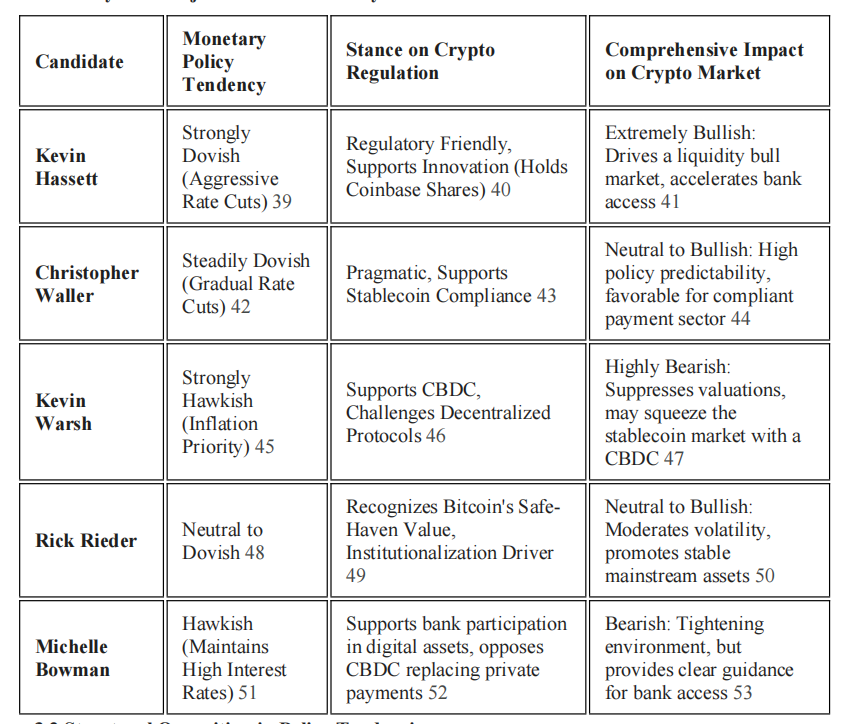
The Structural Impact of the Next Federal Reserve Chair on the Cryptocurrency Industry: Policy Shifts and Regulatory Reshaping
The change of the next Federal Reserve Chair is a decisive factor in reshaping the future macro environment of the cryptocurrency industry.
Trending news
MoreCrypto prices
More






