
News
Stay up to date on the latest crypto trends with our expert, in-depth coverage.


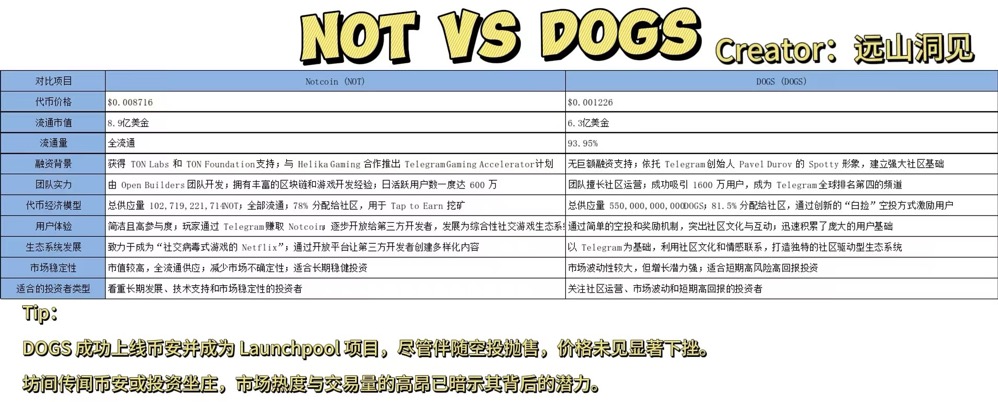


What is the progress of DePIN on L1 and L2
白泽研究院·2024/08/28 06:01


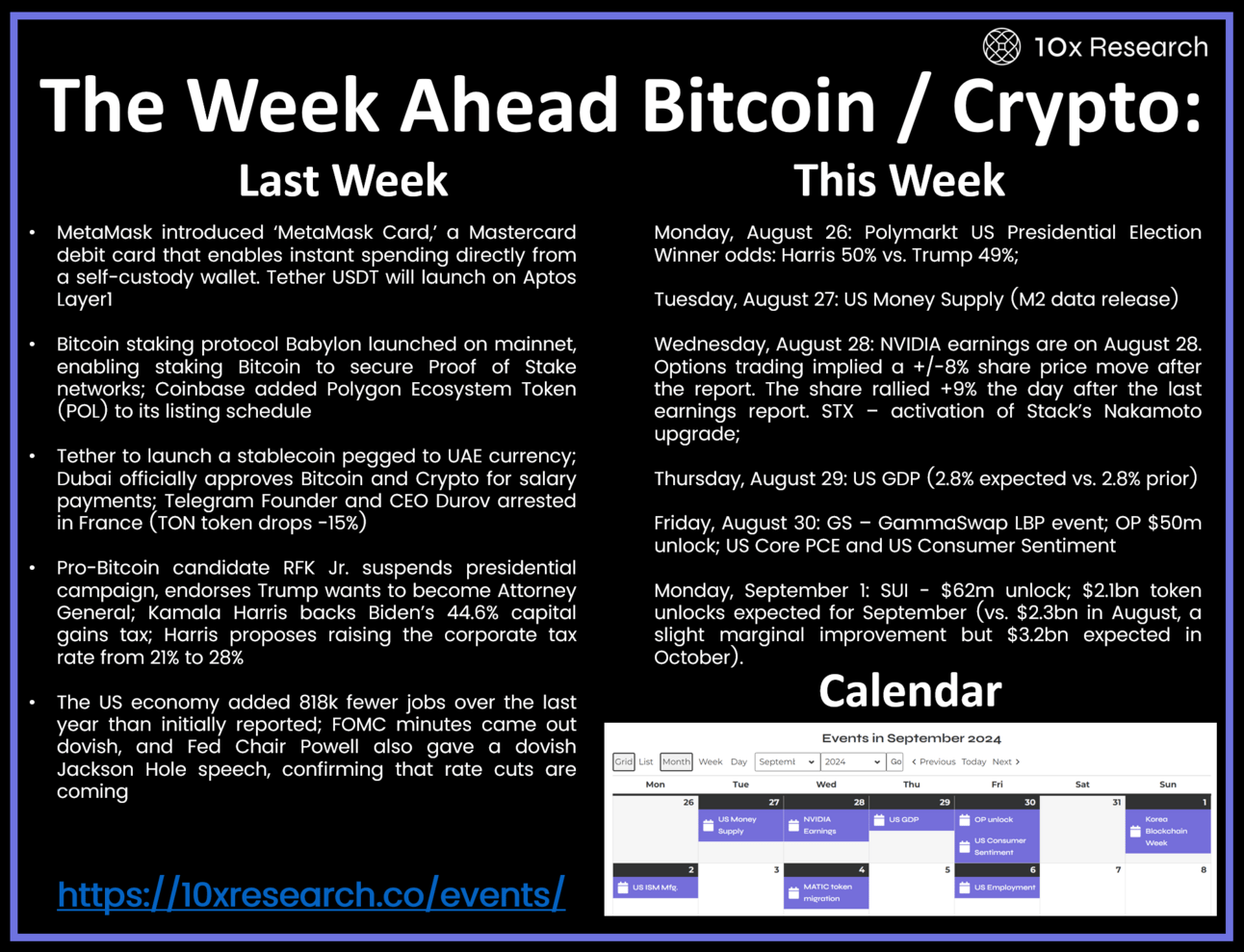
The Week Ahead Bitcoin / Crypto
Institutional Crypto Research Authored by Experts
10xResearch·2024/08/26 02:43



Flash
06:06
Matrixport: The Current Downturn May Be More of a Tactical PullbackAccording to Odaily, Matrixport has released a market research report stating that President Trump's latest round of tariff threats should be understood not so much as a trade policy, but rather as a strategic tool to extract negotiation concessions by creating volatility. The market has gradually figured out this pattern: news shocks first trigger price repricing, and when liquidity tightens, sell-offs are amplified; once negotiation signals emerge, prices often stabilize quickly and trading returns to a relatively orderly state. The correlation between bitcoin and global liquidity continues to strengthen, making it the most sensitive pricing asset in this cycle, acting more as a high-beta proxy for global liquidity rather than a traditional macro hedge tool. Judging from current performance, this round of volatility appears more like a repricing at the trading level due to external disturbances, rather than a structural weakening of crypto asset fundamentals. On the contrary, the market repeatedly presents volatility windows that can be captured, allowing disciplined investors to benefit from these opportunities. Meanwhile, other risk assets remain relatively resilient, and the market's marginal response to tough statements is also becoming muted. Therefore, this round of decline is likely more of a tactical pullback; position management should not be interpreted solely from short-term news, but should also consider changes in pricing and liquidity structure. Implied volatility has not risen significantly, which also prompts reflection: is bitcoin's weight as a "risk sentiment barometer" declining?
06:06
SEALCOIN launches the world’s first space-based machine economy platformOn January 23, according to official sources, SEALCOIN, a subsidiary of the Nasdaq-listed company WISeKey, recently announced the official launch of its hardware-based machine economy trading platform. This platform enables AI agents, IoT devices, and satellites to autonomously authenticate identities and exchange value, marking the entry of the decentralized economy into the "space era." SEALCOIN is not just a conceptual project; leveraging the WISeSat low Earth orbit (LEO) satellite constellation, the platform has achieved a world first—initiating and completing blockchain transaction settlements directly in space. Through orbital infrastructure deployed by leading aerospace launch services, including SpaceX, SEALCOIN can support real-time economic activities even in environments lacking terrestrial communication networks. Reportedly, QAIT is the native utility and payment token within the SEALCOIN ecosystem, primarily used for machine authentication, machine-to-machine (M2M) data exchange, and autonomous service settlements. As semiconductors, space technology, and artificial intelligence accelerate their integration, SEALCOIN and its QAIT token are seen as representatives of the next generation of infrastructure-driven crypto networks. In addition, to address potential security challenges posed by quantum computing, SEALCOIN has introduced post-quantum cryptography (PQC) solutions. This "quantum-ready" security framework can effectively resist future decryption risks, which holds significant strategic importance for infrastructure deployed in space and critical industrial sectors.
06:04
Matrixport: The correlation between Bitcoin and global liquidity continues to strengthen, with recurring and tradable volatility windows appearing in the market.Foresight News reported that Matrixport tweeted, "President Trump's latest round of tariff threats should be understood less as trade policy and more as a strategic tool to extract concessions through creating volatility. The market has gradually figured out this rhythm: news shocks first trigger price repricing, and when liquidity tightens, sell-offs are amplified; once negotiation signals appear, prices tend to stabilize quickly and trading returns to a relatively orderly state." The correlation between bitcoin and global liquidity continues to strengthen, and it has gradually become the most sensitive pricing asset in this cycle, acting more like a high-beta proxy for global liquidity rather than a traditional macro hedging tool. Judging from the current performance, this round of volatility looks more like a repricing at the trading level caused by external disturbances, rather than a structural weakening of the fundamentals of crypto assets. On the contrary, the market repeatedly presents volatility windows that can be captured, and disciplined investors can benefit from these opportunities. Meanwhile, other risk assets remain relatively resilient, and the market's marginal response to tough statements is also diminishing. Therefore, this round of decline may be more of a tactical correction; the implications for positions should not be interpreted solely from short-term news, but should also consider changes in pricing and liquidity structure. Implied volatility has not risen significantly, which also raises the question: is bitcoin's weight as a 'risk sentiment barometer' declining?"
News