
BSV Financier Behind Wirecard? New Probe Revives $2.2 Billion Mystery Around Calvin Ayre

Calvin Ayre, billionaire gambling mogul and main financier of Bitcoin SV (BSV), has been identified as the “single customer” behind Wirecard’s fabricated €1.9 billion (or $2.19 billion) Asian payment network. Investigators traced hundreds of millions of euros through complex shell companies across Prague, Montenegro, Antigua, Manila, and Spain, each tied to Ayre’s gambling operations. The
Calvin Ayre, billionaire gambling mogul and main financier of Bitcoin SV (BSV), has been identified as the “single customer” behind Wirecard’s fabricated €1.9 billion (or $2.19 billion) Asian payment network.
Investigators traced hundreds of millions of euros through complex shell companies across Prague, Montenegro, Antigua, Manila, and Spain, each tied to Ayre’s gambling operations.
The Wirecard Collapse and Missing Billions
Wirecard AG collapsed in June 2020 after revealing that €1.9 billion reported in Asian trustee accounts did not exist.
The German payment processor’s implosion wiped out more than €20 billion ($23.1 billion) in investor value and sparked one of Europe’s largest financial fraud investigations.
CEO Markus Braun and other executives currently face trial in Munich on charges that include fraud, breach of trust, and market manipulation.
The company claimed substantial revenues from third-party acquiring (TPA) partnerships across Asia. Yet, auditors from Ernst & Young never verified these accounts.
When the truth emerged, Wirecard’s stock price crashed from over €100 ($115.76) to nearly zero within days. The scandal exposed regulatory failures and raised concerns about how such large-scale fraud could remain undetected for years.
Good morning from #Germany, whose reputation as a reliable business location has suffered. The collapse of Wirecard has damaged trust in the German regulatory framework. After the turmoil at VW, Bayer, or Deutsche Bank the Germans are seen as tricksters.
— Holger Zschaepitz (@Schuldensuehner) June 28, 2020
Fugitive ex-COO Jan Marsalek vanished in June 2020 and remains at large. German officials suspect he fled to Russia with help from intelligence operatives.
Investigations by Germany’s public broadcaster Bayerischer Rundfunk (BR) analyzed more than 500,000 financial transactions from Wirecard Bank’s 2018 data. Mapping intricate money flows that enabled the fraud, the investigation revealed:
- BR identified Ayre as the beneficial owner of funds channeled through Wirecard Bank’s TPA accounts.
- At least €135 million ($156 million) went to companies in Antigua, most sharing offices at 44 Church Street with former Antiguan finance minister Errol Cort, a close Ayre associate.
- Payments also reached Ayre-linked entities such as RGT in Spain (€6.6 million), Tyche Consulting in the Philippines (€8 million), and Pittodrie Finance in Hong Kong (€177 million).
A parallel investigation by The Rage reports these funds flowed from Ayre’s illegal gambling operations. These offshore structures allowed anonymous transfers of large sums while giving the impression of genuine TPA business.
Wirecard’s auditors accepted these movements as evidence of legitimate third-party revenue, further masking the firm’s nonexistent Asian operations.
Marsalek sent a letter to German courts in 2023 identifying a “Canadian customer” whose corporate structures were reorganized for TPA operations.
German media noted this description fit Ayre, a Canadian national who made his fortune in online gambling. Investigators also found transfers to Ayre under the alias “Calvin Wilson” in the Philippines.
Former nChain CEO Christian Ager-Hanssen publicly confirmed Ayre’s central role, stating that Ayre’s cash flows were essential to Wirecard’s fraudulent business.
“The truth is now undeniable: the man behind the money was Calvin,”Ager-Hanssen stated.
In his opinion, without its platform, Ayre’s empire would not have operated on such a scale.
Ayre’s Legal History and Gambling Operations
Ayre made his fortune through Bodog, an online gambling enterprise that generated over $100 million in sports betting revenues.
In February 2012, federal prosecutors in Baltimore indicted Ayre and three Canadians for illegal internet gambling and money laundering.
The charges described how funds flowed through Switzerland, England, Malta, and Canada before reaching US gamblers and media brokers.
US authorities seized $66 million from Bodog-linked accounts and took over the bodog.com domain. Ayre faced maximum sentences of five years for gambling charges and 20 years for money laundering. He asserted his innocence, shifted operations offshore, and fought the charges.
By July 2017, Ayre struck a plea agreement with prosecutors. Forbes reported that all felonies were dropped in exchange for a plea to a misdemeanour related to the transmission of gambling information.
Ayre received one year of probation and a $500,000 fine, while losing claim to the previously seized $66 million.
This plea deal ended a five-year legal ordeal, but Ayre continued to engage in controversial activities. His subsequent involvement with Wirecard allegedly provided a way to move gambling proceeds through legitimate-seeming payment channels, evading oversight in multiple jurisdictions.
The BSV Connection and Craig Wright Link
Ayre is the key financial backer of Bitcoin SV (BSV), a cryptocurrency he promotes alongside Craig Wright’s Satoshi Nakamoto claim.
Wright previously worked at Tyche Consulting in London, one of the Philippines-based entities that received millions through the Wirecard network. This link highlights the overlap between Ayre’s business interests and the BSV ecosystem.
Despite the Wirecard revelations, BSV’s price has remained stable, suggesting a muted immediate market response.
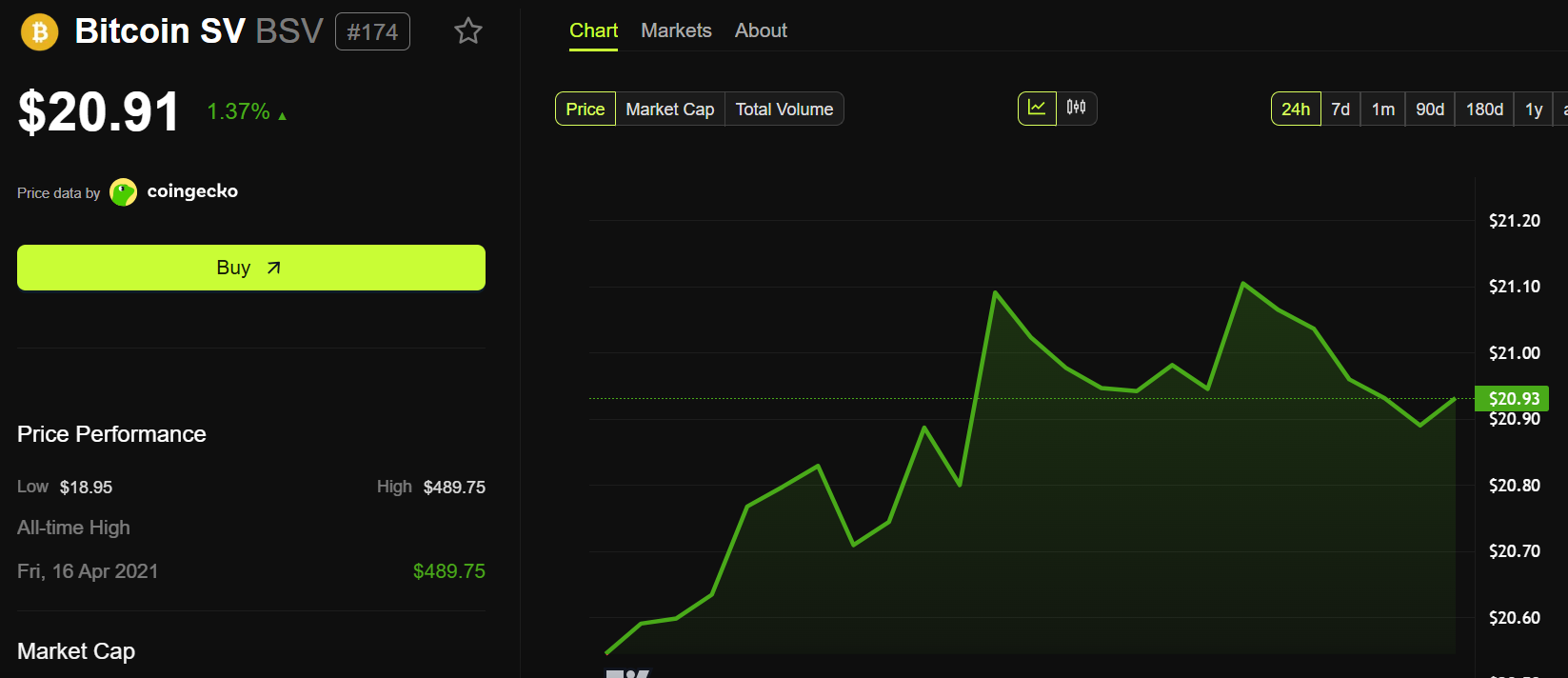 Bitcoin SV (BSV) Price Performance. Source:
BeInCrypto
Bitcoin SV (BSV) Price Performance. Source:
BeInCrypto
BSV is currently trading at $20.91, up by a modest 1.37% in the last 24 hours. The surge comes in tandem with the broader market strength on Wednesday as crypto tokens attempt a recovery.
Disclaimer: The content of this article solely reflects the author's opinion and does not represent the platform in any capacity. This article is not intended to serve as a reference for making investment decisions.
You may also like
The Astar 2.0 Infrastructure Initiative in Upstate New York: Leveraging Strategic Municipal Restructuring and Grant-Supported Projects to Drive Industrial Investment
- New York State's $50M CIGP and Astar 2.0 initiative are transforming Upstate infrastructure to attract high-value industrial investment. - Erie and Onondaga counties use grant-funded projects like roundabouts and street revitalization to enable housing and commercial growth. - The CIGP's 50% local cost-sharing requirement and housing-linked incentives create scalable partnerships for industrial development. - Synergy with programs like POWER UP ensures power-ready sites, positioning Upstate as a hub for

2026: The Year When RWAs Will Become the Standard for Global Payments

Massive 250 Million USDC Minted: What This Whale-Sized Move Means for Crypto
Assessing the Enduring Infrastructure and Development Potential of the Xerox Campus Located in Webster, NY
- Xerox Campus in Webster, NY, receives $9.8M FAST NY Grant to modernize infrastructure and revitalize a 300-acre brownfield site. - EPA-compliant remediation and municipal road realignments enhance accessibility, reducing industrial vacancy rates to 2% by 2026. - Projected $1B industrial hub includes a $650M dairy facility, creating 250 jobs and driving 10.1% annual residential price growth. - Strategic infrastructure upgrades position the campus as a nearshoring hub, offering investors resilient ROI thro

Trending news
MoreCrypto prices
More






