
Here’s Why Ethereum Emerges As The Global Capital Rails For On-Chain Finance

In the rapidly evolving landscape of digital finance, Ethereum is quickly establishing itself as the primary infrastructure for global on-chain capital markets. From tokenized bonds and money market funds to institutional liquidity rails, the world’s capital is beginning to migrate to an ecosystem where transactions are programmable, auditable, and borderless.
Why Is Ethereum Chosen As The Default Choice For Global Rails
The global capital markets are moving on-chain to Ethereum because it is credibly neutral. ETH has never experienced downtime, and it possesses the economic security necessary to support the world’s financial system. Investor and founder of GM42NFT, Captain GM, has stated that ETH is not fast enough to support trading because it wasn’t built for it.
However, the attempts to build a genuinely fast on-chain trading environment have consistently led teams to centralize significant parts of the trading system. This move creates security, reliability, and neutrality concerns for a system designed to be global. These compromises are in direct conflict with the very benefits that ETH provides, and make it the chosen blockchain for global finance.
This is where Raya Network steps in to solve these issues at the core. Raya is delivering a decentralized exchange (DEX) with institutional-grade execution speed and Ethereum-level security. It’s a platform that is as fast as TradFi and remains simultaneously secure, reliable, and credibly neutral as exactly DeFi should be. “Fast is easy, decentralized is hard, and it’s only Reya that does both,” Captain GM noted.
Analyst Alucard mentioned that the Raya network has become one of the few projects that genuinely solves the speed and security problem. The sub-millisecond execution speeds, trades are fully verified on ETH, and there’s no dependence on a single sequencer. This is an engineered combination designed for real progress in the space.
However, over 45% of the token supply is allocated to the community. Reya, combined with the ETH buyback mechanism, creates an ecosystem that’s aligned both technically and economically. They’re building something fast and secure, and because of that, Reya sits in a different category.
Why Reya’s Design Feels More Like A New Standard Than Another DEX
A trader and ambassador of Somnia, Onur, has also explained that his experience with Reya feels like a full redesign of on-chain execution rather than a small improvement. It offers sub-millisecond fills, unified margin, Ethereum security with ZK settlement, and smooth flow through EigenDA.
According to Onur, the peer-to-pool model keeps trades consistent, efficient, and free from bottlenecks or hidden edges. As a result of this approach, Reya isn’t just another venue anymore, and it’s actively becoming the new execution standard for DeFi.

Disclaimer: The content of this article solely reflects the author's opinion and does not represent the platform in any capacity. This article is not intended to serve as a reference for making investment decisions.
You may also like
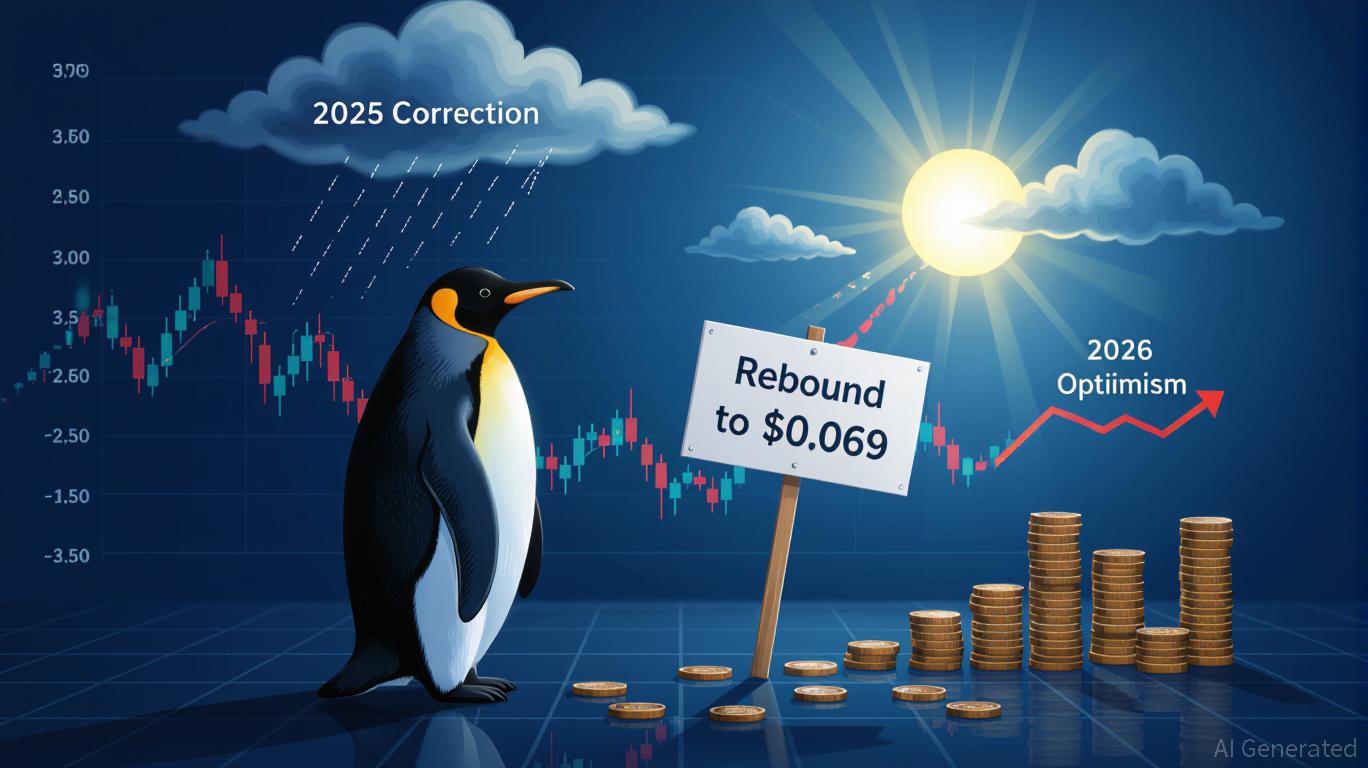
PENGU Price Forecast for 2026: Managing Fluctuations and Momentum from Key Catalysts After the 2025 Market Adjustment
- 2025 crypto market correction reshaped altcoin dynamics as Bitcoin/Ethereum declined amid macroeconomic uncertainty and regulatory pressures. - Pudgy Penguins (PENGU) saw sharp volatility post-correction, with technical indicators suggesting potential $0.069 rebound by 2026 if adoption metrics align. - Strategic partnerships with Bitso and cross-chain integrations, plus Kung Fu Panda NFT collaborations, aim to boost PENGU's liquidity and mainstream adoption. - Despite 12% early 2026 price drop, Pudgy Inv
ZEC Value Increases by 4.82% Following Recent Exchange Listing
- Zcash (ZEC) surged 4.82% in 24 hours after Bitget listed it for spot trading on Dec 3, 2025, boosting short-term liquidity and visibility. - Zcash’s zero-knowledge proof technology enables encrypted transactions while maintaining blockchain integrity, distinguishing it as a privacy-focused asset. - Bitget’s UEX model supports multi-chain access, aligning with Zcash’s goal to balance transparency and privacy, though recent 7-day and 1-month declines highlight market volatility risks.
Tether (USDT) Price Fluctuations and Market Response to PENGU Sell Indicators: Assessing Potential Risks and Opportunities within a Divided Stablecoin Landscape
- Tether (USDT) faced 2025 depegging to $0.90, exposing reserve management flaws and triggering S&P's "weak" stability rating. - Algorithmic PENGU USDT's 28.5% price drop and $66.6M team outflows highlighted systemic risks in opaque collateral structures. - Regulatory shifts (GENIUS Act, MiCA) accelerated migration to compliant stablecoins like USDC , now dominating 30% of on-chain transaction volume. - Market fragmentation reveals dual dynamics: algorithmic risks vs. institutional adoption opportunities i

DASH Increases by 2.44% as Significant Insider Selling and Purchase Indicators Emerge
- DASH rose 2.44% in 24 hours to $50.1, showing a 31.63% annual gain despite a 11.79% seven-day drop. - High-ranking insiders sold millions via 10b5-1 plans, including $9. 3M by Stanley Tang and $6.19M by Andy Fang. - Alfred Lin’s $100.2M purchase signaled confidence, contrasting with other sales and suggesting undervaluation. - Market reacted positively short-term, but analysts expect macroeconomic and business fundamentals to support DASH ahead.

Trending news
MoreCrypto prices
More






