
Markets and Businesses See Shifts Three Years After ChatGPT’s Introduction

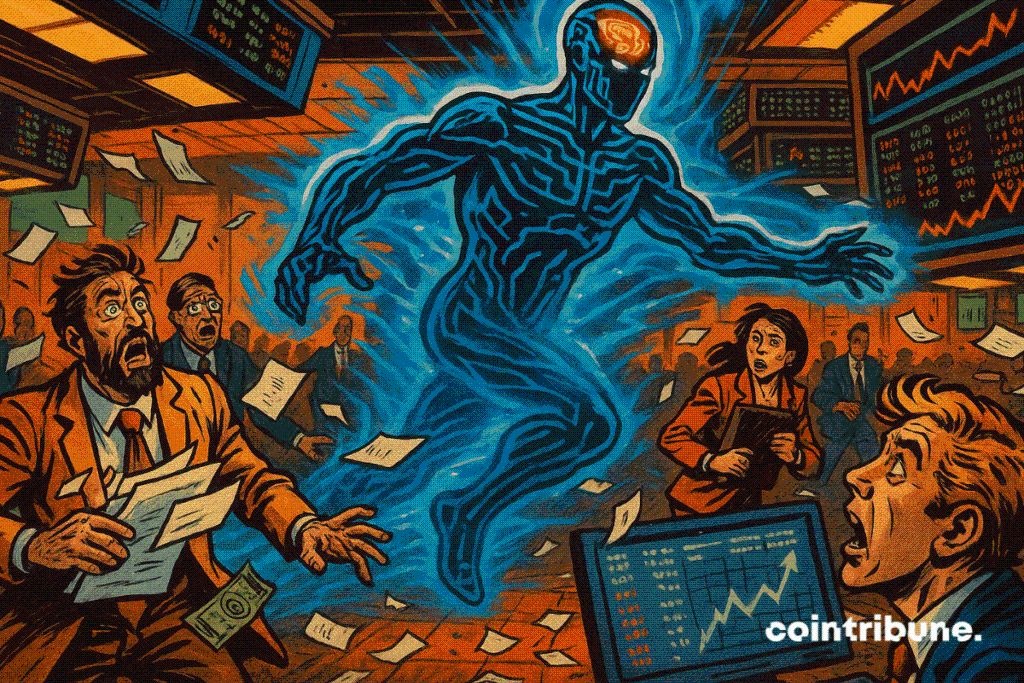
Three years after its debut, ChatGPT has emerged as a major force in shaping both technology and market trends. The product arrived at a time when investors were grappling with one of the toughest periods since the global financial crisis. Interest in artificial intelligence surged rapidly, sparking innovation and nudging market sentiment upward after years of muted growth.
In brief
- Following the launch of ChatGPT, markets and the broader economy have shown clear signs of improvement.
- The S&P 500 has surged more than 70% since the AI tool was introduced, reflecting renewed investor confidence.
- OpenAI’s valuation has soared from $14 billion eighteen months before the release to an estimated $500 billion.
Market Recovery Before and After ChatGPT
Prior to ChatGPT being unveiled on November 30, 2022, the S&P 500 had already hit the bottom of its post-COVID decline on October 12, falling 25% from the record high it had reached at the start of the year. Weeks after the AI tool was launched, the index had climbed back nearly 13% from that low, though it would not reach a new high until January 2024.
Following the launch of ChatGPT, other areas of the economy and business world also began to shift:
- Stock prices have climbed sharply, and large-scale infrastructure expansion has progressed across the country.
- At the same time, workplace processes have shifted, prompting companies to rethink how they operate.
- Staffing requirements have undergone major changes, reflecting the broader adjustments happening in businesses.
Shifts in the Economy and Job Market
The economic effects of these changes have not been evenly distributed. Wealth has increased for investors and business owners, while wage earners face rising challenges. This growing divide is visible in both corporate and consumer sectors, highlighting that gains from technological advances are not shared equally.
Despite these differences across the economy, both markets and overall conditions began to show signs of improvement. In the final months of 2022, inflation was still rising , and the Federal Reserve continued lifting interest rates to slow price growth. This created a difficult environment for the technology sector, which was hit especially hard at the time.
Several major technology companies experienced steep declines in the months leading up to ChatGPT’s introduction. Nvidia, Meta, and Palantir each lost nearly 70% of their value. Apple dropped around 30%, Alphabet slipped close to 40%, and Amazon saw its share price reduced by about half.
Following this period, the S&P 500 began to rise, eventually increasing more than 70% since ChatGPT’s debut. At the same time, job vacancies have declined by about 30%, highlighting a contrast between booming markets and a weakening job sector. This drop in job openings is linked to interest rate adjustments rather than AI, according to journalist Derek Thompson, with job vacancies already peaking several months before ChatGPT was released.
OpenAI’s Growth and ChatGPT’s Lasting Impact
Alongside this, OpenAI’s valuation has grown dramatically since launching ChatGPT. The company had been worth $14 billion eighteen months before the release. It is now estimated at $500 billion, placing it among the top privately held companies worldwide.
At its introduction, ChatGPT came with a brief announcement, saying, “We’ve trained a model called ChatGPT which interacts in a conversational way. The dialogue format makes it possible for ChatGPT to answer followup questions, admit its mistakes, challenge incorrect premises, and reject inappropriate requests. We are excited to introduce ChatGPT to get users’ feedback and learn about its strengths and weaknesses.”
The AI tool is now entering its fourth year, and the developments it set in motion continue to shape how progress in artificial intelligence is viewed.
Disclaimer: The content of this article solely reflects the author's opinion and does not represent the platform in any capacity. This article is not intended to serve as a reference for making investment decisions.
You may also like
Zcash Halving and Its Effects on the Dynamics of the Cryptocurrency Market
- Zcash's halving mechanism reduces block rewards every four years, enhancing scarcity and mimicking Bitcoin's deflationary model while offering optional privacy features. - Historical halvings (2020, 2024) triggered sharp price swings, with Zcash surging 1,172% post-2024's NU5 upgrade and institutional adoption via Grayscale Zcash Trust. - Next halving projected for late 2028 faces risks from regulatory scrutiny of shielded transactions and competition from privacy coins like Monero. - Long-term investors

Zcash (ZEC) Rallies as Interest in Privacy Coins Grows: Can the Momentum Last?
- Zcash (ZEC) surged 900% in Q4 2025, peaking at $702.04, driven by institutional adoption and regulatory clarity via the CLARITY/GENIUS Acts. - The November 2025 halving reduced block rewards by 50%, historically correlating with price surges, while shielded transactions now account for 20-25% of supply. - Zcash diverged from broader crypto weakness, gaining 35% weekly in November despite Bitcoin's decline, fueled by privacy-focused retail demand and $2B+ trading volume. - Upgrades like Zashi wallet and P

Why Dash (DASH) is Soaring in 2025: An In-Depth Strategic Review for Investors
- Dash (DASH) surged 150% in Nov 2025 amid regulatory tightening, leveraging ChainLocks/InstantSend upgrades to maintain 10% market share. - Its DAO governance model and real-world adoption in Latin America boosted institutional confidence despite privacy coin crackdowns. - While DASH futures open interest doubled, challenges remain in DeFi integration and liquidity due to exchange delistings. - Upcoming confidential transactions and retail partnerships position Dash as a compliance-focused privacy asset w

Bitcoin News Today: Has Bitcoin's Drop to $87K Signaled a Temporary Pullback or the Onset of a More Significant Decline?
- Bitcoin fell below $87,000 amid ETF outflows, whale selling, and macroeconomic pressures, marking its largest correction since spot ETFs launched. - Institutional withdrawals, including $151M in ETF outflows and BlackRock's $2.47B IBIT losses, reflect waning confidence and profit-taking amid tightening monetary policies. - On-chain data shows mixed signals: mid-sized wallets accumulate Bitcoin while whales offload, while regulatory uncertainties in the U.S. and EU amplify selling pressure. - Technical in
Trending news
MoreCrypto prices
More





