
Infrastructure Initiatives Fuel Real Estate Growth in Upstate New York: The Impact of Local Government Projects on Industrial Market Transformation
- Webster , NY leveraged a $9.8M FAST NY grant to transform a 300-acre Xerox brownfield into a high-tech industrial hub, slashing vacancy rates to 2%. - Infrastructure upgrades attracted food processing and semiconductor firms , with a $650M fairlife® dairy plant expected to create 250 jobs by 2025. - Strategic site readiness and pre-leased industrial space at the NEAT site reduced investor risk, driving 10.1% residential property value growth since 2023. - The model highlights underpenetrated markets' pot
Upstate New York’s Industrial Revival: How Infrastructure Is Fueling Growth
While America’s major coastal cities often capture the spotlight, a significant transformation is quietly taking place in Upstate New York. Towns such as Webster, located near Rochester, are strategically investing in infrastructure to unlock the potential of industrial real estate and draw new capital into previously overlooked markets. A standout example is Webster’s $9.8 million FAST NY grant, which demonstrates how targeted upgrades and municipal planning can spark economic renewal. By converting a 300-acre former Xerox brownfield into a thriving technology and manufacturing center, Webster has reduced industrial vacancies to just 2% and
driven a 10.1% increase in local home values since 2023. This article examines how these efforts are reshaping real estate investment strategies across the Northeast.
The FAST NY Grant: A Catalyst for Change
As part of a statewide push to accelerate infrastructure improvements, the FAST NY grant has been instrumental in Webster’s resurgence. Upgrades to roads, utilities, and electrical systems on the old Xerox site have turned an abandoned property into an attractive destination for advanced industries. Companies in food processing and semiconductor supply chains—sectors that require robust infrastructure and skilled workers—are now establishing operations in the area.
Strategic Property Investment in Emerging Shovel-Ready Markets reports that the construction of a $650 million fairlife® dairy facility, projected to add 250 jobs by 2025, further enhances the region’s appeal. These developments illustrate a positive cycle: improved infrastructure lowers business costs, which boosts demand for industrial space and labor, ultimately stimulating broader economic activity.
Site Readiness: The Key to Attracting Investment
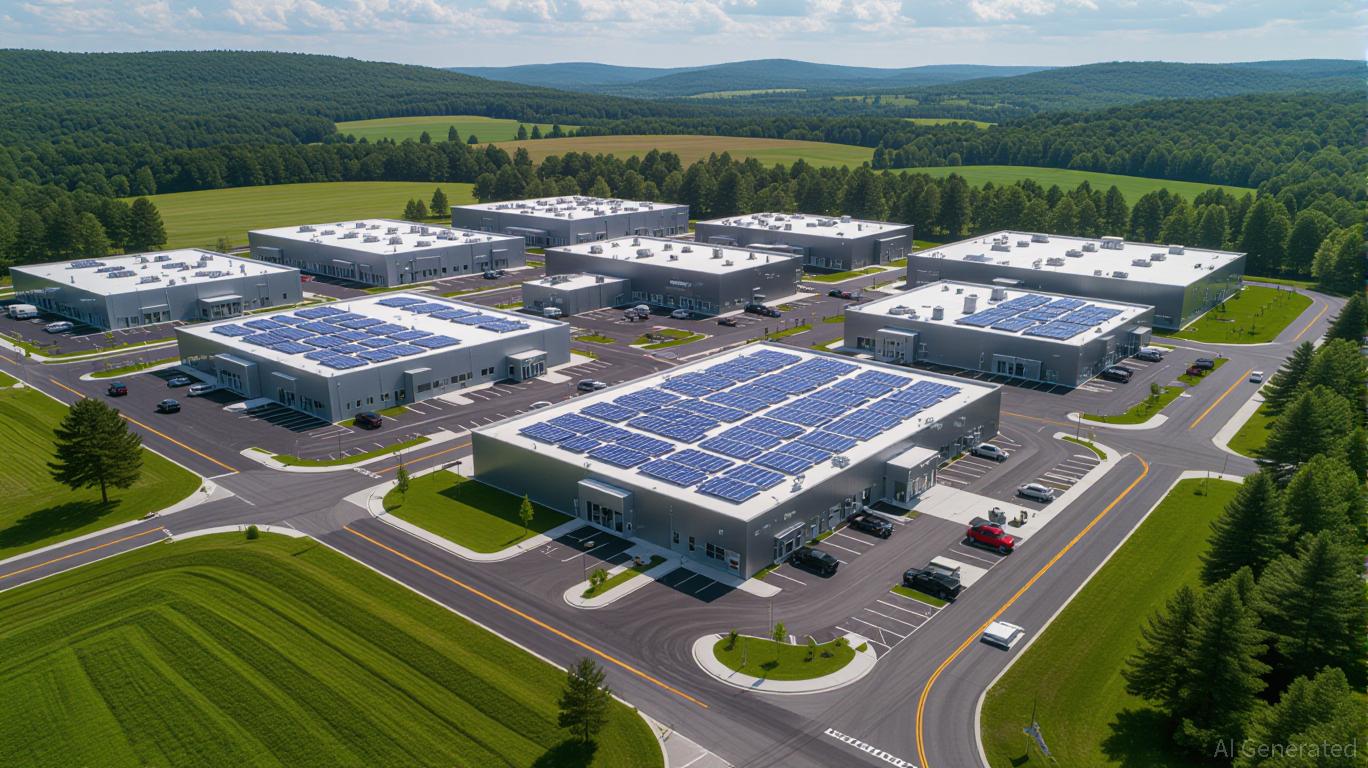
Webster’s achievements highlight the often-overlooked importance of preparing sites for development. The Northeast Area for Technology (NEAT), a 300-acre expansion of the revitalized Xerox campus, is on track to provide nearly one million square feet of industrial space by 2026. This “shovel-ready” strategy reduces uncertainty for investors, who can purchase land or pre-leased buildings with confidence in the site’s infrastructure and zoning. For municipalities with limited resources, this readiness shortens the time between public spending and private sector returns—an essential advantage amid rising construction costs and supply chain challenges.
For real estate investors, the impact is significant. Webster’s industrial vacancy rate has dropped to 2%, far below the national average of 7.5%. This scarcity, combined with the arrival of well-paying jobs from projects like the fairlife® plant, has created a reinforcing cycle: businesses strengthen the local economy, workers seek housing, and both residential and industrial property values climb.
From 2023 to 2026, data shows that home values have risen by 10.1%, underscoring the broader benefits of industrial revitalization.
Lessons for Emerging Markets
Webster’s progress reflects a larger trend: infrastructure-led development can unlock value in regions that have long been overlooked. Upstate New York, with its history of industrial decline and underused assets, is especially well-positioned for this kind of transformation. Municipalities that update zoning, align infrastructure with business needs, and focus on site readiness can replicate Webster’s results. For investors, the opportunity lies in identifying areas where public investment is paving the way for future private demand—a window that narrows as development accelerates.
The NEAT site, for example, presents a time-sensitive chance to acquire properties before 2026, when limited supply and increasing demand are expected to push prices higher.
Conclusion: Infrastructure as an Engine for Growth
Webster’s experience offers a glimpse into a broader shift in real estate investment. As investors seek returns in a low-interest environment, markets with proactive municipal strategies and infrastructure investment are poised to outperform. Infrastructure is no longer just an expense—it’s a powerful driver of economic growth. The $9.8 million FAST NY grant has shown that with strategic vision and a focus on readiness, even towns with an industrial past can reclaim their place in the national economy. Those who recognize these trends early will find promising opportunities in Upstate New York’s resurgence.
Disclaimer: The content of this article solely reflects the author's opinion and does not represent the platform in any capacity. This article is not intended to serve as a reference for making investment decisions.
You may also like
Why is Dash (DASH) experiencing a significant rise in December 2025
- Dash (DASH) surged 550% in December 2025 due to on-chain activity, institutional adoption, and blockchain upgrades, reflecting growing demand for privacy-focused assets amid financial surveillance concerns. - On-chain metrics showed mixed signals, with large investor purchases and rising TVL offset by whale activity and bearish indicators like negative funding rates. - Institutional partnerships, including relisting on OKX and Zebec integration, expanded DASH's utility and liquidity, attracting both reta

ZEC Value Jumps 12.48% Following Bitget Listing and Major Whale Transactions
- Zcash (ZEC) surged 12.48% in 24 hours on Dec 3, 2025, driven by Bitget’s listing and whale trading activity despite broader market declines. - Bitget’s ZEC/USDT listing enabled institutional access, highlighting Zcash’s privacy-focused zero-knowledge proof technology and capped supply model. - A whale deposited 4.49M USDC on Hyperliquid for 10x leveraged ZEC longs, amplifying volatility amid $1.29M unrealized losses and broader crypto trends. - Growing institutional adoption of privacy-centric assets lik

ZEC's Rapid Surge: How Institutional Infrastructure Investments Play a Part
- Zcash (ZEC) surged 700% in 2025 as institutional crypto investments hit $25B, driven by privacy demand and infrastructure-linked strategies. - Regulatory clarity and tokenized asset innovation enabled $25B RWA market growth, linking crypto to real-world infrastructure projects like NY’s Xerox campus redevelopment. - Institutional buyers (Cypherpunk, MaelstromFund) acquired 1.43% of ZEC supply, mirroring infrastructure investments in brownfield upgrades and industrial clusters. - The November 2025 halving

Zcash (ZEC) Price Fluctuations: Regulatory Changes and Infrastructure Developments Fueling a New Era for Privacy Coins
- Zcash (ZEC) surged nearly 900% in Q4 2025 due to regulatory clarity, institutional adoption, and infrastructure upgrades. - The U.S. CLARITY Act and $137M Grayscale ETF, plus $18M Cypherpunk investment, boosted institutional confidence in ZEC’s opt-in privacy model. - Orchard protocol upgrades and Ztarknet’s Layer-2 rollup enhanced Zcash’s DeFi utility while preserving privacy, attracting 4.5M shielded ZEC. - However, EU regulatory uncertainty and governance debates over privacy vs. compliance pose risks

Trending news
MoreCrypto prices
More






