
Sustainable Transportation in Cities and the Adoption of Renewable Energy in Developing Economies
- South Africa and India are leading solar-powered transit growth, driven by decarbonization goals and energy security needs in emerging markets. - Solar bus markets project $17.79B value by 2033 (21.6% CAGR), supported by falling solar costs, EV affordability, and policy frameworks in Africa/Asia. - Behavioral economics shapes e-mobility adoption, with South Africa targeting 18,000 tonnes CO₂ reduction via 120 electric buses and India using social nudges to boost EV uptake. - Cross-regional collaboration
Accelerating the Shift to Sustainable Urban Mobility
The global movement toward greener urban transportation is gaining momentum, propelled by the urgent need to cut carbon emissions and address energy challenges, especially in developing regions. Solar-powered public transport and electric mobility infrastructure are becoming essential pillars of this transformation, providing scalable ways to lower emissions and enhance economic stability. For investors, the intersection of technological progress, supportive policies, and behavioral insights in nations such as South Africa and India offers a promising landscape.
Expanding Market and Promising Growth Prospects
The market for solar-powered buses is expected to experience a robust compound annual growth rate of 21.6% between 2025 and 2033, with projections estimating the sector will reach $17.79 billion by 2033. This surge is being driven by falling prices for solar panels, improvements in battery technology, and the decreasing cost of electric vehicles. Emerging economies in Africa and Asia are leading this evolution. For instance, South Africa has committed to boosting its solar capacity by 20% as part of its renewable energy agenda, while India is building a comprehensive electric vehicle ecosystem through national policies that incentivize manufacturing and charging infrastructure.
Leading Examples: South Africa and India
South Africa’s Push for Solar Transit
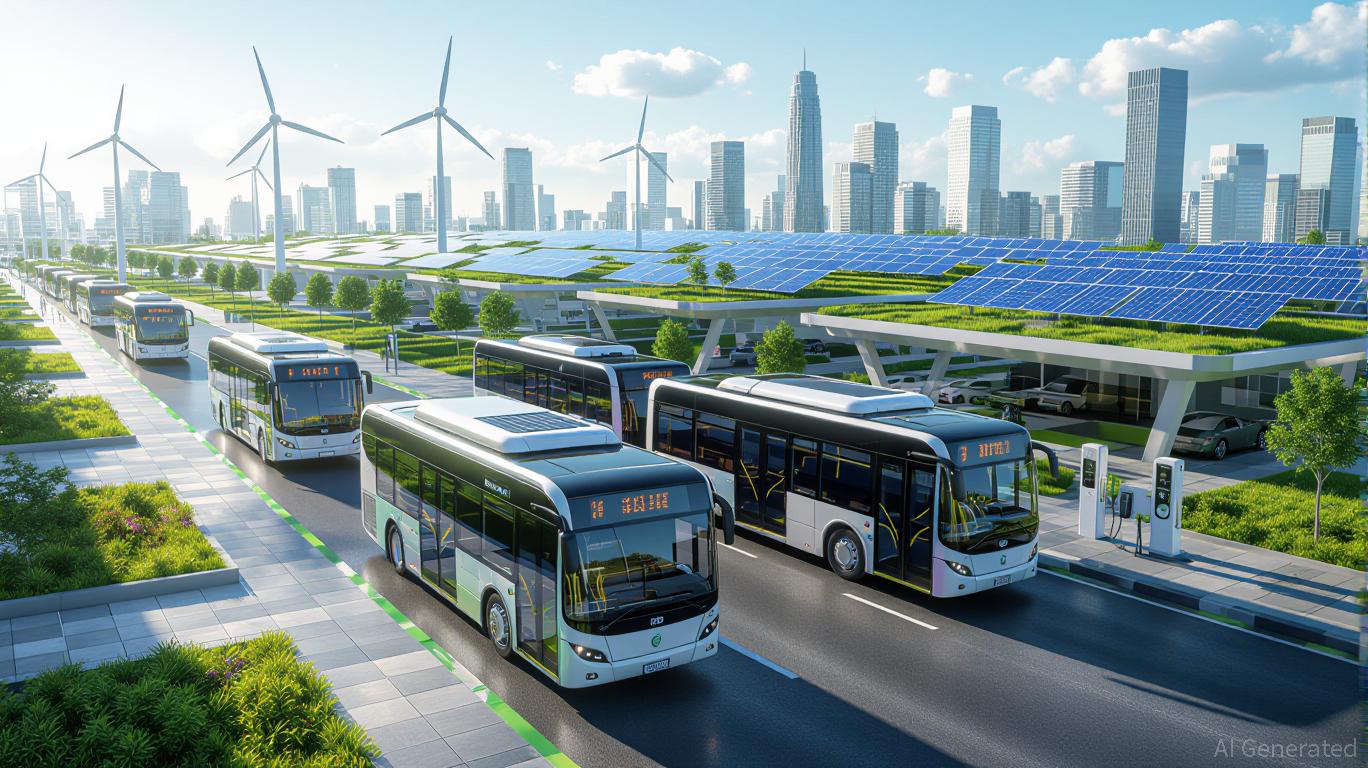
South Africa is rapidly expanding its fleet of solar and electric buses. MAN Truck & Bus plans to supply 100 fully electric city buses to the Paruk Group, with local assembly set to begin in 2026. In Cape Town, Autel Energy is rolling out solar-hybrid charging stations to support 120 electric buses by 2025, a move expected to cut 18,000 tonnes of CO₂ emissions annually. Golden Arrow Bus Services has grown its electric fleet from two to sixty buses in a single year. These advancements are supported by a government investment of R1 billion ($54 million) to encourage local electric vehicle and battery manufacturing, including tax breaks for producers.
India’s Policy-Driven E-Mobility Transformation
India stands out in the Global South for its advanced e-mobility policies. National initiatives like the FAME II program provide subsidies for electric vehicle purchases and charging infrastructure, while state-level measures, such as Tamil Nadu’s EV policy, offer additional incentives like reduced import duties and tax exemptions. Research from 2025 shows that behavioral economics tools—such as social nudges and peer comparisons—have helped reduce household electricity use by 7% in pilot projects. These strategies are now being applied to encourage electric vehicle adoption, focusing on practical benefits like lower maintenance costs and strong government backing.
The Role of Behavioral Economics in Policy Development
Behavioral economics is increasingly shaping the design of e-mobility policies. In South Africa, studies among paratransit operators reveal that 38% are open to switching to electric vehicles, influenced by perceptions of reliability and environmental responsibility. India’s approach combines theories of consumption value and planned behavior, showing how targeted policies can align with consumer choices. For example, India’s use of social norm messaging has led to measurable reductions in electricity consumption—a tactic that could be adapted to promote solar-powered public transport.
Although South Africa’s policy framework is still developing, the country is beginning to apply behavioral insights. Recent analysis highlights a “green window of opportunity” in its automotive industry, recommending targeted measures to address concerns about upfront costs and reliability. By adopting India’s behavioral strategies—such as emphasizing peer adoption rates or framing electric vehicles as long-term savings—South Africa could speed up its transition to e-mobility.
Key Drivers for Scaling Up: Policy and Demographics
The widespread adoption of solar-powered public transit depends on coherent policies and demographic trends. In India, rapid urbanization and government mandates for electric vehicle use in major cities are fueling demand for low-carbon transportation. South Africa’s growing middle class and youthful population also create favorable conditions for investment in sustainable mobility. However, obstacles like high import tariffs and limited rural charging infrastructure remain significant challenges.
Collaborative initiatives such as EMBRACE (Electric Mobility Bridge for Regional Africa-India Cooperation and Exchange) are helping to overcome these barriers. By exchanging best practices in policy and infrastructure, India and African countries can tackle shared challenges, including workforce development and financing. Rwanda’s advanced e-mobility policies, which scored highly in regional assessments, provide a model for South Africa and others to emulate.
Investment Landscape: Balancing Risks and Opportunities
While the outlook for solar-powered public transit is highly promising, investors must be mindful of risks like regulatory uncertainty and substantial upfront costs. In South Africa, the absence of direct subsidies for electric vehicles and inconsistent tax incentives pose challenges. Nevertheless, the nation’s focus on local manufacturing and integrating renewable energy—such as solar-powered charging—helps offset some of these risks. India’s more established policy environment and increasing private sector involvement, including venture capital in electric vehicle startups, make it an attractive and relatively lower-risk market.
Innovative financing solutions, such as green bonds and public-private partnerships, will be essential for scaling up projects in both countries. Investors who collaborate with governments and apply behavioral insights to address consumer concerns will be well-positioned to benefit from the anticipated $17.79 billion solar bus market by 2033.
Conclusion
The shift toward sustainable urban mobility in emerging economies is now a tangible investment prospect. South Africa and India demonstrate how solar-powered transit and electric mobility infrastructure can drive both decarbonization and economic growth. By weaving behavioral economics into policy and fostering cross-regional cooperation, investors can overcome challenges and unlock significant long-term value in a sector set for rapid expansion.
Disclaimer: The content of this article solely reflects the author's opinion and does not represent the platform in any capacity. This article is not intended to serve as a reference for making investment decisions.
You may also like
Zcash (ZEC) Price Rally and Contributing Factors in Late 2025: Privacy-Focused Cryptocurrencies Amid Increasing Regulatory Pressure
- Zcash (ZEC) surged 700% in late 2025, peaking at $728 amid rising demand for privacy-focused crypto amid regulatory scrutiny. - Technological upgrades like Orchard protocol and Zerdinals drove adoption, while institutional investments and endorsements from figures like Winklevoss twins boosted market confidence. - A dynamic fee model stabilized transaction costs, addressing privacy coins' usability challenges during price volatility. - U.S. regulatory engagement with Zcash contrasted with EU plans to ban

ICP Network Expansion: The Adoption of Blockchain Infrastructure and Its Impact on DeFi Investment Approaches
- ICP's 2025 upgrades (Fission, Stellarator) boosted throughput to 11,500 TPS but face decentralization concerns due to 80% node centralization. - Chain Fusion cross-chain protocol enabled Bitcoin/Ethereum interoperability, driving $1.14B TVL growth and attracting institutional partnerships with Microsoft/Google. - Institutions adopt ICP for hybrid cloud/Web3 solutions, prioritizing tokenized RWAs over speculative dApps amid 22.4% Q3 engagement decline. - Analysts project $11.15–$88.88 ICP price range by 2
Zcash Halving and Its Effects on Crypto Markets: Deflationary Dynamics and Investor Perspectives
- Zcash (ZEC) will undergo its next halving in late 2028, reducing block rewards by 50% and aligning with Bitcoin's deflationary model. - The 2024 halving triggered a 1,172% price surge followed by a 96% crash, highlighting volatility from scarcity-driven speculation and macroeconomic factors. - Regulatory challenges like EU MiCA framework scrutiny and reliance on transaction fees raise sustainability concerns as block rewards shrink. - Future success depends on balancing deflationary scarcity with regulat

Assessing How Federal Reserve Policies Influence Emerging Blockchain Assets Such as Solana
- Fed's 2025 rate cuts and liquidity injections initially boosted Solana prices by 3.01% but triggered 6.1% drops during October 2025 liquidations. - Regulatory frameworks like EU MiCA and U.S. GENIUS Act drove 8% institutional ownership of Solana, attracting $101.7M in November 2025 inflows. - 35% of crypto volatility stems from Fed policy shifts, with high-rate environments eroding Solana's appeal as investors favor cash equivalents. - Solana's SIMD-0411 proposal aims to reduce token issuance by $2.9B by

Trending news
MoreCrypto prices
More





