
Trump signed an executive order to unify artificial intelligence regulations at the federal level.

on the 11th, U.S. President Trump signed an executive order to unify regulatory rules for the artificial intelligence sector at the federal level, restricting states from formulating their own rules. The executive order states that to achieve victory, American AI companies must be able to innovate freely without being burdened by cumbersome regulations, but "excessive state-level regulation" hinders this goal. The executive order points out that the current situation where states separately formulate regulatory rules will inevitably result in a patchwork of 50 different regulatory systems, making compliance more difficult, especially for startups. The executive order states that a "least burdensome" national standard will be established.
The executive order also requires the Attorney General to establish a special AI litigation task force whose "sole responsibility" is to challenge state AI laws that conflict with this executive order. Some U.S. tech companies have long opposed strict regulatory systems, and the latest executive order has been interpreted by some local media as a victory for these companies. Some media have pointed out that the latest policy may lead to weakened AI regulation, bringing risks. (Xinhua News Agency)
Disclaimer: The content of this article solely reflects the author's opinion and does not represent the platform in any capacity. This article is not intended to serve as a reference for making investment decisions.
You may also like
The Rise of Dynamic Clean Energy Markets
- CleanTrade, CFTC-approved as a Swap Execution Facility (SEF), transformed clean energy markets into institutional-grade assets by standardizing VPPAs, PPAs, and RECs. - The platform addressed fragmented pricing and opaque risks, enabling $16B in transactions within two months and bridging renewable assets with institutional capital. - Institutional investors now use CleanTrade’s tools to hedge fossil fuel volatility and lock in renewable energy prices, mirroring traditional energy strategies. - Global cl

COAI Token Fraud: Insights for Cryptocurrency Investors During Times of Regulatory Ambiguity
- COAI token's 88% collapse in late 2025 exposed systemic risks in AI-driven DeFi ecosystems, with $116.8M investor losses. - Governance flaws included 87.9% token concentration in ten wallets, untested AI stablecoins, and lack of open-source audits. - Panic selling accelerated by AI-generated misinformation and CEO resignation, amid conflicting global crypto regulations. - Lessons emphasize scrutinizing token distribution, demanding transparent audits, and avoiding jurisdictions with regulatory ambiguity.

Renewable Energy Training as a Key Investment to Meet Future Workforce Needs
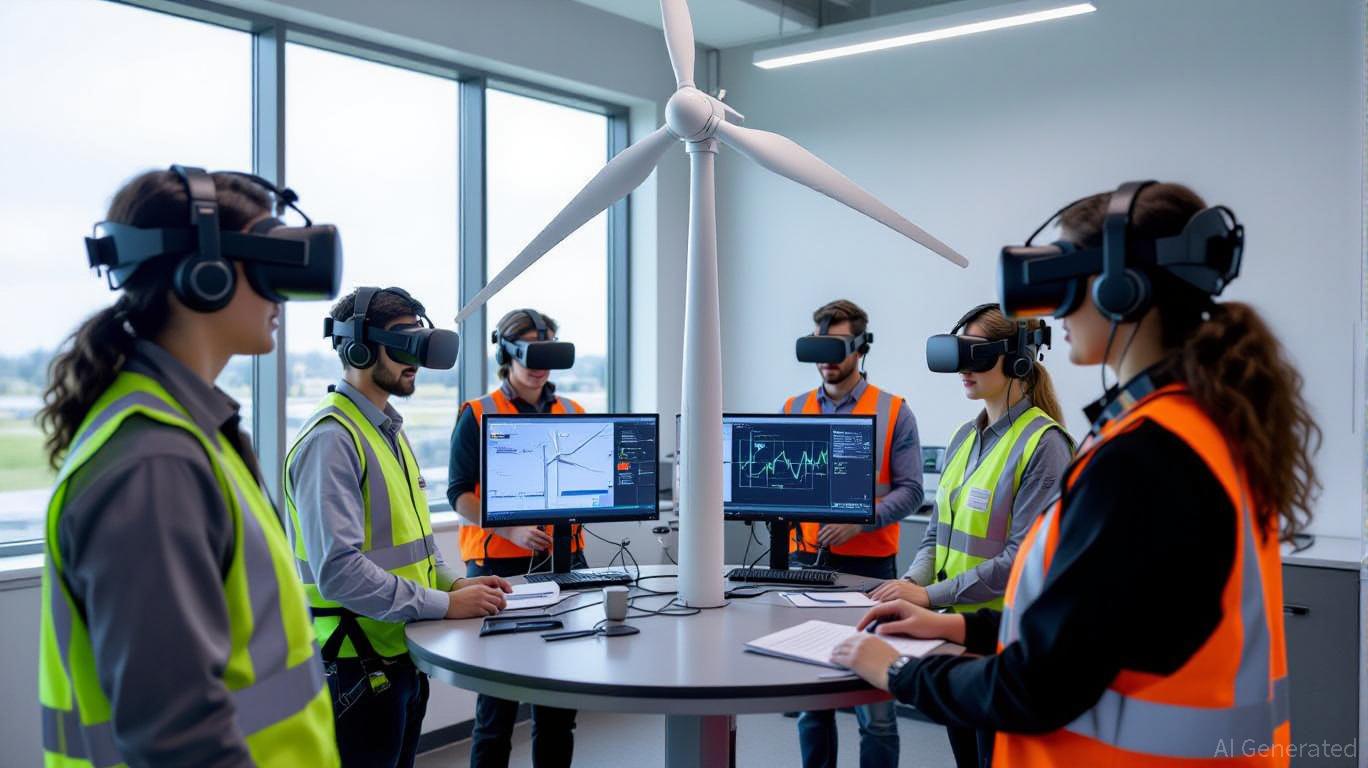
- Farmingdale State College's Wind Turbine Technology program aligns with surging demand for skilled labor in decarbonizing economies, driven by U.S. renewable energy targets. - Industry partnerships with Orsted, GE Renewable Energy, and $500K in offshore wind funding validate the program's role in addressing workforce shortages in expanding wind sectors. - Hands-on training with GWO certifications and VR simulations prepares graduates for high-demand, high-salary roles ($56K-$67K annually), reducing corpo
The Revival of STEM Learning as a Driving Force for Tomorrow’s Technology Investments
- Emerging STEM universities are driving tech innovation through interdisciplinary curricula and industry partnerships, focusing on AI, biotech , and advanced manufacturing. - U.S. programs like STEM Talent Challenge and NSF Future Manufacturing allocate $500K-$25.5M to bridge skills gaps and fund projects in quantum tech and biomanufacturing. - Leadership-focused STEM programs at institutions like Florida State and Purdue boost startup success rates (75-80%) and align with venture capital trends favoring

Trending news
MoreCrypto prices
More





