
2nm is here! Intel releases third-generation Ultra processors, integrated graphics can play Battlefield|CES 2026

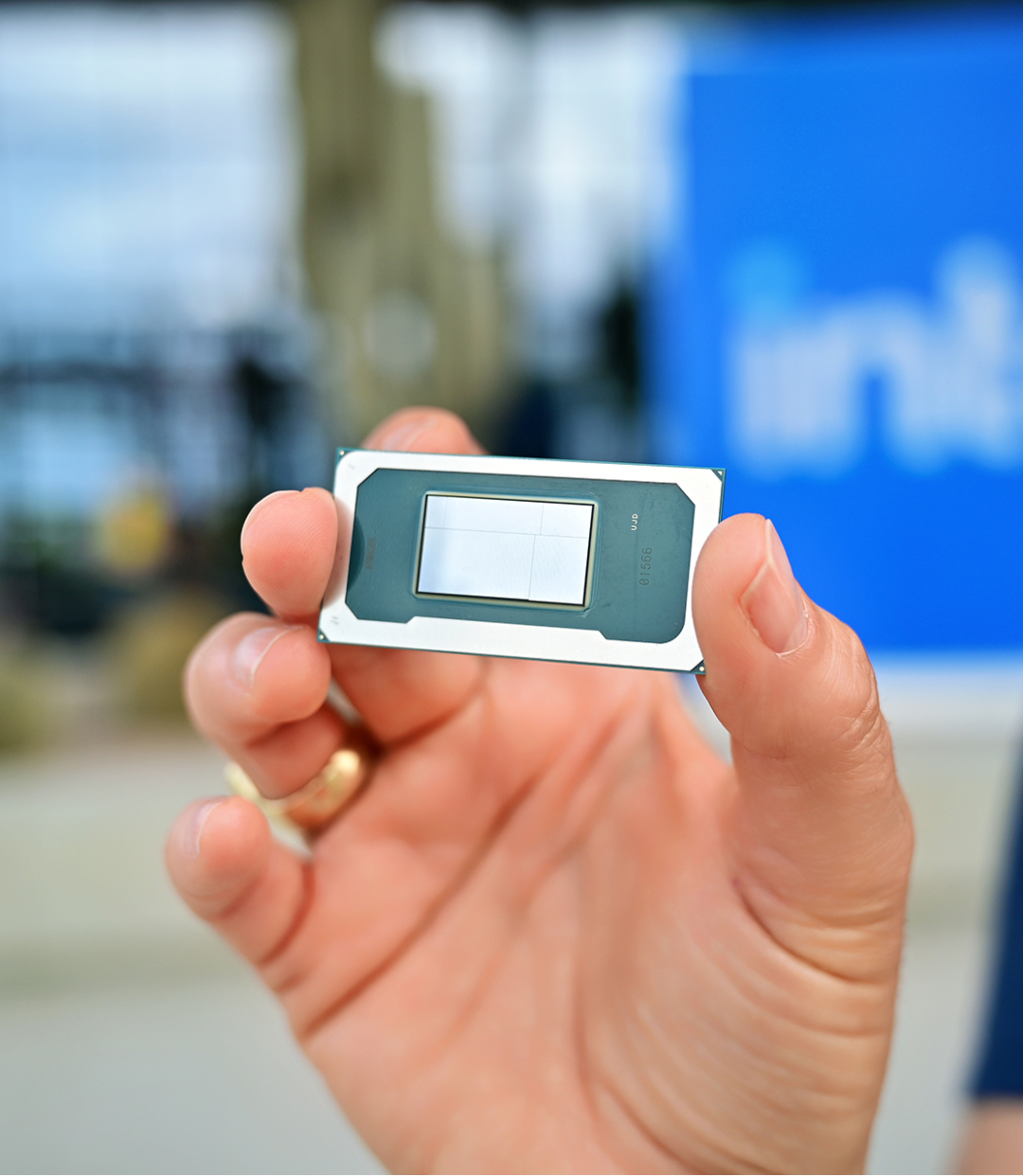 Ultrabook Good Times
 Since Lunar Lake, Intel seems to have been quiet for a long time without any major news.
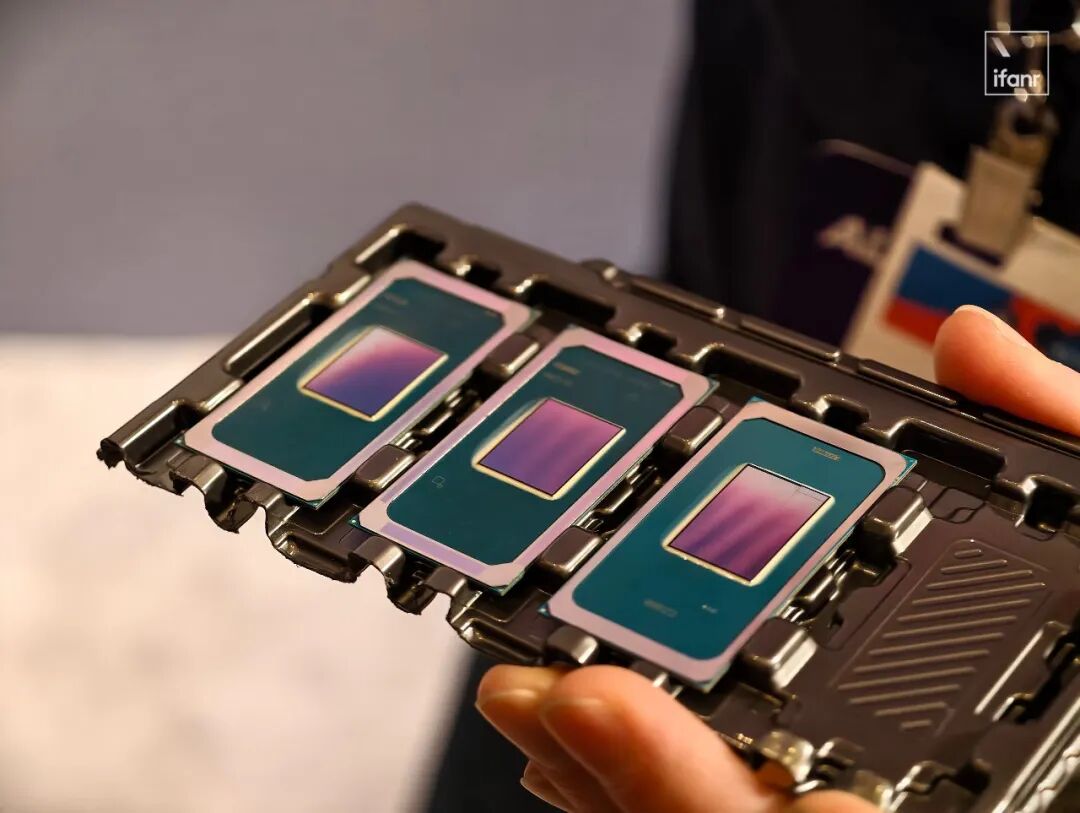
But a period of silence doesn't mean nothing is happening. At the just-concluded Las Vegas CES 2026 Intel press conference, we witnessed the "blue team" unveil its first major new product in over a year—the Intel Core Ultra Series 3, part of the Panther Lake family.
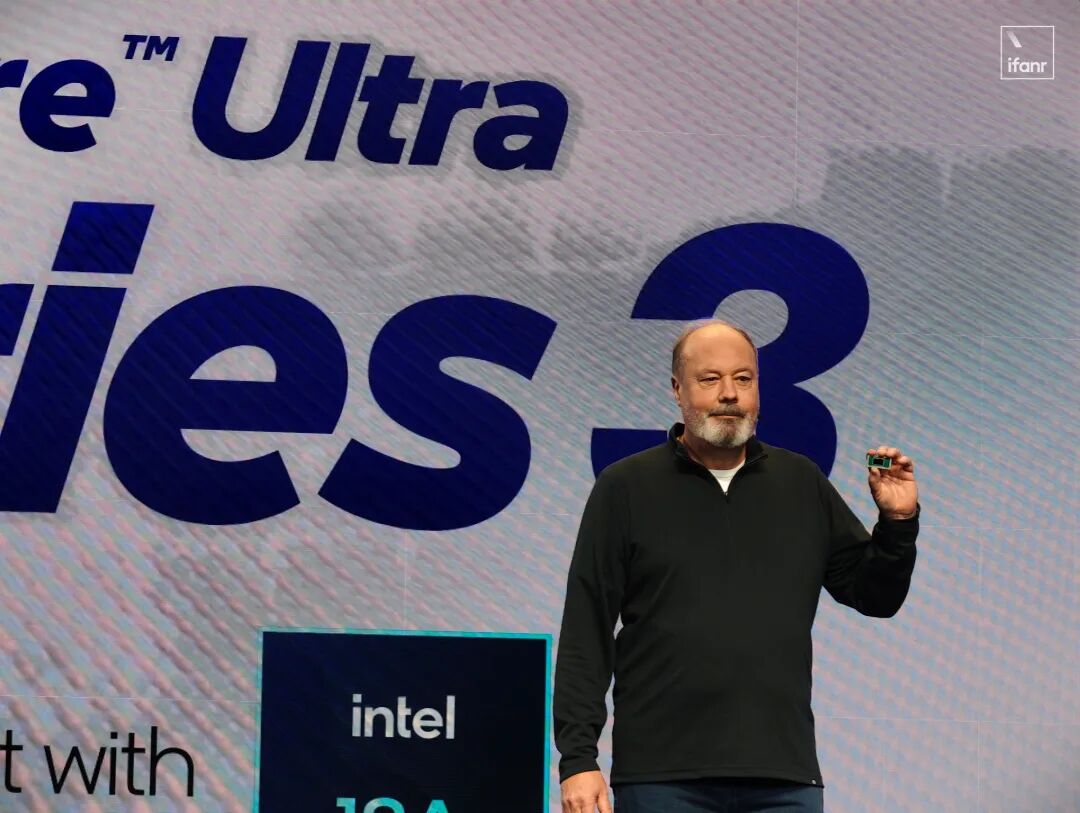
The key point is,this is the first processor product built with Intel’s latest 18A process technology.
As covered in the article from Ifanr after visiting the Intel factory in October, the 18A process leverages RibbonFET and PowerVia technologies, cleverly solving some traditional challenges in processor manufacturing. Compared to the previous Intel 3 process, it achieves dual improvements in transistor density and energy efficiency.
Related reading:
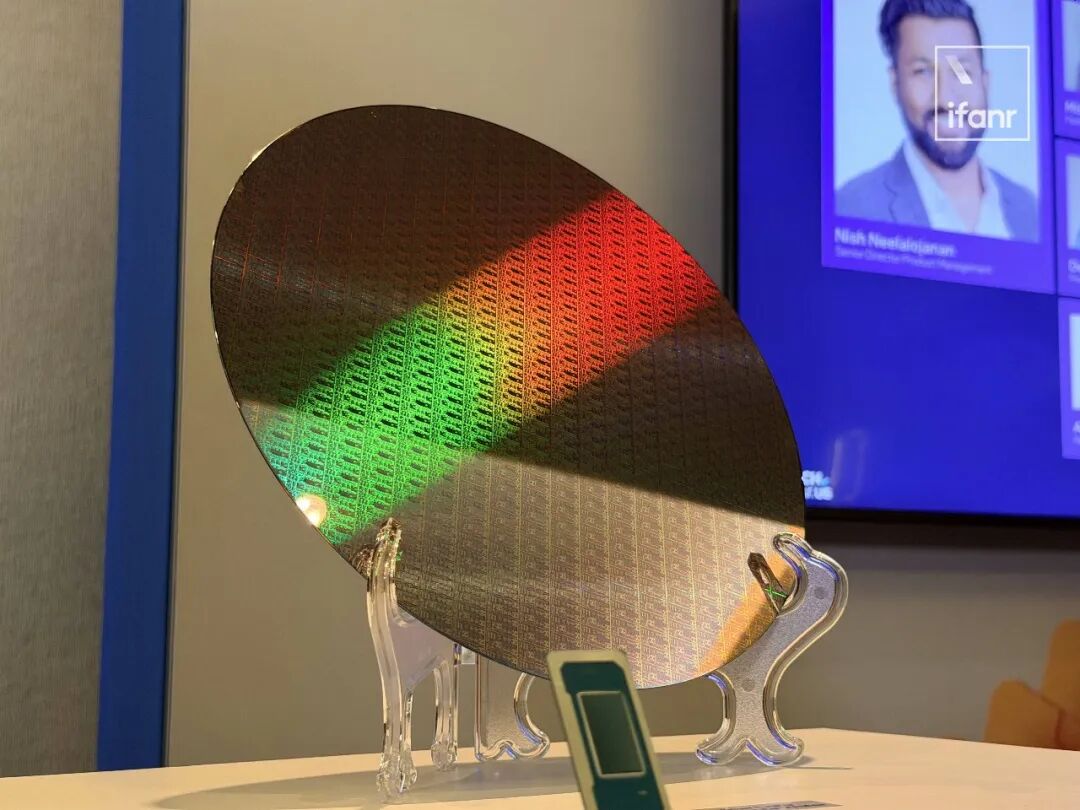
▲ New 18A process wafer
This directly translates into the main improvement for Core Ultra Series 3. According to Jim Johnson, Senior Vice President and General Manager of Intel’s Client Computing Group:
In Series 3, we focus on improving energy efficiency, increasing CPU performance, equipping with the largest GPU in its class, and providing rich AI computing power and software compatibility brought by the x86 architecture.
At this CES, Intel highlighted the key performance improvements of Core Ultra Series 3.

For example, the latest processor for mobile (laptop) products, Intel Core Ultra X9 388H, currently the top SKU in the Core Ultra series, is equipped with 16 CPU cores, 12 GPU cores, up to 50 TOPS NPU computing power, and up to 96GB of LPDDR5 memory, among other features—
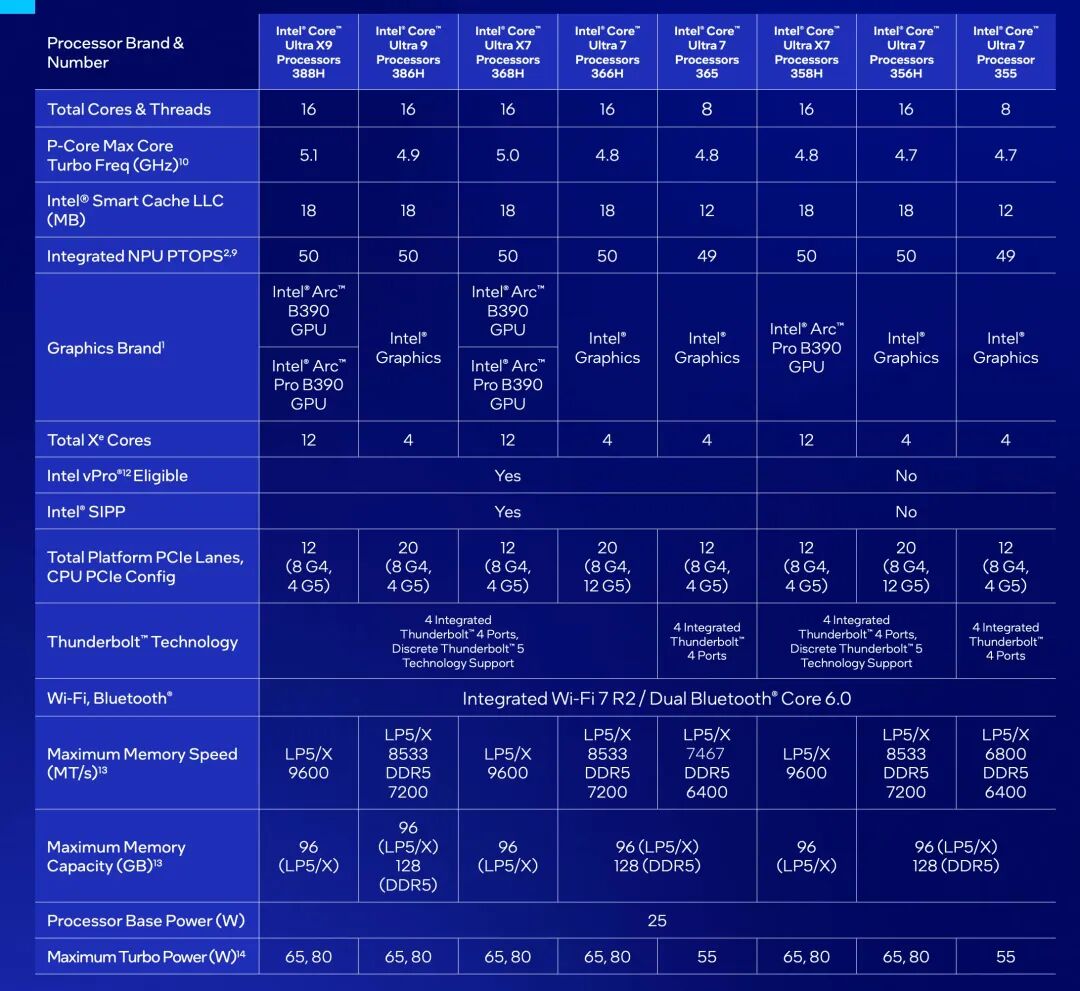
▲ Image|Intel
Compared to the Core Ultra Series 2 processors based on the Lunar Lake architecture, the latest Panther Lake series products can achieve up to a 60% improvement in core performance.
Combined with the newly designed core architecture based on the 18A process, which lowers voltage requirements and improves per-core performance and efficiency,the new processors unveiled at CES are highly suitable for the mobile work ecosystem, while also keeping heat generation within a reasonable range.
As a result, the new energy-efficient cores (E-cores) added to Core Ultra Series 3 come into play. According to Intel’s live demonstration,the power consumption for 4K streaming playback on the new processor is only one-third that of the previous generation, raising the possibility of extending laptop battery life from "hours" to "days."
Additionally, in the Core Ultra Series 3 announced this time, X9 and X7 models not only offer more powerful performance and greener energy efficiency, but also integrate the brand new Arc B390 graphics card, which brings many highlights—
That's right, this is the 12Xe integrated graphics card that was repeatedly leaked before the official debut of Panther Lake.
In addition to 12 Xe GPU cores, the Arc B390 also features 12 enhanced ray tracing units and 96 XMX AI accelerators, achieving 12 TOPS of GPU AI computing power on a single integrated card:
▲ Image|Intel
In terms of performance improvement, Intel claimed at CES: compared to the Arc 140V graphics integrated in the Lunar Lake Core Ultra 9 288V, the new Arc B390 achieves a 77% improvement in gaming performance and a 53% improvement in AI performance.
Furthermore, apart from the major leap over Lunar Lake, the performance of Arc B390 even surpasses its AMD counterpart.
Intel claims that compared to Radeon with similar power consumption and memory, Arc B390 can deliver on average 70% more frames per second, and in some games, even double the frame rate of AMD.
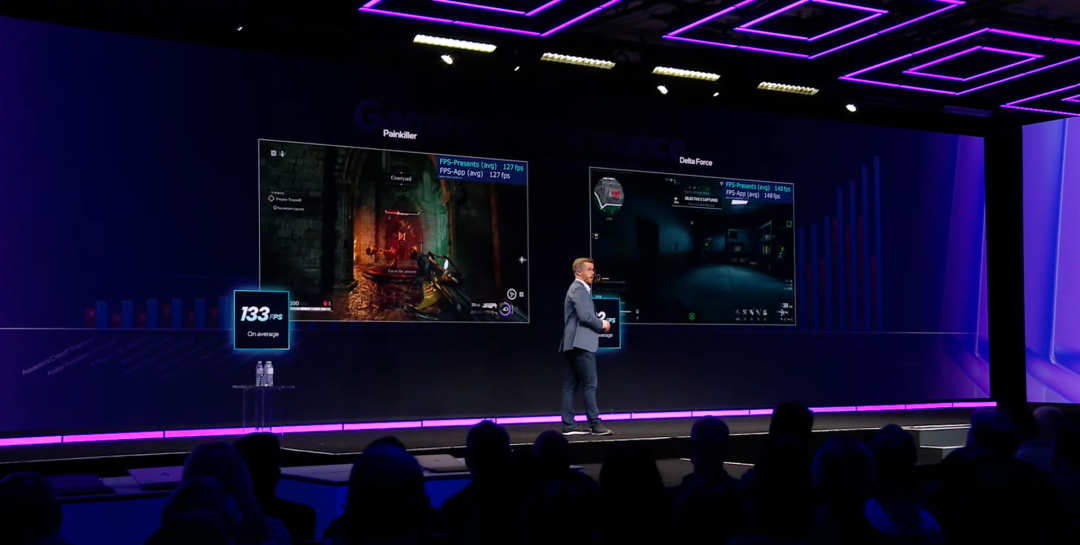
▲ Image|Youtube @Intel
Taking advantage of the new XeSS 3 technology, Intel has also integrated a series of upgraded imaging features into Arc B390, collectively referred to as Modern Rendering.
This includes improved global illumination and ray tracing, super-resolution details, and an ultimate enhanced frame interpolation technology—Multi-Frame Generation (MFG).
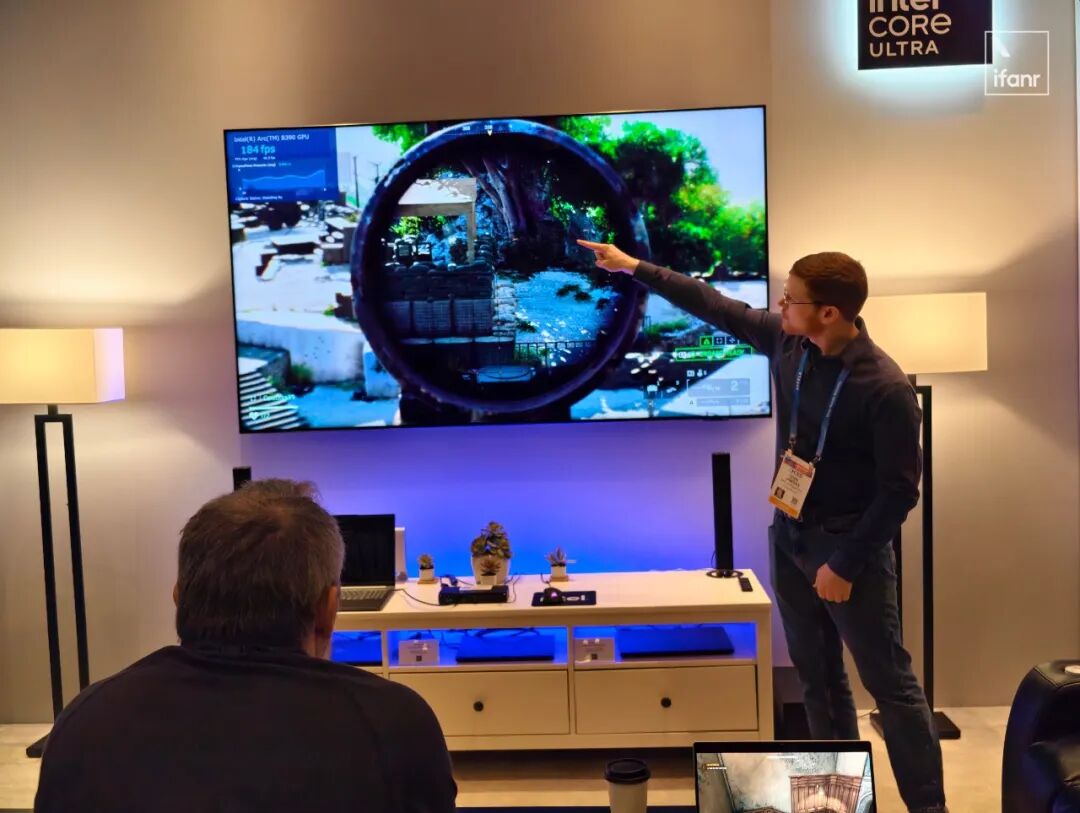
According to Intel at the launch event: the new Arc graphics card in the Panther Lake lineup will be the world's first integrated graphics card to "support multi-frame AI generation right after release." Paired with XeSS 3, it cangenerate 3 interpolated frames for every 1 rendered frame, significantly enhancing the gaming experience on laptops.
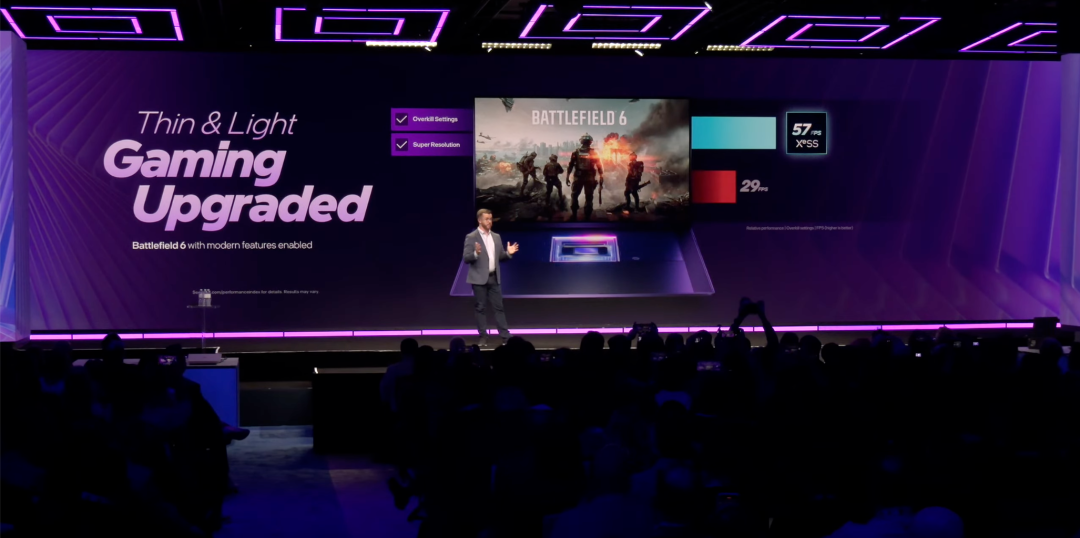
▲ Image|Youtube @Intel
For example, in Battlefield 6 with the "Overkill" graphics preset, the original frame generation technology of XeSS can boost the average frame rate from 29 FPS to 57 FPS.
And after enabling XeSS 3’s MFG multi-frame generation, the average frame rate can reach about 150 FPS (in some scenes, nearly 200 FPS), while the 1:3 generated frames have almost no negative effects, making them highly practical.
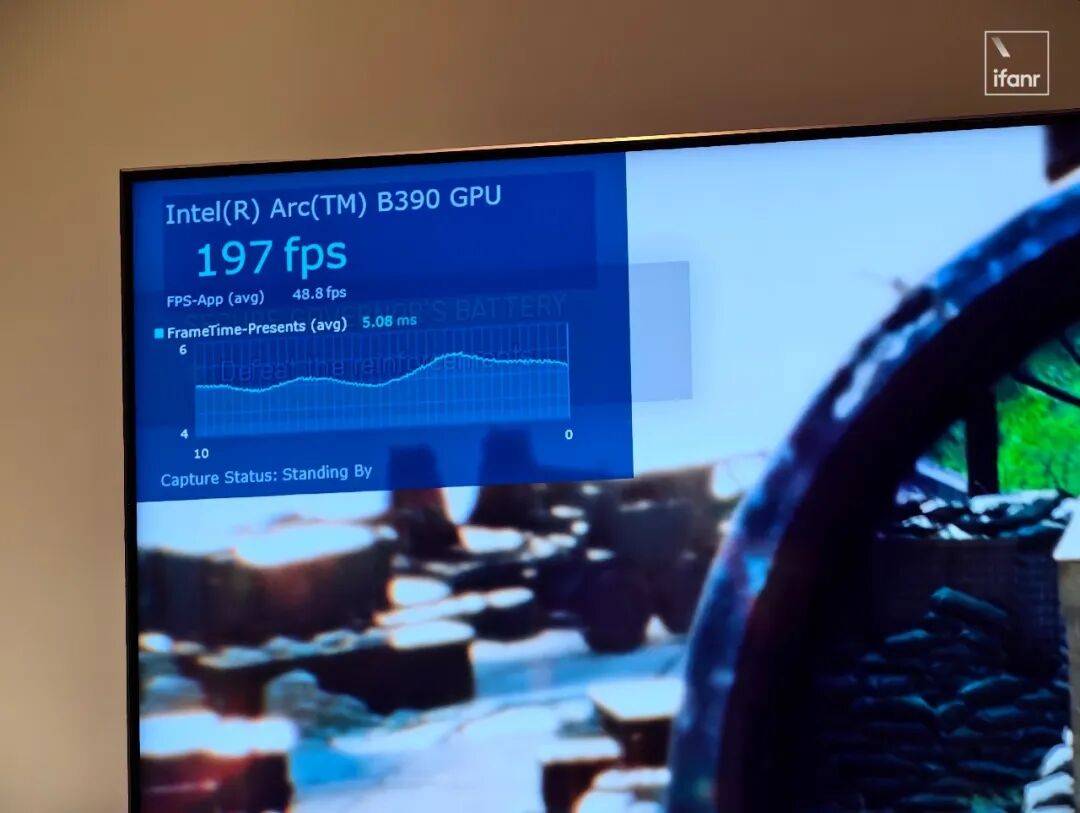
Such performance is already quite impressive for ultrabooks, but interestingly, Intel's goal this year is not limited to ultrabooks.
At the conference, Intel also mentioned that it will work with a group of partners to launch a series ofgaming handhelds based on low-power x86 platforms this year:
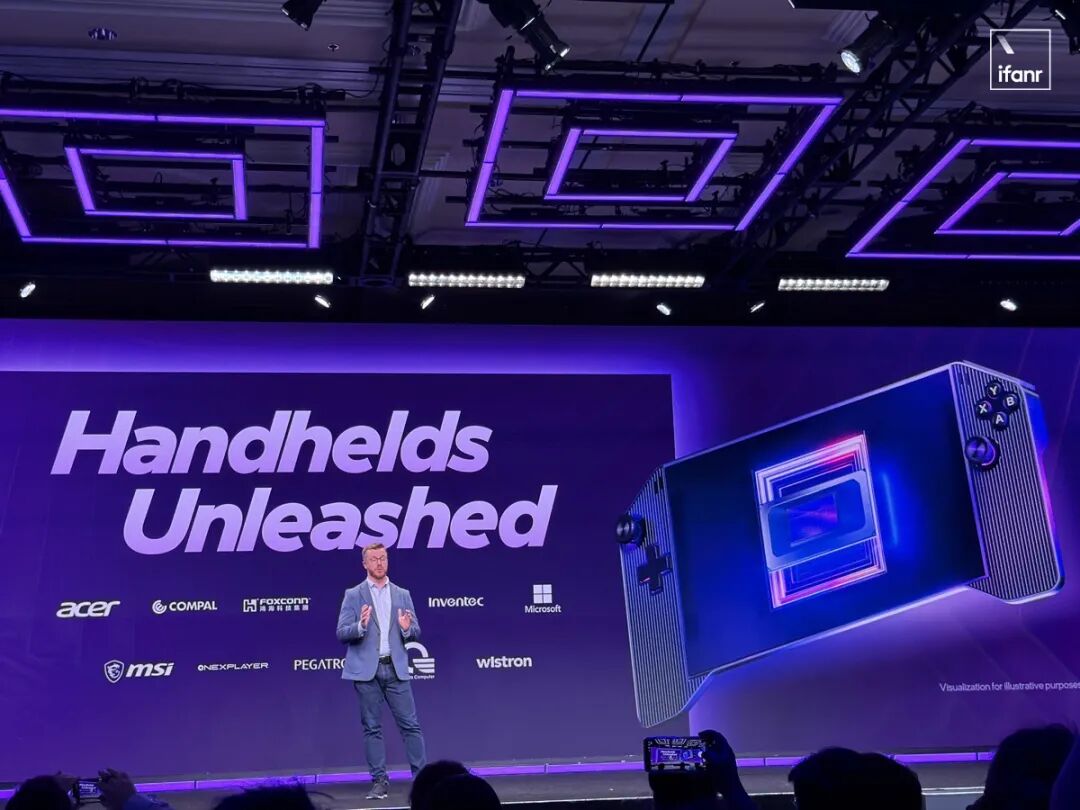
It seems that Steam's entry did not end the game console wars, but rather shifted the battleground from the original console big three to the PC x86 platform.
Unfortunately, Intel hasn’t announced more detailed roadmaps for handhelds based on Panther Lake and Arc B390 graphics cards, but judging from the partners revealed in the keynote,Intel's envisioned handhelds are still expected to run on Windows kernels, rather than custom systems.
Perhaps powered by the strong combination of 18A, Series 3 core cluster design, and Arc graphics cards, the fatal standby issue of Windows handhelds may be alleviated, and Win handhelds, which have been under the shadow of SteamDeck for years, may finally see their day of prosperity.
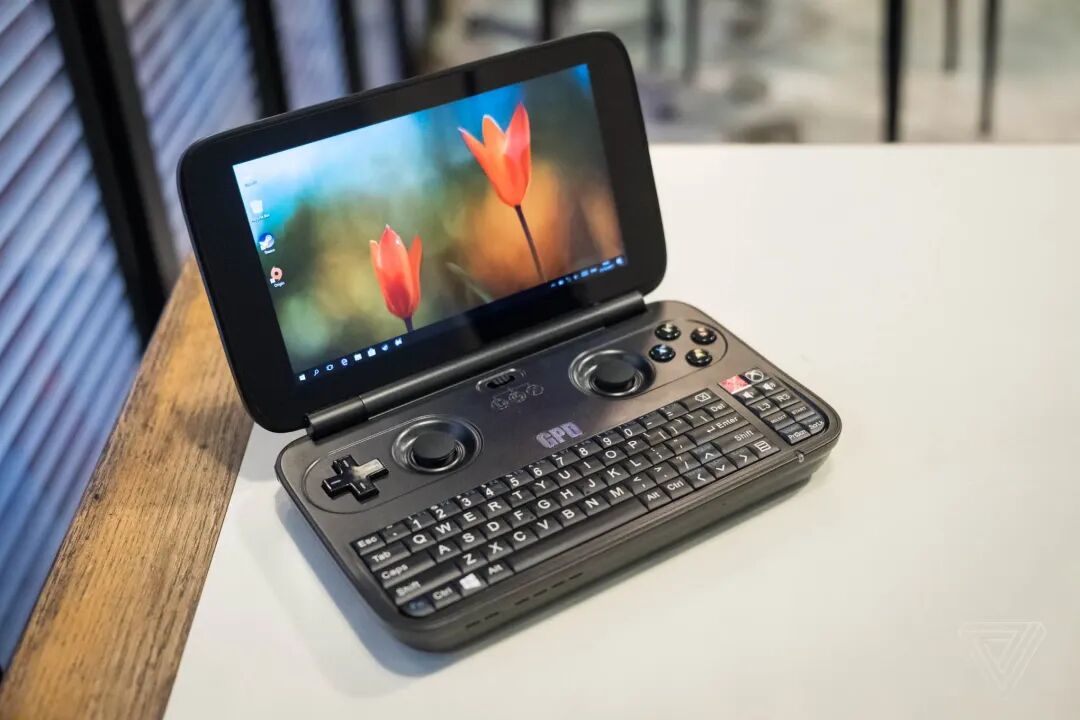
▲ Image|TheVerge
In addition, in the AI PC direction, Intel has also updated many strategic plans and concepts.
For the Panther Lake product line, Intel once again emphasized the "Edge Computing" theory at the conference, focusing on "end-cloud collaboration" and bringing significant local AI computing upgrades to Core Ultra Series 3.

For example, in addition to the upgraded AI acceleration capabilities of the new Core Ultra X9, X7, and Ultra 5 themselves, Intel also announced at CES that it would align with this year's PC release pace andaccelerate the launch of 18A process products for the edge computing market, with extreme temperature, reliability, and long lifecycle support as main design considerations.
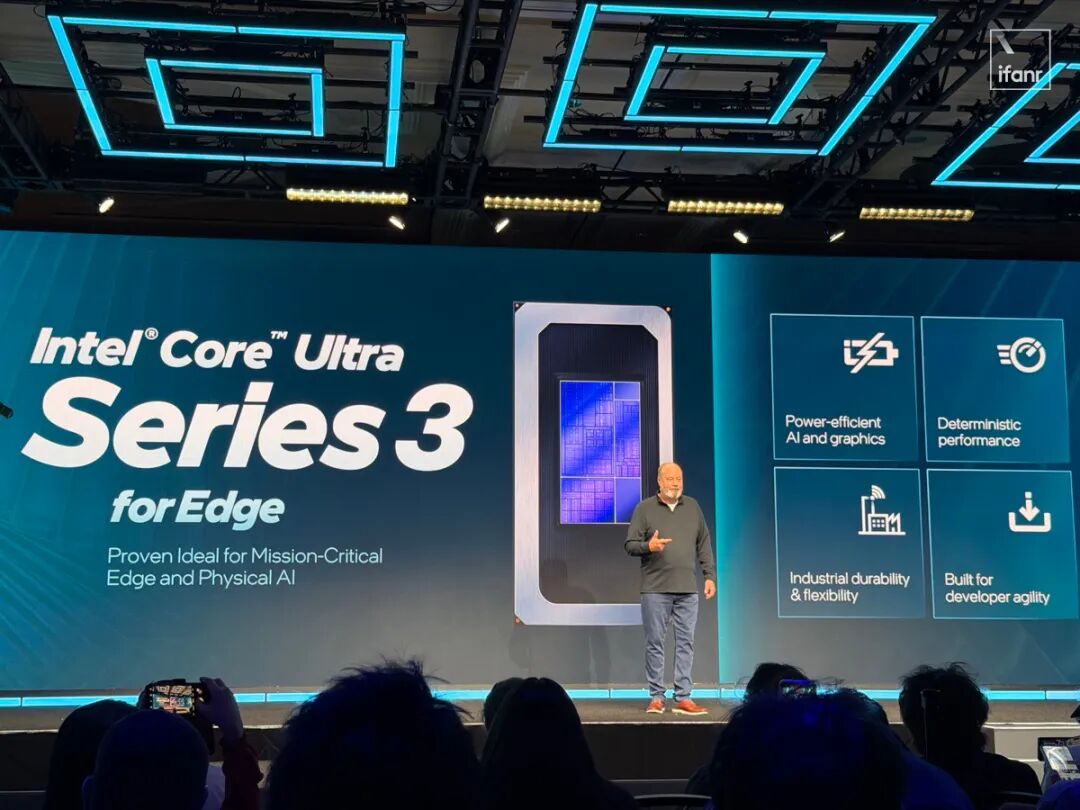
At present, the Intel Core Ultra Series 3 family of products can already be widely deployed across various hardware platforms.
Thanks to flexible core counts, memory capacities, and ahighly modular die partition design, Intel claims "more than 200 partners' products can find suitable combinations," and Panther Lake will be the most widely adopted and globally available AI PC platform in Intel’s history:
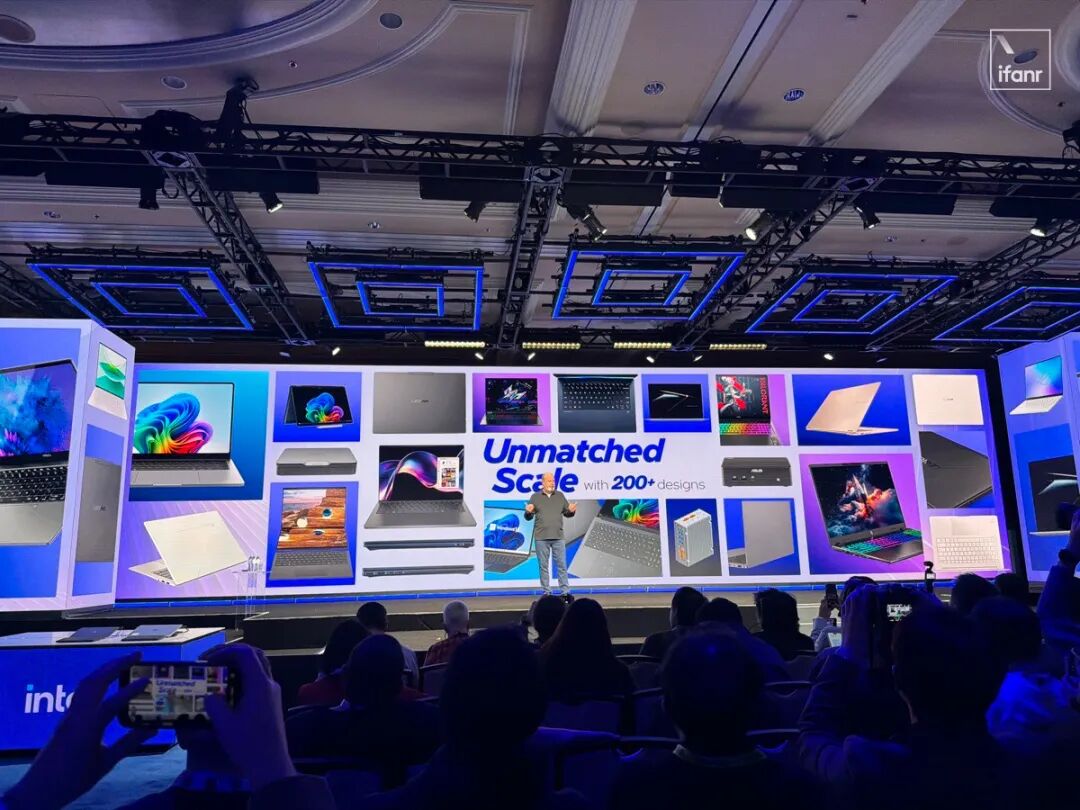
As for the question of launch timing most concerned by consumers, the Core Ultra Series 3 has already entered mass production, andthe first batch of consumer products with this generation of processors will go on sale as early as January 6, with new products launching throughout 2026.

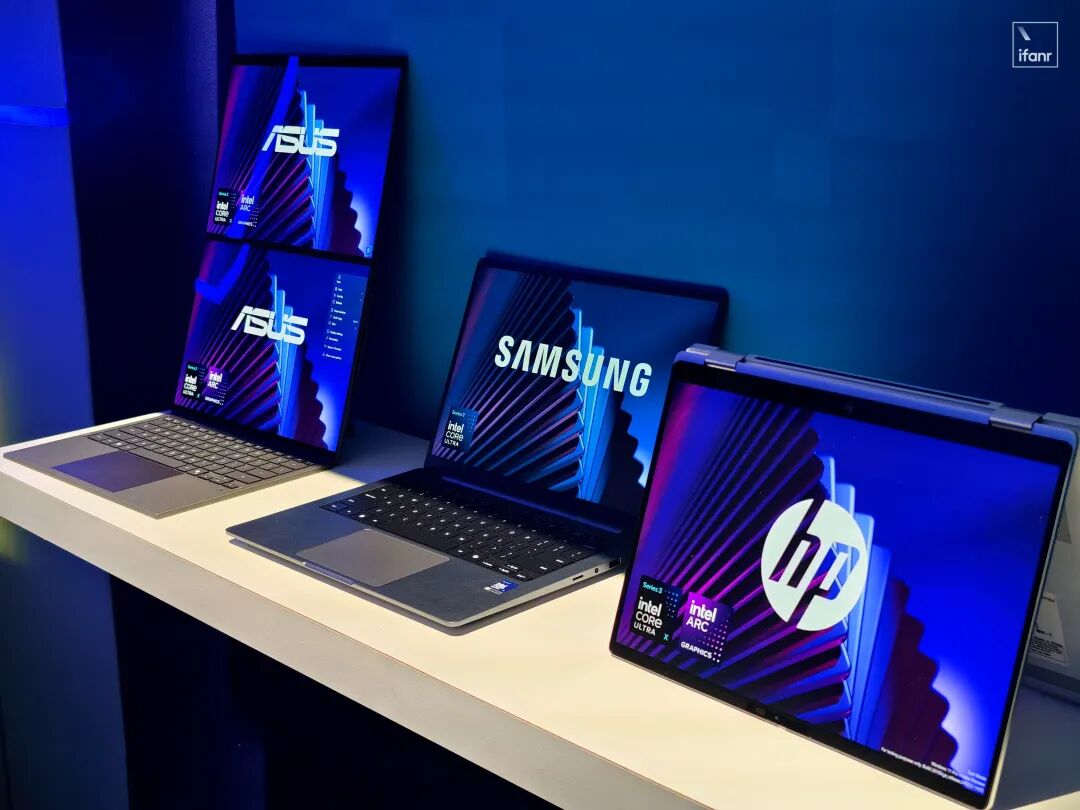
In fact, at the press conference, we already saw several products equipped with the Ultra Series 3, such as ROG’s Zephyrus 16 dual-screen laptop, as well as Dell’s XPS series, which last year was loudly announced to be discontinued, only to make a comeback this year:
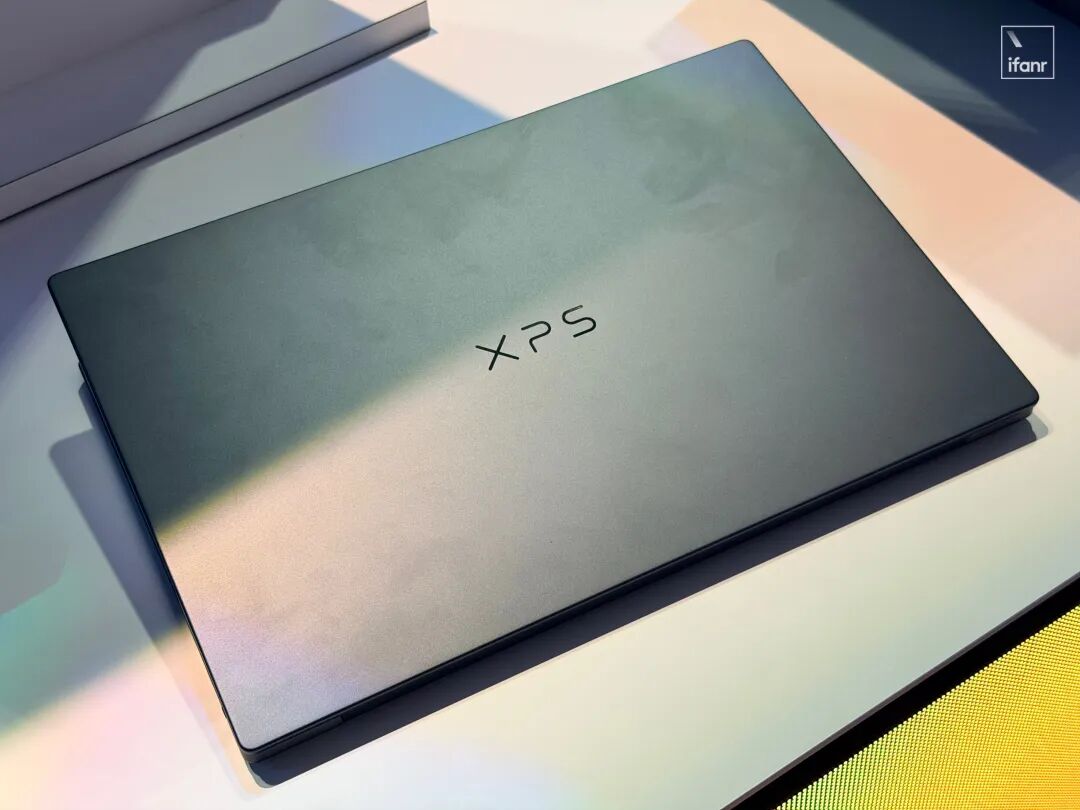
—It must be said, although the memory price surge at the end of 2025 brought a shockwave to the PC market that has lasted until today.
But the very attractive performance of Panther Lake brings renewed hope to the PC sector in 2026.
Text|Ma Fuyao

Disclaimer: The content of this article solely reflects the author's opinion and does not represent the platform in any capacity. This article is not intended to serve as a reference for making investment decisions.
You may also like
Ethereum Founder Vitalik Buterin Calls for ‘Garbage Collection’ to Save the Blockchain

Is XRP Still an Investable Trade for 2026, or Has Its Core Use Case Faded?


World markets face fresh jolt as Trump vows tariffs on Europe over Greenland
Trending news
MoreCrypto prices
More






