
Why this venture capitalist believes 2026 will mark ‘a breakthrough for consumers’

The Shifting Landscape of Consumer Tech Investment
Since 2022, venture capital funding for consumer technology startups has slowed, largely due to economic uncertainty and inflation concerns that have made investors wary of consumer spending. In recent years, the majority of AI-related investments have targeted enterprise clients, who offer lucrative, long-term contracts and rapid opportunities for growth.
However, one venture capitalist anticipates a resurgence in consumer tech by 2026.
“Next year will be a turning point for consumer technology,” predicts Vanessa Larco, a partner at Premise and former NEA partner, during a recent episode of the Equity podcast.
Larco points out that, despite enterprises’ eagerness and substantial budgets for AI, many struggle with implementation because they’re unsure where to begin.
“The exciting thing about consumer and prosumer markets is that people already know what they want to use these tools for,” she explains. “They’re quick to adopt, and if the product meets their needs, they stick with it.”
This means startups can more easily gauge whether their AI products truly address user needs, rather than just securing contracts.
“When you’re selling directly to consumers, feedback is immediate—you’ll quickly see if your solution fits or if you need to pivot, refine, or even start over,” Larco adds.
In today’s challenging economic environment, consumer tech products that achieve significant growth are clear indicators of strong product-market fit.

There are already signs of renewed interest in consumer tech. For instance, OpenAI’s recent integration of apps into ChatGPT enables users to shop with Target, browse homes on Zillow, plan trips via Expedia, or create Spotify playlists—all within the chatbot interface.
“AI will soon feel like a personal concierge, handling any task you can imagine,” Larco says. “The real question is which services should be highly specialized and which should remain broad.”
As OpenAI aims to position ChatGPT as the backbone of the consumer internet, it raises questions about which established brands—like Tripadvisor or WebMD—will maintain their independence and which may be overtaken by AI platforms.
Larco expects a surge in mergers and acquisitions in 2026, but she’s especially interested in startups that “OpenAI won’t want to eliminate.”
“OpenAI doesn’t deal with physical assets,” she notes. “I doubt they’ll compete with Airbnb or build marketplaces that require managing real-world logistics or people.”
Emerging Business Models and Monetization
Larco is also monitoring how the landscape might change if OpenAI decides to take a significant cut—similar to Apple or Android’s 30% fee—of the traffic it drives to other platforms.
“Would companies like Airbnb be willing to accept those terms?” she wonders.
She believes these shifts will inspire innovative revenue models and new ways for businesses to engage with consumers online.
Social Media’s Evolution in the Age of AI
While scrolling through Instagram for updates on the crisis involving Nicolás Maduro, Larco noticed that her feed was dominated by AI-generated images rather than real news.
Although deepfakes have become increasingly common on social platforms, this event marked a significant moment where AI-generated content blurred the line between fact and fiction.
“If I’m just going to see AI-created videos and photos, I’d at least prefer them to be entertaining,” she remarks.
Larco admits she now assumes most videos on social media are AI-generated, and she’s not alone. As skepticism grows about the authenticity of content on platforms like Meta and TikTok, the question becomes: where can people find genuine, human-created material?
She suggests that other platforms, such as Reddit and Digg, may step in to verify authentic content. Meanwhile, Meta could evolve into an entertainment hub focused on user-created short films.
“It’s time to stop relying on [Meta] for news,” Larco concludes. “It’s become a source of amusing videos, not a social network. It’s more about entertainment than information now.”
Voice Technology: The Next Frontier

Meta’s recent acquisition of AI agent startup Manus was widely seen as a move to strengthen its enterprise offerings. However, Larco believes it could also enhance Meta’s Ray-Ban smart glasses—a product she praises for enabling hands-free calls, messaging, photography, and access to Meta AI, all without needing a screen.
She feels that advanced, truly helpful voice AI assistants are finally within reach, thanks to improvements in technology and computing power.
“Some tasks are simply better handled by voice than by screen,” Larco observes. “Screens became necessary because voice technology wasn’t good enough, but now we can start to distinguish which experiences are best suited for audio and which for visual interfaces.”
For example, answering her children’s questions about the world feels far more natural with voice commands, making typing seem outdated.
“This is an exciting time for designers, who can now choose the ideal form factor for each use case,” she says.
Disclaimer: The content of this article solely reflects the author's opinion and does not represent the platform in any capacity. This article is not intended to serve as a reference for making investment decisions.
You may also like

Solana DEX Jupiter Unveils JupUSD, Returning Native Treasury Yield to Users
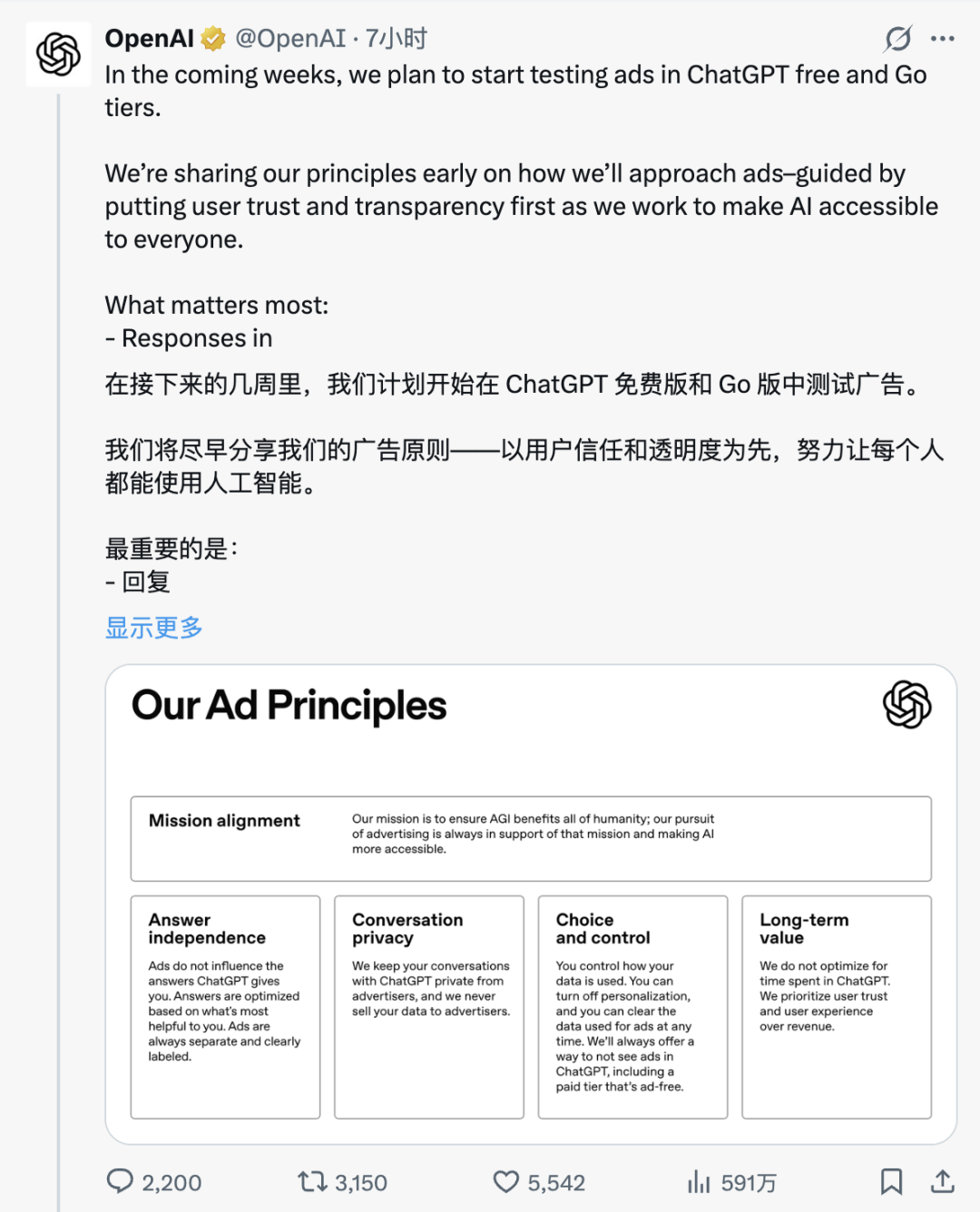
ChatGPT suddenly announces ads, $8 subscription plan can't avoid them
Trending news
MoreCrypto prices
More






