
Dollar Climbs Following Strong US Economic Data

Dollar Index Climbs to Four-Week Peak on Robust US Economic Data
The US dollar index surged to its highest level in a month on Thursday, closing with a gain of 0.24%. This upward movement was fueled by stronger-than-anticipated economic indicators from the United States. Notably, job cuts in December dropped to their lowest point in 17 months, and weekly unemployment claims increased by less than forecasted—both signs of a resilient labor market that could influence the Federal Reserve's policy stance. Additionally, third-quarter non-farm productivity improved, and the trade deficit narrowed to a level not seen in 16 years, further supporting the dollar's strength.
In December, Challenger job cuts in the US declined by 8.3% year-over-year to 35,553, marking the lowest figure in nearly a year and a half, which bodes well for employment conditions.
Related Updates from Barchart
Initial jobless claims in the US rose by 8,000 to 208,000 last week, which was still below the anticipated 212,000, indicating ongoing labor market strength.
Non-farm productivity in the third quarter increased by 4.9%, nearly matching the expected 5.0% and representing the largest jump in two years. At the same time, unit labor costs dropped by 1.9%, a steeper decline than the projected 0.1% decrease.
October’s US trade deficit unexpectedly contracted to $29.4 billion, far better than the forecasted widening to $58.7 billion and the smallest gap in 16 years.
Currently, markets are pricing in a 12% probability of a 25 basis point rate cut at the Federal Open Market Committee’s next meeting on January 27-28.
Despite recent gains, the dollar faces underlying softness as investors expect the Fed to lower rates by about 50 basis points in 2026. In contrast, the Bank of Japan is anticipated to raise rates by 25 basis points, while the European Central Bank is likely to keep rates steady that year.
Additional downward pressure on the dollar comes from the Fed’s recent liquidity injections, with $40 billion in Treasury bills being purchased monthly since mid-December. Concerns are also mounting that former President Trump may appoint a dovish Federal Reserve Chair, which could weaken the dollar further. Trump has indicated he will announce his pick for Fed Chair in early 2026, with Bloomberg suggesting Kevin Hassett, currently Director of the National Economic Council, as the leading candidate—widely seen as favoring looser monetary policy.
Euro Slides as Dollar Strengthens and Eurozone Confidence Falters
The euro-dollar pair dropped to a four-week low on Thursday, ending the session down 0.21%. The euro was pressured by the dollar’s rally and by disappointing Eurozone economic confidence data for December. Additionally, a sharp decline in Eurozone producer prices for November, the largest in over a year, suggests a dovish outlook for ECB policy and weighed on the euro.
Additional Eurozone Developments
- Losses for the euro were tempered by a surprise drop in the Eurozone’s November unemployment rate, a stronger-than-expected rise in one-year inflation expectations, and German factory orders posting their largest monthly increase in nearly a year.
- The Eurozone’s December economic confidence index unexpectedly slipped by 0.4 points to 96.7, missing forecasts for an increase to 97.1.
- Unemployment in the Eurozone for November fell by 0.1 percentage points to 6.3%, defying expectations for no change.
- Producer prices in the Eurozone dropped 1.7% year-over-year in November, the steepest fall in thirteen months and in line with estimates.
- ECB’s one-year inflation expectations for November held steady at 2.8%, slightly above the expected 2.7%, while three-year expectations remained at 2.5%.
- German factory orders in November jumped 5.6% month-over-month, far exceeding the anticipated 1% decline and marking the biggest gain in 11 months.
- ECB Vice President Luis de Guindos stated that current interest rates are appropriate, with recent data aligning with projections. He noted headline inflation is at 2%, and services inflation is easing.
- Markets see no chance of a 25 basis point ECB rate hike at the next policy meeting on February 5.
Yen Weakens Amid Dollar Gains and Economic Concerns
The US dollar rose 0.14% against the Japanese yen on Thursday. The yen was pressured by the dollar’s strength and disappointing economic data from Japan, including a drop in consumer confidence for December and lower-than-expected real cash earnings for November—both factors that support continued accommodative policy from the Bank of Japan. Rising US Treasury yields also contributed to the yen’s decline.
Further weakening of the yen is linked to escalating tensions between China and Japan, following China’s announcement of export controls on goods bound for Japan with potential military applications. This move was in response to comments by Japan’s prime minister regarding possible conflict if China were to invade Taiwan. These export restrictions could disrupt supply chains and negatively impact Japan’s economy.
Japan’s fiscal outlook is also weighing on the yen, as Prime Minister Takaichi’s administration plans to increase defense spending to a record high in the next fiscal year, as part of a 122.3 trillion-yen ($780 billion) budget approved by the cabinet.
Markets currently assign a zero percent probability to a rate hike by the Bank of Japan at its upcoming meeting on January 23.
Precious Metals Retreat as Dollar Strengthens
On Thursday, February COMEX gold closed down $1.80 (-0.04%), while March COMEX silver fell $2.469 (-3.18%). Both gold and silver prices declined for a second consecutive day, pressured by the dollar index’s surge to a four-week high, which triggered long liquidation in the precious metals market. There are also concerns that broad-based rebalancing of commodity indexes may be weighing on gold and silver prices. Citigroup estimates that the reweighting of the BCOM and S&P GSCI indexes could result in outflows of $6.8 billion each from gold and silver futures. Higher Treasury yields on Thursday further pressured precious metals.
Despite recent declines, precious metals continue to find support from safe-haven demand amid ongoing uncertainty over US tariffs and geopolitical risks in regions such as Ukraine, the Middle East, and Venezuela. Expectations that the Fed may adopt a more accommodative policy in 2026, especially if a dovish Chair is appointed, also underpin demand for gold and silver. Moreover, the Fed’s recent liquidity injections are increasing the appeal of precious metals as a store of value.
Central bank demand for gold remains robust. In December, China’s central bank increased its gold reserves by 30,000 ounces to 74.15 million troy ounces, marking the fourteenth consecutive monthly increase. The World Gold Council also reported that global central banks purchased 220 metric tons of gold in the third quarter, a 28% rise from the previous quarter.
Investor interest in precious metals is strong, with gold ETF holdings reaching a 3.25-year high last Tuesday, and silver ETF holdings climbing to a 3.5-year high as of December 23.
Disclaimer: The content of this article solely reflects the author's opinion and does not represent the platform in any capacity. This article is not intended to serve as a reference for making investment decisions.
You may also like
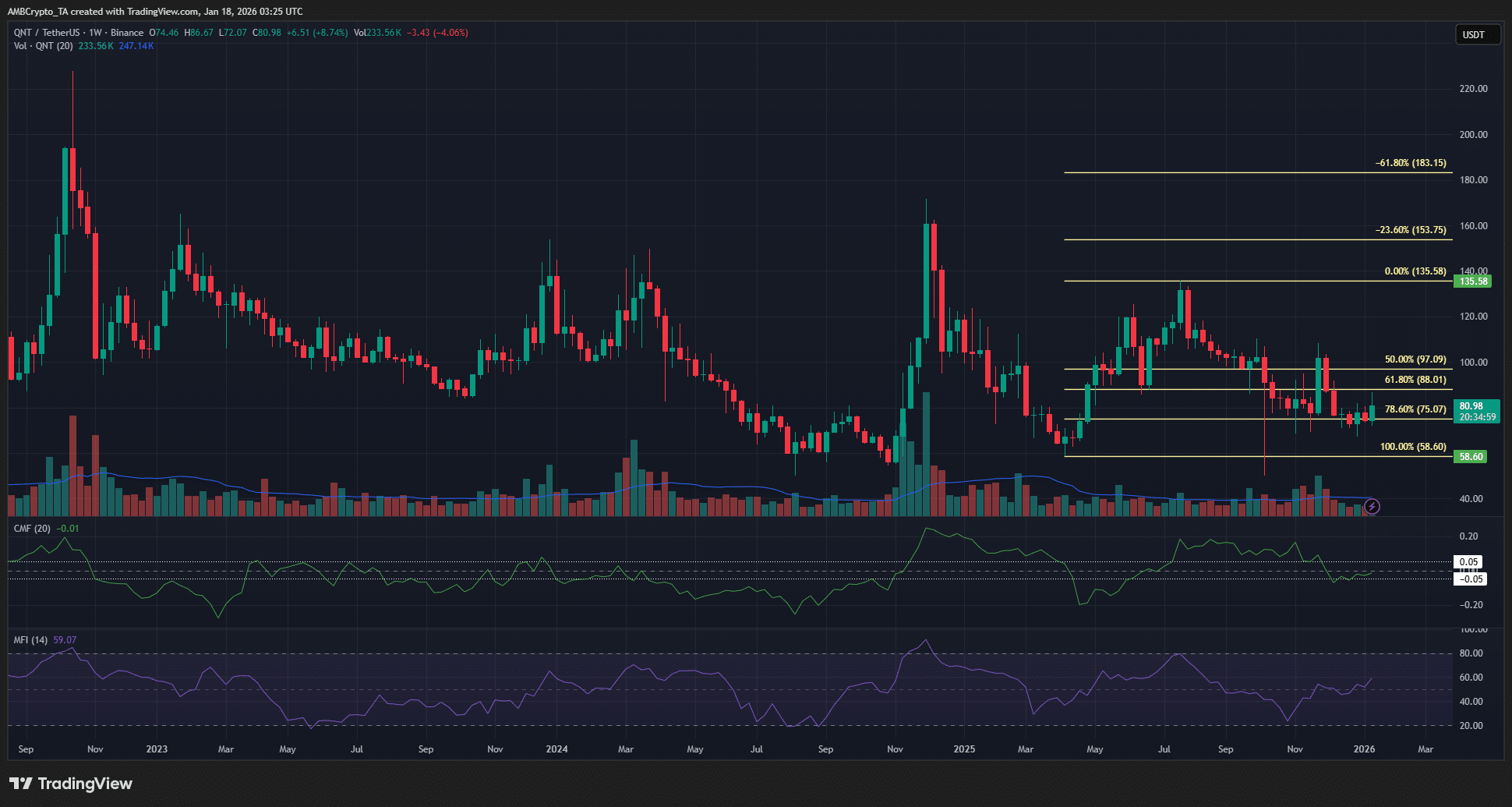
QNT jumps 12% as volume triples — Can Quant bulls defend THIS floor?
GRAM Ecosystem Joins EtherForge to Boost Web3 Gaming Across Chains
Everyone to get their own AI friend in five years, Microsoft executive says
Bitcoin’s Weekend Journey Sparks New Market Trends
Trending news
MoreCrypto prices
More






