
Ethereum prices remained under pressure as a large sell-off in crypto exchange-traded funds weighed on the broader market, keeping both Ethereum and Bitcoin stuck in a narrow range below recent highs.
Data showed that crypto ETFs recorded about $560 million in outflows in a single day, with both Bitcoin and Ethereum products seeing heavy selling from large asset managers.
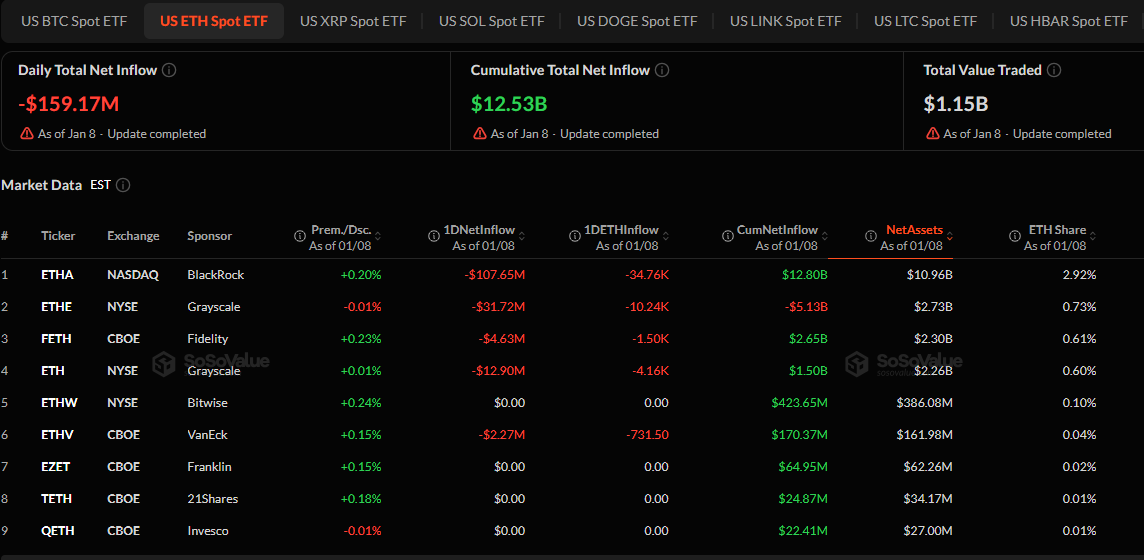
Spot Ether ETFs recorded withdrawals of roughly $159.17 million, while Bitcoin ETFs sold about $398.95 million worth of holdings. Together, the outflows marked one of the largest single-day reductions in ETF exposure in recent weeks.
 Source:
SoSoValue
Source:
SoSoValue
The selling came as prices struggled to move above resistance levels, with Ethereum failing to hold gains above the $3,300 area and Bitcoin trading below the $90,000–$95,000 range.
Funds managed by BlackRock recorded the largest outflows during the session. Its iShares Ethereum Trust (ETHA) saw about $107.65 million leave the fund. Grayscale Ethereum Trust(ETHE) followed with $31.72 million in outflows.
Grayscale Ethereum Mini Trust (ETH) also posted outflows of about $12.90 million, while Fidelity’s FETH saw $4.63 million in withdrawals.
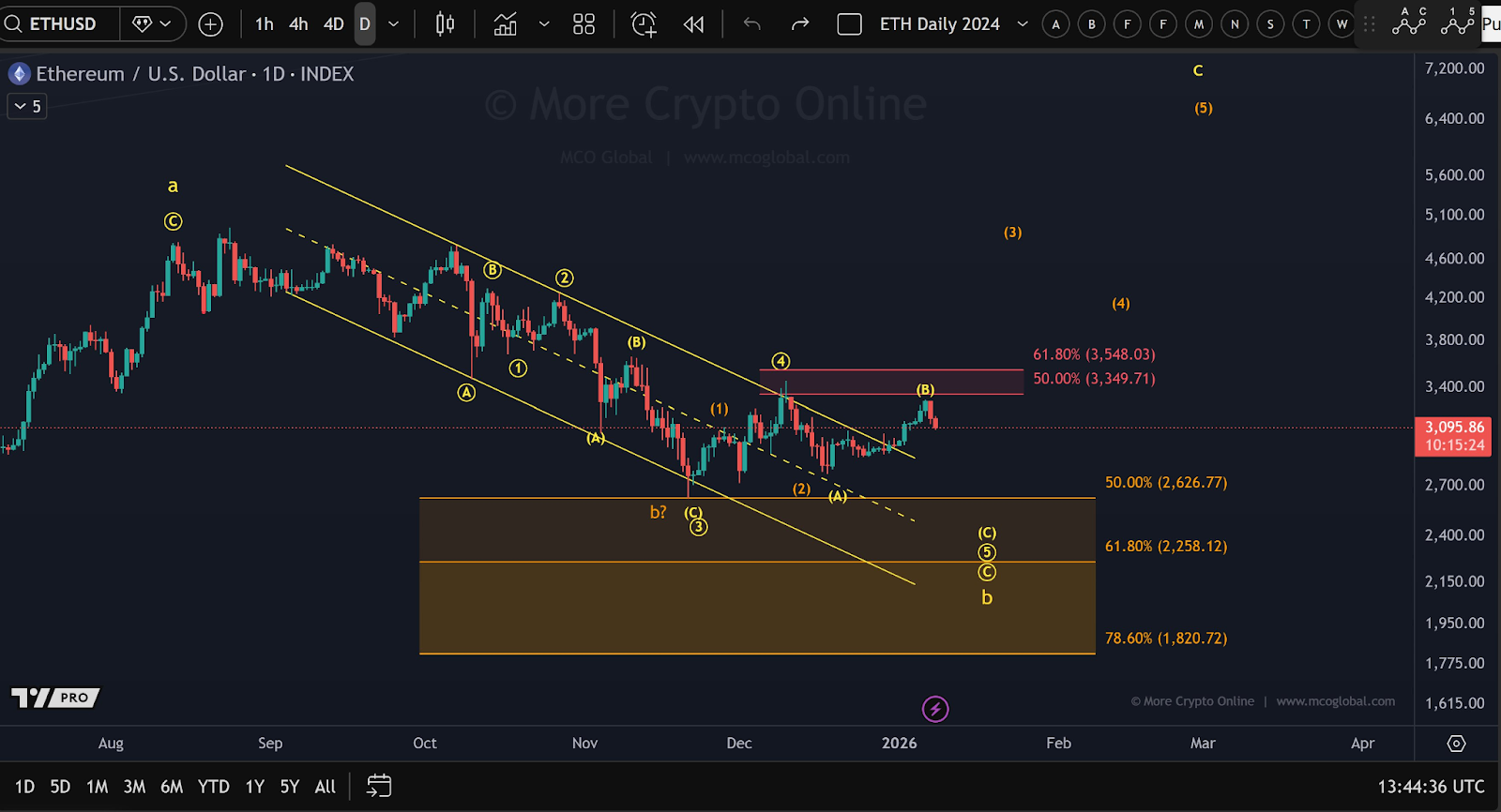
(adsbygoogle = window.adsbygoogle || []).push({});Ethereum has moved sideways on the daily chart after being rejected at higher levels earlier this week. Prices have not broken decisively above resistance, and recent declines have stayed within a broader range.
The price was rejected around the $3,300 area earlier this week and has since moved lower, showing that buyers are struggling to push the market higher. Any move higher continues to face pressure in the $3,150 to $3,250 zone. Ethereum has been rejected from this area multiple times, making it a strong ceiling for now.
 Source:
X
Source:
X
On the downside, Ethereum is holding above recent lows, but overall pressure remains tilted lower. If the price weakens further, analysts see room for Ethereum to drift toward the $2,600 to $2,250 range, where buying interest could return.
Related: Vitalik Buterin Details Ethereum’s Bandwidth-First Scaling Strategy