
Discover how these options metrics can assist you in creating a more effective trading strategy

Why Many Options Traders Struggle
Many individuals trading options don't lose money because they misjudge the market's direction. Instead, their downfall often comes from a lack of understanding of the underlying mechanics that drive option prices.
Options expert Rick Orford recently discussed in a video why so many traders find it difficult to achieve consistent success. Contrary to popular belief, the problem isn't poor stock selection. The real challenge lies in overlooking the critical factors that influence option pricing: the Greeks and volatility.
Latest Updates from Barchart
These concepts aren't reserved for institutional investors. They are practical tools that help explain the movement of options, when strategies are likely to succeed, and when the odds are not in your favor.
The Greeks: Essential Factors Most Traders Overlook
Every change in an option's price has a reason behind it. The Greeks provide a way to measure and understand these various influences.
Delta is commonly described as the amount an option's price will change if the underlying stock moves by $1. However, Rick points out that Delta also gives a rough estimate of the likelihood that an option will expire in the money.
Generally, a higher Delta means a greater probability of finishing in the money and results in higher premiums. Yet, many speculative traders are drawn to low-cost, low-Delta calls, only to see their capital diminish as the odds work against them until expiration.
Theta represents time decay, which quietly erodes the value of options each day. This loss of time value accelerates as expiration approaches. If the underlying stock doesn't move enough to counteract this decay, the option's premium can disappear—even if your prediction about direction is correct.
Vega measures how much an option's price responds to changes in volatility. When volatility rises, option prices increase; when it drops, such as after earnings announcements, premiums can fall sharply. Many traders experience this effect without realizing what is causing it.
While these three Greeks don't indicate which way the market will move, they help define risk and probability—key elements that distinguish disciplined trading from mere speculation.
Volatility: The True Source of Trading Advantage
Rick emphasizes that volatility is not about predicting direction, but about understanding the size and likelihood of price movements.
Implied volatility (IV) reflects the market's expectations for future price swings, while historical volatility (HV) shows how much a stock has actually fluctuated in the past. Comparing these two gives traders valuable perspective.
Metrics like IV Rank and IV Percentile are especially useful. IV Rank compares current volatility to the past year, while IV Percentile indicates how often volatility has been lower than it is now. High readings mean options are expensive; low readings suggest they are cheap.
Rick also points to the IV/HV ratio—comparing implied to realized volatility. When implied volatility is much higher than realized, sellers tend to have an advantage. When it's lower, buyers may benefit. This simple comparison can significantly impact how you approach your trades.
How Barchart Helps Traders Put Knowledge Into Action
Understanding these principles is just the beginning; applying them consistently is what sets successful traders apart. Barchart offers tools that go beyond basic charting to help traders make informed decisions.
With Barchart’s Options Screeners, you can:
- Quickly access Greek values for any options strategy
- Evaluate Expected Move to identify realistic profit and risk ranges
- Compare IV, IV Rank, IV Percentile, and IV vs. HV without manual calculations
- Test strategies with Profit & Loss charts before committing capital
Rather than relying on gut feelings, traders can use data to determine if a trade is truly supported by market conditions. This shift in approach is why professionals depend on objective analysis rather than opinions.
Why Consistency Outperforms Prediction
Rick concludes with an important reminder: every trade has someone taking the opposite side, holding a different view.
Your advantage doesn't come from being right more often than others. It comes from careful preparation, a structured approach, and emotional discipline. While you can't control the market, you can control your process.
Traders who last over the long term don't rely on luck. They focus on stacking the odds in their favor, managing risk, and maintaining consistency—even during challenging market conditions.
The resources and knowledge are available. The real difference is whether you choose to use them.
Trading isn't about guessing the next move—it's about being ready for whatever happens.
Watch: Understanding Greeks & Volatility
👉 Explore Options Screeners and the Options Learning Center
👉 Watch Rick Orford’s full video on YouTube
Disclaimer: The content of this article solely reflects the author's opinion and does not represent the platform in any capacity. This article is not intended to serve as a reference for making investment decisions.
You may also like
The world's largest auto supplier warns profit margin may fall below 2%
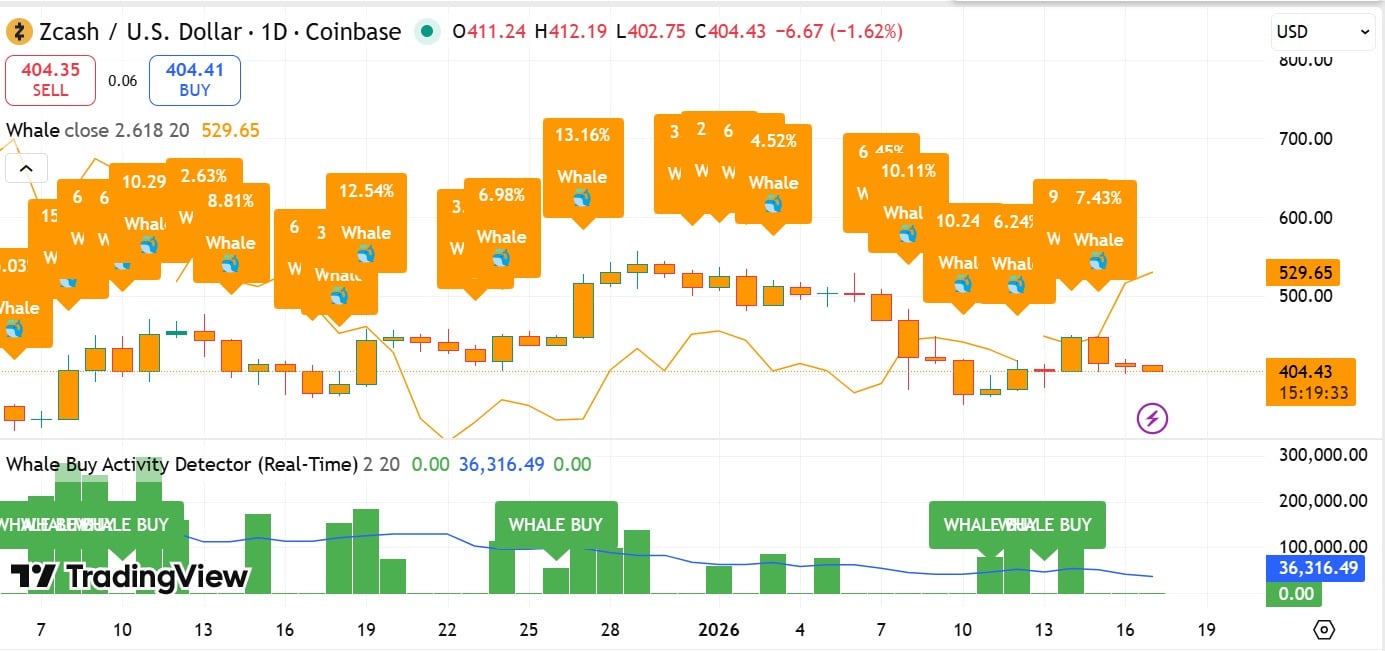
$31M ZEC whale inflows: Is Zcash ready to break $439?
Can Chainlink (LINK) Reverse? Expert Predicts Potential New Higher High
Anthropic’s Claude Code is the AI tool everyone’s talking about right now
Trending news
MoreCrypto prices
More






