
Pebble founder claims his latest venture is ‘not a startup’

Eric Migicovsky Charts a New Course with Pebble Reboot
Eric Migicovsky, CEO and founder of Beeper, addresses the audience at RemedyFest in Washington, DC, on February 27, 2024. The event brings together policymakers and technology leaders to discuss the evolving regulatory landscape.
Photographer: Valerie Plesch/Bloomberg via Getty Images | Image Credits: Bloomberg/Contributor / Getty ImagesReimagining Pebble: A Different Approach
Eric Migicovsky, best known for founding Pebble, is taking a fresh approach as he revives the Pebble smartwatch brand and introduces a new AI-powered ring. This time, the operation is lean, with a small team, no external investors, and products only manufactured after they’re sold.
Core Devices: Not Your Typical Startup
Migicovsky emphasizes that his new venture, Core Devices, is intentionally structured to avoid the pitfalls of the traditional startup model. “We’ve built this business to be sustainable and profitable for the long term, but it’s not a startup,” he explained during a recent interview at the Consumer Electronics Show in Las Vegas.
Learning from Pebble’s Past
Reflecting on his earlier experiences, Migicovsky acknowledges the lessons learned from running a hardware company. Pebble, which he launched, was acquired by Fitbit in 2016 for approximately $40 million, and Fitbit was later bought by Google for $2.1 billion.
Before Pebble’s acquisition, the company faced significant challenges. The 2015 holiday season left them with excess inventory after overestimating demand, resulting in $82 million in sales instead of the projected $102 million. This led to discounted sales, strained relationships with retail partners, and insufficient funds for product development, forcing layoffs and restructuring before ultimately seeking a buyer.
Migicovsky admits, “I lost track of Pebble’s original mission. Initially, our vision was clear—we launched on Kickstarter and communicated exactly what Pebble offered and who it was for. Over time, we drifted, experimenting with health tracking and other features that didn’t align with our identity.”
Image Credits: PebbleA Targeted Vision for the New Pebble
This time, Migicovsky is focused on creating products for a specific audience—enthusiasts and tinkerers who enjoy building and experimenting, rather than fitness fans or those seeking a full-fledged smartphone on their wrist. The new Pebble watches are designed for people like himself: those who appreciate playful, functional gadgets.
Design Philosophy: Simplicity and Fun
“I want a device that complements my phone, not replaces it. Something more akin to a Swatch than a Rolex—fun, lighthearted, and made of plastic,” Migicovsky says. He’s comfortable with a product that doesn’t try to be everything for everyone.
He adds, “I’m fine with having a focused vision and a limited scope for what we’re trying to achieve.”
New Products and a Streamlined Team
- Pebble Time 2 smartwatch
- Pebble Round 2 (round-faced model)
- Index 01: $75 AI smart ring
Unlike the previous iteration, the company now consists of just five people and sells directly to customers online, without working with distributors or maintaining a large staff.
Image Credits: PebblePebble OS: The Heart of the Reboot
The revival of Pebble is built on Pebble OS, the open-source operating system for the smartwatch, which Google generously released to the public. Migicovsky recounts how a chance meeting at a child’s birthday party led to the right contact at Google, and after a year, the OS was made open source—a move he deeply appreciates as a tribute to the Pebble community.
Without this open-source foundation, recreating Pebble’s software would have been impossible, as the original OS required years of work by a large team.
Image Credits: PebbleProgress and Future Plans
The new business model is proving effective: 25,000 pre-orders have been placed for the smartwatches, and 5,000 for the AI ring. Although current shipping times are about six months, Migicovsky expects to reduce this to just a few weeks. The Pebble App Store now offers 15,000 watch faces and apps, and the team plans to relaunch the SDK for developers soon.
Migicovsky notes that the company is financially stable, able to cover its costs and invest in new ideas. While he hasn’t revealed details about upcoming hardware, he hints that future products will be simple, enjoyable, and designed to improve daily life, working seamlessly together.
“There are plenty of products out there, but nothing quite like what we’re building,” Migicovsky says. “Our next devices will be fun, straightforward, and designed to make life a bit better—one step at a time.”
Disclaimer: The content of this article solely reflects the author's opinion and does not represent the platform in any capacity. This article is not intended to serve as a reference for making investment decisions.
You may also like
Why Quant (QNT) Price Is Rising Today: Can It Hit $100 This Weekend?

XRP Price Prediction January 2026: Onchain Signals Elevating XRP Rally Odds

Polkadot (DOT) Breakout Has Paused: Why The Silence Around DOT Matters

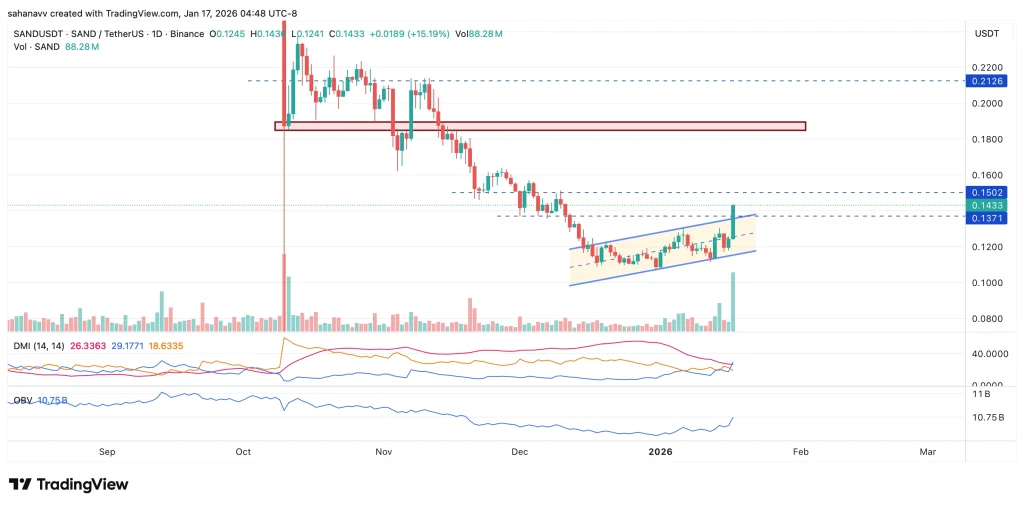
The Sandbox (SAND) Price Confirms a Retest: Top NFT Tokens to Watch in 2026
Trending news
MoreCrypto prices
More






