

The cryptocurrency market added more than
The
The data showed that while inflation is no longer falling rapidly, price pressures have stabilised at levels that could allow policymakers to shift toward easing if economic growth slows.
Core CPI, which excludes food and energy, increased
Shelter and services keep inflation elevated
The BLS said
Services inflation also continued to outpace goods. The trend reflects ongoing wage and rent pressures in the U.S. economy, a key reason the Federal Reserve has been cautious about cutting rates too quickly.
Energy prices rise as gasoline falls in new CPI report
Energy prices were not the source of the latest inflation relief. The CPI report showed that the
Gasoline prices declined for the month, but that drop was insufficient to pull overall energy prices into deflation. This means inflation remains structurally supported by services and housing rather than being driven down by falling fuel prices.
Trump pushes Fed to cut rates post CPI report
The CPI release quickly sparked political reaction. President Donald Trump took to social media shortly after the data was published. He argued that the Federal Reserve should lower interest rates.
“Great (LOW!) Inflation numbers for the USA. That means that Jerome ‘Too Late’ Powell should cut interest rates, MEANINGFULLY!!!” Trump wrote, adding that economic growth remained strong alongside stable inflation.
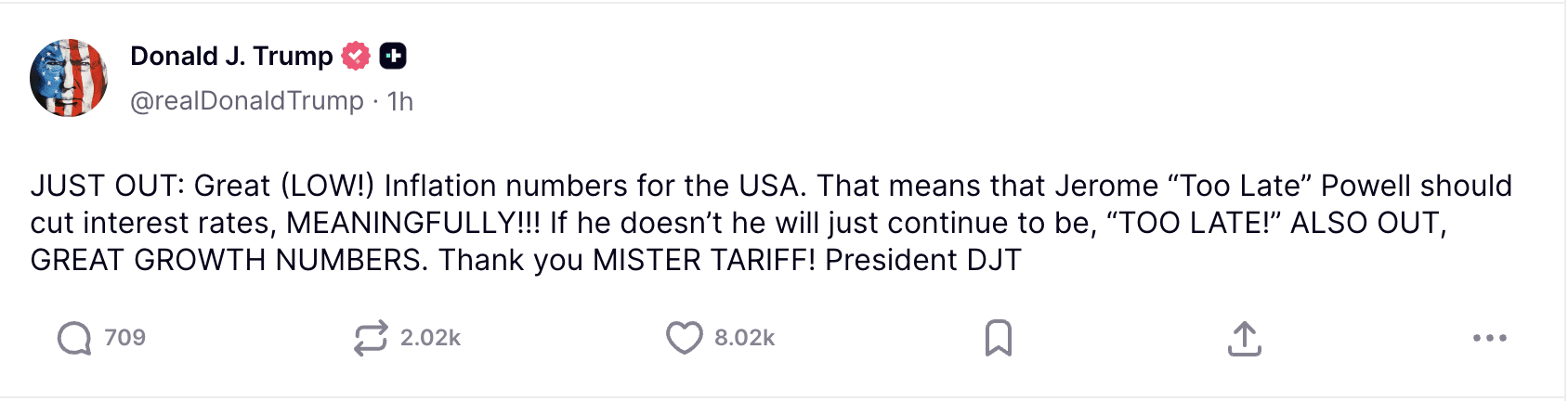
Source: Truth Social
While the Federal Reserve operates independently of political pressure, inflation running near 2.7% strengthens the case for eventual rate cuts if economic momentum cools.
Crypto market reacts to policy shift expectations
The crypto market responded positively to the inflation data. The total cryptocurrency market capitalization rose to around
Bitcoin climbed back above $91,000, while Ethereum and major altcoins also advanced as investors increased exposure to risk assets.
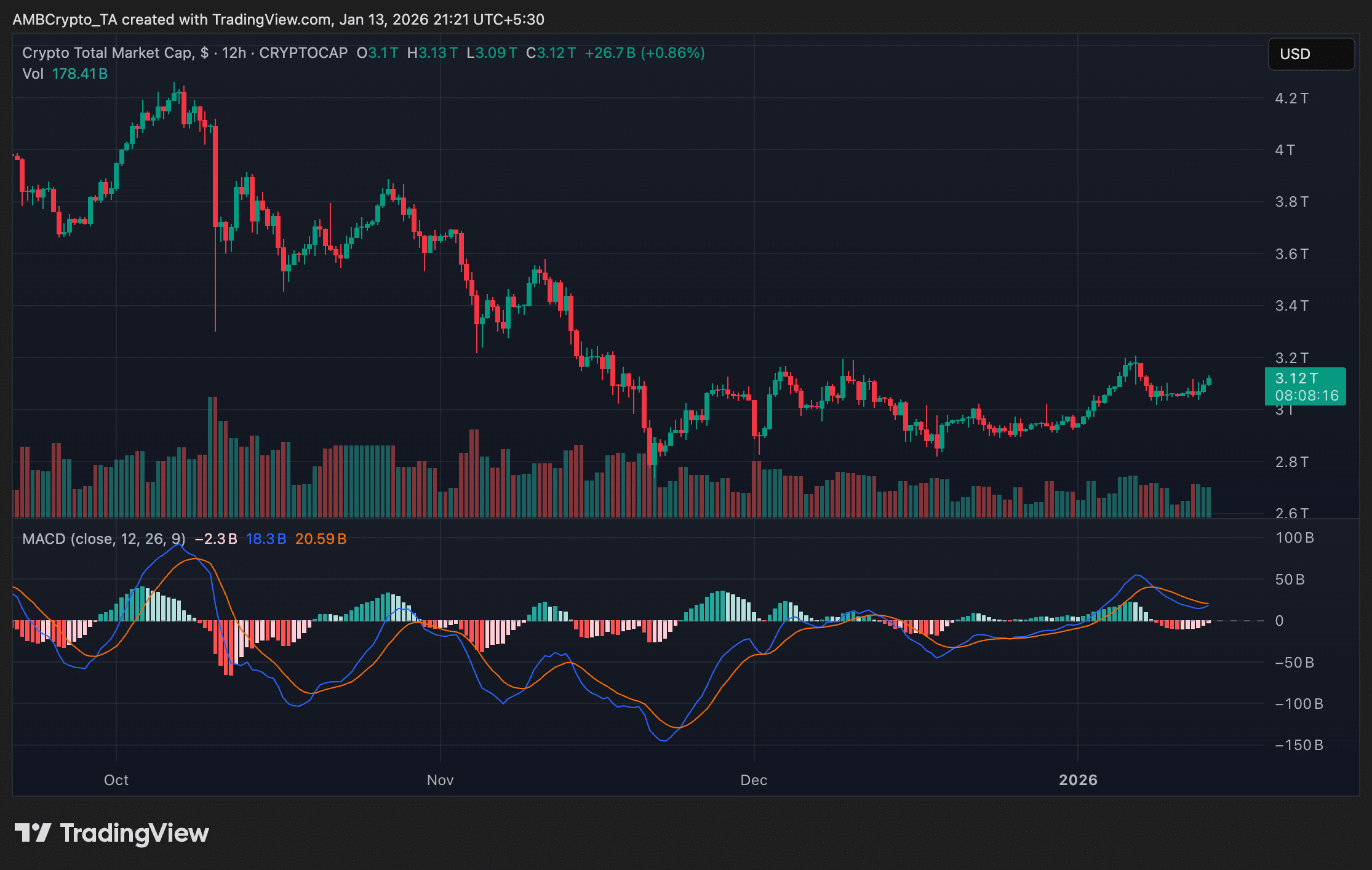
Source: TradingView
Technically, the broader crypto market showed improving momentum following the CPI release. On the 12-hour chart, total market capitalisation pushed above short-term resistance, with MACD turning positive — a sign that upside momentum may be rebuilding.
Why CPI matters for Bitcoin
As institutional participation has grown through ETFs, derivatives, and macro-linked trading strategies, Bitcoin has become increasingly sensitive to U.S. inflation data.
Stable inflation near the Fed’s target allows:
- Bond yields to ease
- Liquidity conditions to loosen
- Risk assets to attract capital
With the headline CPI holding at 2.7% and core inflation at 2.6%, markets are increasingly pricing in the possibility of a Federal Reserve pivot later in 2026. This backdrop has historically supported Bitcoin and other digital assets.
If inflation remains contained while growth slows, monetary policy may soon shift from restraint to stimulus, potentially providing a powerful tailwind for crypto markets.
Final Thoughts
- U.S. inflation remained stable at 2.7%, increasing expectations that the Federal Reserve may begin cutting interest rates later in 2026.
- Lower inflation reduces the need for tight monetary policy, improving liquidity conditions and making risk assets like Bitcoin more attractive.






