
Taxpayers may face obstacles when trying to deduct interest on car loans

Understanding the New Car Loan Interest Tax Deduction
The much-discussed promise of "no tax on car loan interest" is leaving many car buyers disappointed, as numerous individuals will discover they do not meet the requirements for this new tax benefit on their 2025 tax filings.
Who is missing out?
Lower-income families, who often rely on their tax refunds for down payments on used vehicles, will not be able to deduct interest paid in 2025 on high-interest used car loans taken out in the previous year. The deduction is not available for used car loans.
Leases are also excluded. The recently introduced car loan interest deduction, part of the One Big Beautiful Bill Act, does not apply to leased vehicles.
Leasing is especially common in states like Michigan, New Jersey, New York, and California, where a significant portion of new vehicle transactions are leases rather than loans. For example, in Michigan, over half of new vehicles sold in the third quarter of 2025 were leased, with New Jersey and New York following closely behind. In contrast, states such as Alaska, Arkansas, Kansas, Oklahoma, West Virginia, and Wyoming see less than 5% of new vehicles leased.
According to David Lawrence of the LaFontaine Automotive Group, manufacturers often promote special lease offers in Michigan, where many residents work in the auto industry and can access additional discounts.
Key Requirement: Where Was Your Vehicle Assembled?
To claim the car loan interest deduction, you must know where your car or truck was manufactured. Many buyers are unsure of this detail, but it is essential to verify before attempting to claim the deduction.
If your new vehicle’s final assembly took place outside the United States, you are not eligible for the deduction.
How to Determine Your Vehicle’s Assembly Location
If you believe you might qualify, locate the window sticker (the Monroney label) from your 2025 new car purchase. This label, named after Senator Almer Stilwell “Mike” Monroney, provides detailed information about the vehicle, including its assembly location.
The sticker will specify where your car was built. Do not make assumptions—verify the exact assembly site for your specific model and trim, as even similar trims may be assembled in different countries.
Production locations can change from year to year, so always check the latest information. Patrick Anderson of Anderson Economic Group notes that manufacturers frequently shift their assembly plants.
Some well-known brands, such as Toyota and Honda, operate assembly plants in the U.S., but not all models qualify. Vehicles like the Toyota Tacoma, Honda HR-V, Chevrolet Equinox, Kia K4, and Ford Maverick may not meet the requirement if their final assembly occurs outside the U.S.
If you do not have the window sticker, use the VIN Decoder tool from the National Highway Traffic Safety Administration. Enter your vehicle’s VIN and model year to find the assembly plant information.
Keep in mind: The deduction does not apply to used car loans, leases, vehicles assembled outside the U.S., or to higher-income households.
If your vehicle was assembled in the U.S., you must include the VIN on Schedule 1-A when claiming the deduction. Refer to page 2 of Schedule 1-A, titled "No Tax on Car Loan Interest."
Report the "total additional deductions" from Schedule 1-A, line 38, on line 13b of your 1040 form.
Importantly, you can claim this deduction whether you take the standard deduction or itemize on Schedule A.
Potential Tax Savings from Car Loan Interest
Starting with 2025 tax returns, buyers of new vehicles can deduct up to $10,000 in car loan interest per year, reducing their taxable income if they qualify. However, most borrowers pay much less than $10,000 in annual interest. The actual savings depend on the amount of qualifying interest paid and your tax bracket.
According to Anderson, typical tax savings for those who qualify may range from $300 to $900 annually. Since interest payments are usually highest in the first year of a car loan, the largest deduction will likely occur then, with smaller deductions in subsequent years as the loan balance decreases.
This deduction is only available for tax years 2025 through 2028. For example, if you take out a six-year loan in 2025, you will not receive the deduction in the final two years of the loan.
Only loans originated between January 1, 2025, and December 31, 2028, are eligible.
Important Rules for the Car Loan Interest Deduction
While many are eager to benefit from this new tax break, determining eligibility can be complex.
Higher-income individuals, who are more likely to purchase new vehicles, may find their incomes exceed the threshold for the deduction. The deduction is reduced by $200 for every $1,000 (or part thereof) of modified adjusted gross income above $100,000 for single filers and $200,000 for joint filers. The deduction is completely phased out at $150,000 for single filers and $250,000 for joint filers.
For example, a single filer with a qualifying loan and a modified adjusted gross income of $120,000 would only be able to deduct up to $6,000 in interest, rather than the full $10,000.
Note that the limit is based on "modified adjusted gross income," which may differ from your regular adjusted gross income.
Negative Equity and the Deduction
Many buyers owe more on their current car loan than their trade-in is worth. Sometimes, this negative equity is rolled into a new car loan. However, interest paid on the negative equity portion is not deductible. Only the amount used to purchase the new vehicle qualifies.
For instance, if you take out a $50,000 loan, make a $4,000 down payment, and roll $2,000 of negative equity into the new loan, only $48,000 of the loan qualifies for the deduction. The interest paid on this portion can be deducted on Schedule 1-A.
According to IRS guidance, this rule is unlikely to change.
Tips for Claiming the Car Loan Interest Deduction
- Organize your documents early: Bring your original loan and financing agreements, which should detail the amount financed, lien status, and any add-ons that do not qualify, such as insurance or extended warranties.
- Ensure the loan is secured: The loan must be secured by a lien on your new car or truck, and the vehicle must have been assembled in the U.S.
- Have your VIN ready: The VIN is required on Schedule 1-A and can be found on your purchase contract, insurance card, window sticker, or vehicle registration. Ensure the VIN is entered accurately, as missing or incorrect VINs will disqualify the deduction.
- File electronically: This reduces the risk of omitting required information, such as the VIN.
- Calculate only the interest: You can only deduct the interest portion of your payments, not the entire loan amount or monthly payment.
- Obtain documentation of interest paid: Lenders may provide an annual statement or a 1098-VLI form (vehicle loan interest statement) for 2026 and beyond. For 2025, lenders are not required to issue this form if the interest paid is less than $600, but you must still report the interest on Schedule 1-A.
- First owner requirement: Only the first registered owner of the vehicle can claim the deduction, regardless of vehicle type (including electric and plug-in hybrids).
- Personal use verification: You must be able to show that the vehicle is used primarily (over 50%) for personal purposes.
- Refinanced loans: If you refinance a qualifying loan, the interest on the refinanced amount generally remains eligible for the deduction.
Additional Resources
For more information, consult the IRS’s guidance on the One Big Beautiful Bill Act and review Schedule 1-A for details on the required forms.
Adapted from an article originally published by Detroit Free Press: How taxpayers could hit a dead end with car loan interest deduction
Disclaimer: The content of this article solely reflects the author's opinion and does not represent the platform in any capacity. This article is not intended to serve as a reference for making investment decisions.
You may also like
300% Gains in Just Days: Discover Why Experts Crown ZKP the Best Crypto to Buy Over Solana and Zcash
From Anonymity to Selective Disclosure: The Next Era of Privacy Coins

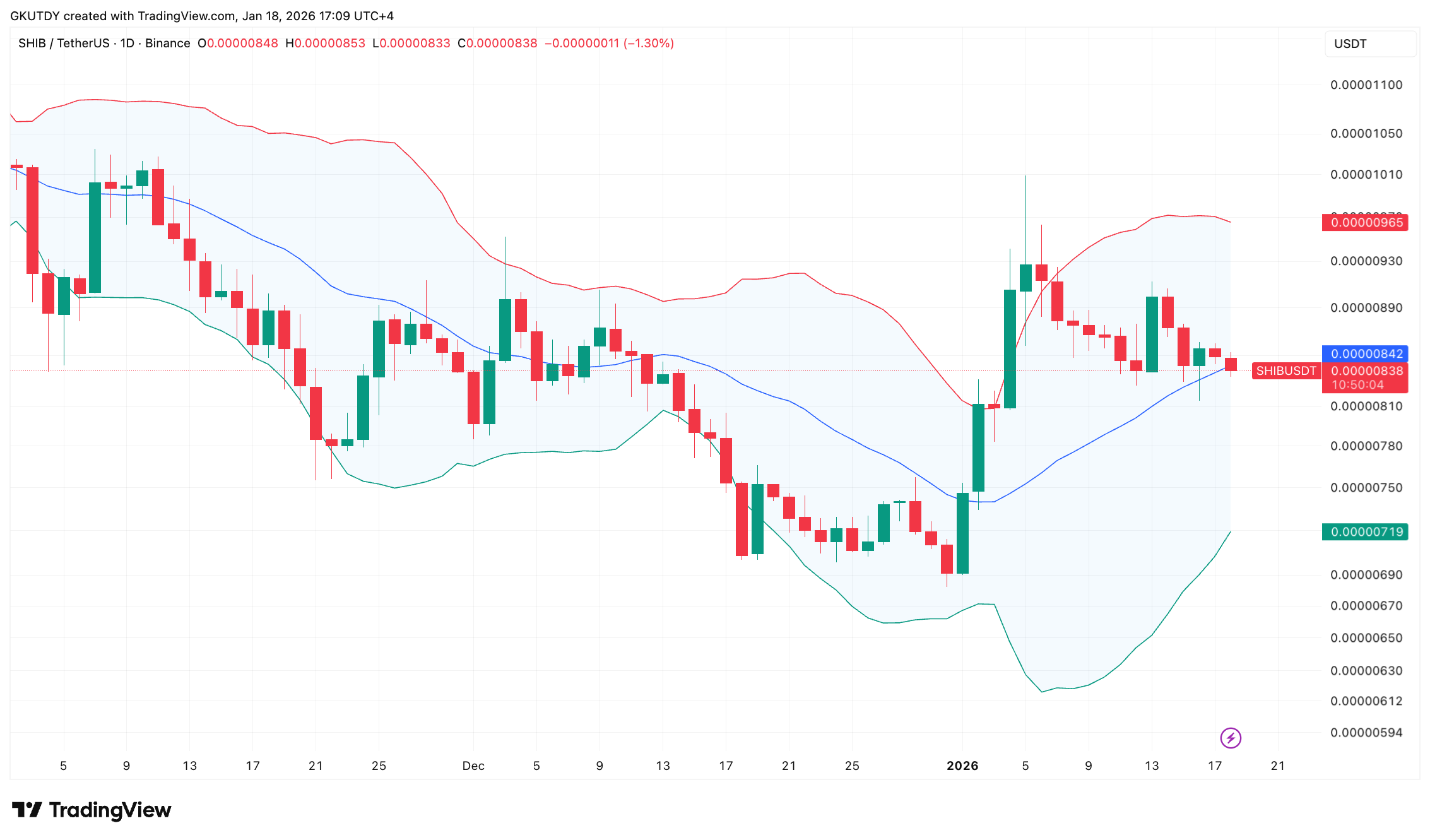
Shiba Inu (SHIB) Price Alert: Bulls Lose Control as Popular Indicator Signals 14% Drop
803,780,000 XRP Now Locked in ETFs as Major Repricing Looms

Trending news
MoreCrypto prices
More






