coindesk.com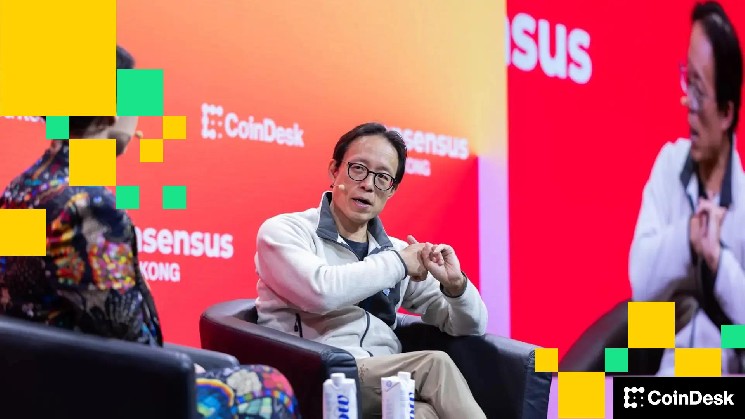
For much of 2025, crypto traded as if U.S. President Donald Trump was its inevitable savior. Prices ran ahead of policy, altcoins priced in political permissions, and the industry waited for a regulatory green light that never quite arrived. But as the year wound down, and Trump's reinauguration faded into memory, the market did not follow.
For Yat Siu, co-founder and executive chairman of Animoca Brands, the fading Trump trade marked a turning point. The moment clarified that crypto’s next phase would not be driven by politics, but by structure, he said. Institutional capital, he argued, is changing how markets behave, pushing bitcoin into a reserve role while forcing altcoins to prove real utility.
At the same time, crypto is converging with AI as the infrastructure layer for autonomous systems and digital commodities. With Consensus returning to Hong Kong, Siu sees the city as uniquely positioned to sit at the crossroads of global finance and emerging technology as that shift accelerates.
“Trump is pro crypto, so that’s a net positive, absolutely,” Siu said in an interview with CoinDesk in Hong Kong. “But we are not his top priority. I think our industry was very much thinking that Trump would always be our savior of some sort, and that was never really the case.”
The past year, he said, exposed how much of crypto’s momentum had been tied to expectations rather than fundamentals.
“We have to navigate around that,” Siu said.
That recalibration, Siu argued, is arriving just as institutional capital becomes a permanent force in crypto markets. Rather than trading around election cycles or headline catalysts, large investors are increasingly treating crypto as a long-term asset class, a shift he said is already changing how markets behave.
That structural shift, Siu said, is also forcing a rethink of how value is distributed across crypto markets, particularly the long-running relationship between bitcoin and the rest of the ecosystem.
“Bitcoin functions very much like gold. It’s our reserve asset," Siu said, arguing that as a result, altcoins collectively become part of the productive economy. Animoca is seeking to become the first altcoin digital asset treasury company, filing for a reverse merger to list on the Nasdaq exchange last year.
Siu sees the same structural logic at work in the relationship between crypto and artificial intelligence, which he argued are converging rather than competing.
For most users, he said, exposure to AI may ultimately come through crypto, not traditional equity markets, because blockchain provides the trust and sovereignty autonomous systems require.
“For most users, the hedge towards AI is owning crypto,” Siu said. “Crypto is essentially the natural asset class of basically AI agents.” If those agents are expected to act independently, manage assets, or execute transactions, he added, they need rails that cannot be arbitrarily revoked or altered.
That convergence, Siu argued, mirrors earlier technology cycles, when the infrastructure layer faded into the background while powering entire industries.
“We don’t talk about e-commerce anymore. It’s just commerce,” he said. “Crypto is very much the same thing.”
Siu argues that this shift toward new users is also reshaping how finance itself is presented. Rather than bringing financial products into games, he said crypto is absorbing the culture of gaming, using mechanics that resonate with younger generations who grew up online.
For example, he pointed to Hyperliquid's leaderboard, where wins – and losses – are celebrated.
“We think the entire industry of crypto is essentially gamified finance of some form,” Siu said. “It’s not putting finance in gaming. Rather, it’s gaming [that] has come to finance.”
Leaderboards, social rankings, and reward mechanics, he added, are not superficial design choices but a reflection of how younger users already understand participation and value.
“It’s really just the understanding of media and culture of that generation,” he continued.
Hong Kong, in his view, is well-positioned for that next phase. Long a global finance hub, the city sits close to some of Asia’s most advanced technology ecosystems, like neighbouring Shenzhen, while maintaining international capital markets and regulatory reach.
“You can’t really build a strong digital assets hub from a global perspective unless it has global rails,” Siu said. “Hong Kong is uniquely positioned towards that.”