
News
Stay up to date on the latest crypto trends with our expert, in-depth coverage.

1Bitget UEX Daily | Jensen Huang Launches NemoClaw; IEA May Deploy More Oil Reserves; Bitcoin Returns to $75,000 (March 17, 2026)2STRC's Liquidity Boom: A Powerful Tool for Maximizing Bitcoin Holdings3Morgan Stanley: This Is Not 2008, "Private Credit" Is Not "Subprime"

Four Stablecoins, Four Blockchains: Visa’s Big Step in Digital Payments
Cointribune·2025/10/30 22:24

Is Virtuals Protocol (VIRTUAL) Poised for a Bullish Rally? This Emerging Fractal Setup Saying Yes!
CoinsProbe·2025/10/30 22:24

Ondo Finance Partners with Chainlink to Strengthen Onchain Institutional Finance
CoinsProbe·2025/10/30 22:24

Aster (ASTER) Nearing Potential Bottom? This Key Emerging Fractal Suggests So!
CoinsProbe·2025/10/30 22:24

African payment giant Flutterwave taps Polygon blockchain for cross-border payments
Coinjournal·2025/10/30 22:09

Uphold relaunches XRP rewards debit card in the US with up to 10% back for users
Coinjournal·2025/10/30 22:09

Garden Finance exploit: over $5.5M stolen, 10% white hat bounty announced
Coinjournal·2025/10/30 22:09

Jiuzi Holdings taps SOLV Foundation for its $1B Bitcoin investment plan
Coinjournal·2025/10/30 22:09

Hedera Powers New Verifiable AI Agent Governance System for Governments and Enterprises
CryptoNewsFlash·2025/10/30 22:00
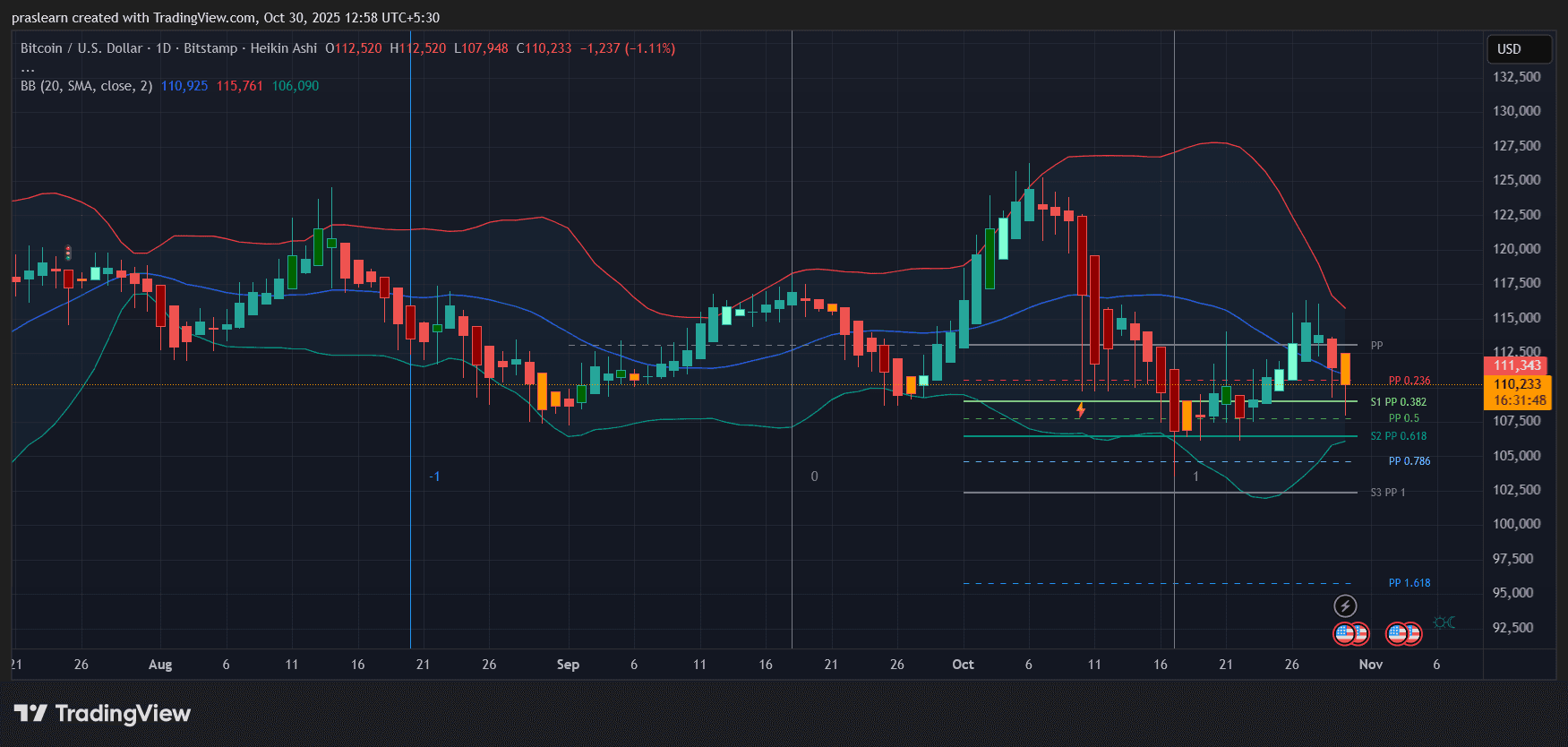
Will the Fed’s Rate Cut Spark a New Bitcoin Rally?
Cryptoticker·2025/10/30 21:54
Flash
09:07
ING Bank: The euro faces downside risks as no positive news emerges from the Middle East situationGolden Ten Data reported on March 17 that ING analyst Francesco Pesole stated in a report that unless there is positive progress in the Middle East situation, the euro may decline. He said: "In the short term, the euro-dollar exchange rate still faces downside risks." He pointed out that Monday's rebound in the euro-dollar exchange rate "may be just a flash in the pan, unless news about ceasefire negotiations or NATO's coordinated actions to ensure the safety of the Strait of Hormuz begins to emerge." High oil and gas prices have intensified concerns about the eurozone's reliance on energy imports. He indicated that the euro could fall below 1.1450 this week.
09:03
Tempo is expected to launch its mainnet by the end of March, with no token issuance in the initial phase.Odaily reported that the cryptocurrency podcast The Rollup posted on X, stating that sources revealed Stripe and Paradigm are jointly developing a new public chain called Tempo, which is expected to launch its mainnet before the end of March, with both enterprise and retail sides going live simultaneously. The Rollup noted the following information: 1. Tempo's mainnet launch will adopt a "dual-track" release model: the retail side will focus on payments and DeFi, while the enterprise side will focus on agent-based payments, B2B, payroll distribution, remittances, and credit expansion scenarios. 2. The new TIP-20 standard means that paying Gas on this chain will no longer require native tokens. 3. No tokens will be issued at the time of the mainnet launch. The team is waiting for a better market environment and a clearer regulatory framework to design a more reasonable token economic model. 4. Stripe is actively promoting the integration and implementation of partner resources behind the scenes. 5. The enterprise route will be built around agent-based payments, covering contractor settlements, payroll distribution, cross-border remittances, prepaid interest payments, and credit expansion.
09:03
Moody's Chief Economist: If the Hormuz Strait Blockade Continues, U.S. Economic Recession Will Be Hard to AvoidBlockBeats News, March 17th. Mark Zandi, Chief Economist at Moody's, said that as long as the Strait of Hormuz remains closed to tanker traffic, the U.S. economic outlook will continue to deteriorate, despite the fact that current U.S. oil and natural gas production is roughly in line with consumption.
Zandi believes that if the situation remains unchanged in the coming weeks, a U.S. economic recession will become unavoidable. Even before the Iran conflict, Moody's machine-learning-based leading indicators had shown a 49% probability of the U.S. entering a recession in the next 12 months. Zandi expects that the next release of the model will indicate a recession probability of 50% or higher.
Currently, several investment banks still maintain recession probabilities in the 30% to 40% range. The Adnaan Research team recently raised the probability of a market crash from 20% to 35%. The S&P 500 Index rose 1% on Monday to close at 6699.38 points, and Wall Street has not yet priced in the recession overall.
News