Bitget App
Trade smarter
Buy cryptoMarketsTradeFuturesEarnSquareMore

News

Stay up to date on the latest crypto trends with our expert, in-depth coverage.

banner
The ChainOpera AI Token Collapse: A Warning Story for DeFi Platforms Powered by AI

- ChainOpera AI's COAI token collapsed 96% in late 2025 due to algorithmic stablecoin failures, exposing systemic risks in AI-driven DeFi. - Technical flaws and opaque governance in COAI's AI systems worsened liquidity crises, despite $50M in funding. - Regulatory pressures and centralized token distribution exacerbated vulnerabilities, contradicting DeFi's decentralization principles. - Market resilience emerged as Uniswap's UNI token rose 15%, highlighting potential for innovation in token economics. - T

Bitget-RWA·2025/11/10 20:40
US Senate Launches Bipartisan Follow-Up to CLARITY Act

The Senate released a bipartisan crypto bill centering oversight on the CFTC while coordinating with the SEC. The draft is a first step toward defining digital commodities and strengthening consumer protection.

BeInCrypto·2025/11/10 20:31
Modern Monetary Theory and the Transformation of Asset Valuation in 2025: Policy Changes, Risk Adjustments, and Actual Market Conditions

- Modern Monetary Theory (MMT) has transitioned from academic concept to central framework for central banks addressing post-stablecoin crisis market instability in 2025. - Central banks are embedding MMT principles into policy tools, shifting from asset purchases to targeted liquidity facilities while prioritizing digital asset system resilience. - Academic research introduces "growth risk premium" to explain how MMT-driven fiscal expansion and low interest rates reshape traditional asset valuations and r


Bitget-RWA·2025/11/10 20:22
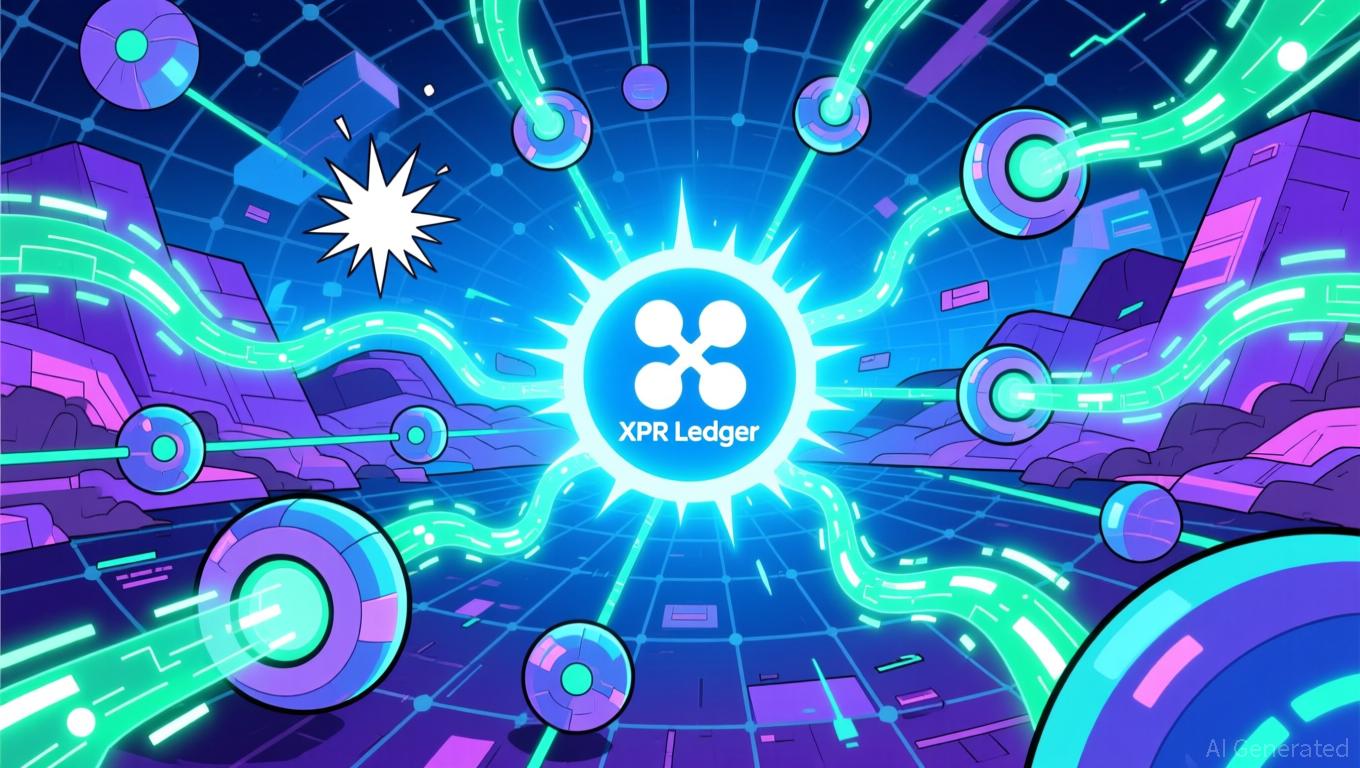
XRP News Today: Ripple’s Regulated Stablecoin Pilot Poses a Challenge to Traditional Banking Systems

- Ripple Labs tests RLUSD, a regulated stablecoin, with Mastercard and Gemini for credit card settlements on XRP Ledger, aiming to optimize speed and reduce costs. - Mastercard expands its digital asset strategy to the U.S. market, leveraging RLUSD's compliance with New York Trust Charter to challenge legacy banking systems. - Market reactions show XRP rebounding to $2.32 amid $500M funding, but regulatory scrutiny like the Bank of England's stablecoin limits remains a key adoption barrier.

Bitget-RWA·2025/11/10 20:08
Flash
13:14
US Stock Market Volatility Index Soars, Semiconductor Stocks Experience Rapid Two-Month Surge Halted
BlockBeats News, June 6th. As the semiconductor sector experienced a sharp pullback, the Cboe Volatility Index (VIX), known as Wall Street's "fear gauge," surged nearly 40% in a single day, marking the largest gain since March this year. The VanEck Semiconductor ETF (SMH) fell by nearly 10% intraday, ending a strong rally of about 80% over the previous two months. Data shows that the S&P 500 index options saw a record 7.8 million contracts traded on Friday, a 16% increase from the previous high in April. Meanwhile, the 10-year Treasury yield rose after strong nonfarm payroll data, leading to a significant increase in demand for put options on long-term Treasury ETFs (TLT) as well as investment-grade and high-yield bond ETFs. Brent Kochuba, the founder of the options analysis platform SpotGamma, stated that the recent abnormally high premium of single-stock options compared to index options is readjusting, indicating a need for the overheated chip stocks to cool down. Danny Kirsch, the head of options at Piper Sandler, pointed out that a substantial amount of leveraged ETF funds are concentrated in the semiconductor sector. Coupled with funding for tech giants like Meta and Alphabet and concentrated large IPO issuance, the market correction pressure has been further intensified. Impacted by the decline in risk appetite, Bitcoin briefly dropped below $60,000 before stabilizing, while Strategy's stock fell by nearly 7% on the day, with the trading volume of put options exceeding that of call options by two-fold. The Nasdaq index recorded its worst single-day performance since April 2025.
12:47
Tether Appoints Independent Director to Twenty One Capital Board, Restoring Full Audit Committee Structure
BlockBeats News, June 6th, Tether announced that it has appointed a new independent director to the board of Bitcoin reserve company Twenty One Capital (XXI) to fill the previous vacancy in the audit committee. The company stated that this appointment complies with the independence requirements of the U.S. SEC Securities Exchange Act Rule 10A-3 and NYSE listing rules. This vacancy arose after Tether's acquisition of XXI shares held by Softbank Group on May 20th. Following the termination of the governance agreement between the two parties, Softbank's appointed director resigned, one of whom was a member of the audit committee. According to reports, Twenty One Capital currently holds over 43,500 Bitcoins and is positioned as a vertically integrated Bitcoin company with business operations covering Bitcoin mining, asset reserves, capital markets, and financial services. Tether CEO Paolo Ardoino stated that XXI is in the process of building one of the most significant Bitcoin enterprises globally. Therefore, the company's priority is to ensure that the board has an independent oversight mechanism in compliance with SEC and NYSE requirements to match its robust balance sheet.
11:48
FT Experiences Minimal Liquidation During Major Market Correction
On June 6, Sonic co-founder Andre Cronje stated that during the first significant market correction experienced by the derivatives platform FT (FlyingTulip), the equity account lending model resulted in only about $50,000 in liquidation. This is significantly lower than traditional loan-to-value (LTV) models due to the use of net risk calculations instead of discounted collateral models, along with the effectiveness of a soft liquidation mechanism, which resulted in an average liquidation amount of only $200 to $2,000 per transaction. Andre Cronje noted that if a traditional LTV-based lending system had been used, the liquidation scale during this market volatility could have increased by 10 to 20 times. He emphasized that the equity account model enables net risk management and reduces market impact through the soft liquidation mechanism, leading to a safer, lower volatility, and reduced discount loss lending experience.
Markets