
News
Stay up to date on the latest crypto trends with our expert, in-depth coverage.

1Amazon is Considering a $9 Billion Deal to Acquire Satellite Communications Company Globalstar. Here's Why Amazon, Apple, and Tesla Investors Should Pay Attention.2Exxon’s Guyana-Permian Engine Fuels 21% Earnings Growth—Is the 24 P/E Already Discounting a Squeeze?3Bitcoin’s Movement Compared to Oil’s Rally: Evaluating a Risk-Off Scenario
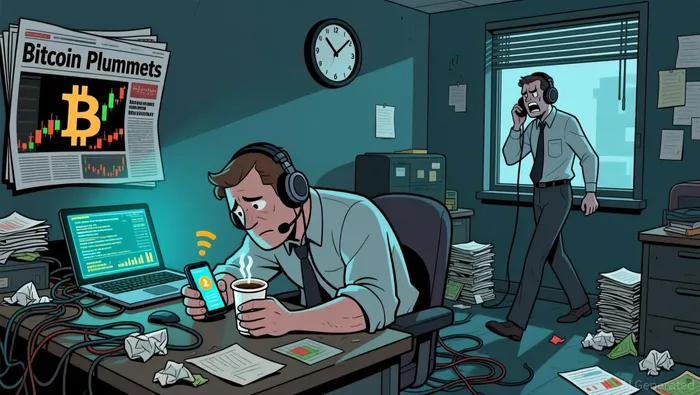
Bitcoin Challenges $70,000 Support Amid Rising Geopolitical Tensions That Could Extend Broader Market Downturn
101 finance·2026/03/23 03:21


EyePoint’s Legal Action Seeks to Prevent Changing the Story Ahead of Duravyu’s Critical Mid-2026 Results
101 finance·2026/03/23 03:21
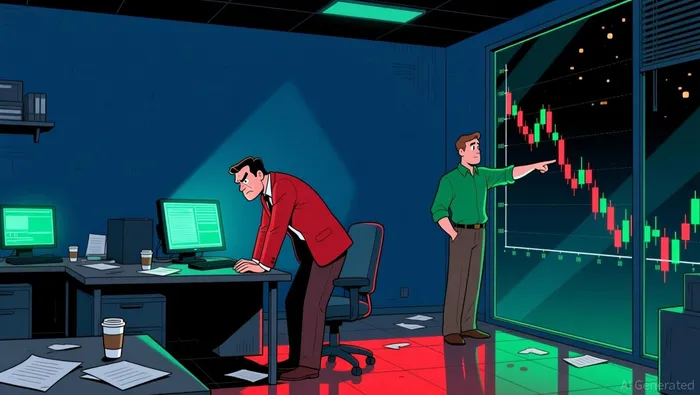
ICP Price Action: Examining Flow Patterns During a Period of Lateral Consolidation
101 finance·2026/03/23 03:15
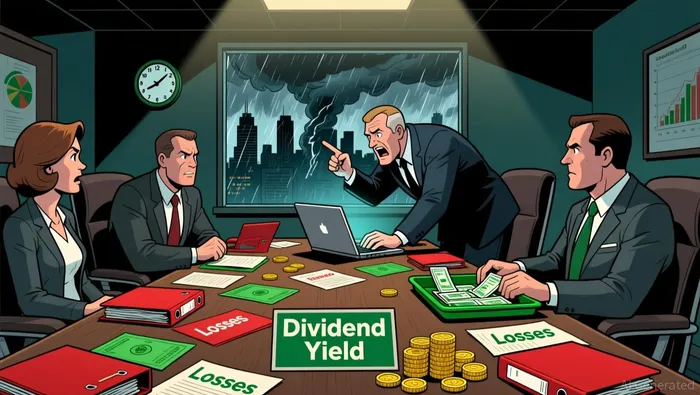
Cosel’s 4.6% Dividend Relies on Losses and Debt—Can the Payout Last?
101 finance·2026/03/23 03:10

SMCI's Legal Fallout Exposes Hidden Governance Risks and Squeeze Potential
101 finance·2026/03/23 03:09
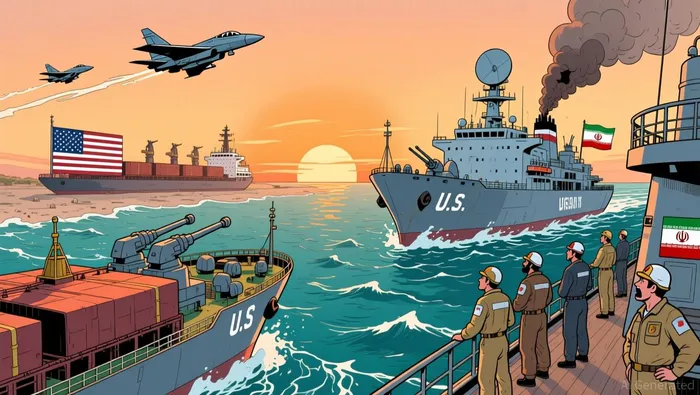
Soaring Rupee Fluctuations Indicate Further Challenges Ahead for Indian Currency and Stock Market Optimists
101 finance·2026/03/23 03:09
Apple's Mac Sets First-Time Buyer Record—But Was the Ecosystem Win Already Priced In?
101 finance·2026/03/23 03:09
SMCI's Legal Fallout Exposes Hidden Governance Risks and Squeeze Potential
101 finance·2026/03/23 03:09
Apple's Mac Sets First-Time Buyer Record—But Was the Ecosystem Win Already Priced In?
101 finance·2026/03/23 03:09
Flash
03:28
Odaily Report: Institutional Field Research — The Strait of Hormuz Enters a New Stage of "Hot War and Parallel Commercial Diplomacy"BlockBeats news, on April 6, Citrini Research, the author of "End Times Report," published a "Field Investigation Report on the Strait of Hormuz." It is reported that Citrini Research dispatched an analyst fluent in four languages (including Arabic) to conduct an on-site investigation by boat in the middle of the Strait of Hormuz to assess the real situation. The analyst from Citrini Research stated that investors should abandon the binary thinking of "open/closed." The reality of the Strait of Hormuz is much more complex, with hot warfare and commercial diplomacy proceeding in parallel. Traffic is expected to gradually recover as the conflict persists. Ongoing events cannot be simply judged as "conflict escalation/de-escalation" or "strait open/closed." The United States is conducting military operations, while allies such as France, Japan, and Greece are actively negotiating with Iran for navigation rights. This is a typical symptom of a multipolar world. Currently, Iran has established a functional navigation checkpoint between Qeshm Island and Larak Island. All approved traffic is directed through Iranian territorial waters (rather than the traditional route). Ships or their respective countries contact Iran via intermediary agents, submit information such as ownership, cargo, and crew, and pay the passage fee. After approval and receiving a confirmation code, vessels are escorted through. Unapproved ships wait. The analyst remarked that Iran's position is "not to close the strait"; its goal is to establish a sovereignty regime similar to Turkey's management of the Bosporus Strait, controlling navigation and collecting fees while allowing commercial traffic, positioning itself as a responsible steward of global trade and isolating the United States. On the other hand, demanding Iran to open the strait without charging fees is accompanied by military strikes. Completely closing the strait would lead to a global economic disaster (the current net loss of global commercial crude oil stocks is estimated at 10.6 million barrels per day). Most other countries (the list is rapidly expanding, including China, India, Russia, Japan, France, Malaysia, etc.) choose to make deals with Iran to secure their energy supply. The analyst expects that as the conflict persists, traffic through the strait will recover. The process will be chaotic and mainly involve LPG ships and small oil tankers, with VLCCs and other large tankers remaining scarce. This is insufficient to avoid a global economic collision but remains far better than a complete closure. Iran is proactively restraining Houthi forces' actions in the Red Sea/Mandeb Strait, keeping it as an escalation card yet to be played. Whether or not the strait is open, freight rates will remain high, and tanker stocks (such as BWET) may not have peaked. The Federal Reserve may see through the conflict's impact, and there is room for expectations of interest rate cuts to move forward—that is, cuts may come earlier than currently priced into the market, with further expansion of this "early" expectation possible.
03:26
Has the bottom of the US stock market appeared? Is this the true bottom or just a dead cat bounce? April may be the key turning point! | Hi, what's your view today?After a sharp decline in the U.S. stock market in the first quarter, a rebound followed, with geopolitics and interest rates dominating the market trend. Wall Street is currently divided between bullish and bearish views, and April may be the decisive month...
03:21
Arc, a public blockchain under Circle, releases a post-quantum cryptography roadmap, covering full-stack upgrades from wallets to validatorsChainCatcher News, according to the official blog, Arc, the institution-level blockchain under Circle, has released a phased roadmap for post-quantum cryptography (PQ) upgrades. It plans to introduce post-quantum signature schemes when the mainnet launches, and gradually extend PQ protection to private state security, infrastructure hardening, and validator authentication across the full-stack. Arc's mainnet will support post-quantum signatures from launch, adopting an opt-in mechanism that does not require forced migration or a network-wide reset. Users can independently create wallets with long-term security. The short-term goal is to extend quantum resistance to the private virtual machine (VM) layer, protecting private balances, private transactions, and private recipients. In privacy mode, public keys will have an additional symmetric encryption layer encapsulation. The mid-term plan is to advance infrastructure layer upgrades, align with industry standards such as TLS 1.3, covering access control, cloud environments, and hardware security modules (HSM). The long-term goal is to complete validator signature hardening. Given that Arc's block finality time is less than one second, current assessments deem the risk of quantum attacks in this stage relatively limited, and validator upgrades will proceed steadily as the post-quantum consensus toolchain matures. Circle also warns that attackers may use a "collect now, decrypt later" strategy, and institutions should plan cryptographic migration paths as early as possible.
News