
News
Stay up to date on the latest crypto trends with our expert, in-depth coverage.


SPACENEW fluctuates 47.5% within 24 hours: speculation driven by low liquidity, no clear event trigger
Bitget Pulse·2026/04/17 16:02
SATS (Ordinals) fluctuated by 50.5% in 24 hours: overall BRC-20 sector surge drives the movement
Bitget Pulse·2026/04/17 16:02
EUR/USD edges higher as Iran reopens Strait of Hormuz, Oil tumbles
101 finance·2026/04/17 15:39
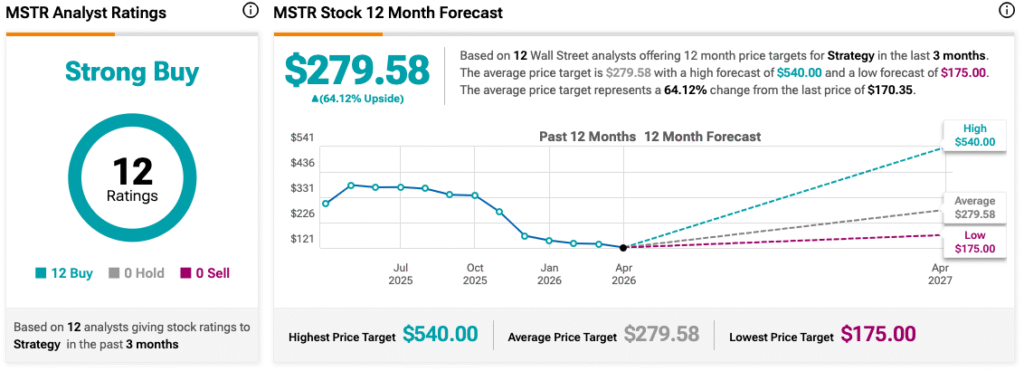
MSTR Stock Rips 15% as Strategy Posts Stunning $1.3 Billion Bitcoin Profit
Tipranks·2026/04/17 15:33
Flash
03:32
Analyst: Market Digesting Fear, On-Chain Metrics Show Bitcoin Has Bottomed Structure ExpectationBlockBeats News, June 6th - On-chain analyst Murphy stated in a post that BTC broke below the $60,000 integer mark yesterday, but the market loss did not deteriorate in line with the sentiment indicators. Currently, the 3-day moving average of the adjusted on-chain realized loss (EARL) is $1.13 billion, nearly half of the value on February 5th. He believes that this does not mean BTC will not continue to decline in the future, but the fact that EARL has not increased further in a lower price environment is a typical structure that signals a "bottoming expectation."
If EARL represents the market's level of fear, STH-RUL (Short-Term Holder Relative Unrealized Loss) represents the psychological pressure faced by new investors. During the downtrend after entering a bear market, short-term holders usually experience a severe psychological limit pressure, and STH-RUL will exceed +5 standard deviations, corresponding to a systemic crisis. Subsequently, even if the price continues to decline, STH-RUL often does not surpass the previous peak, as the chips have completed turnover in the high loss range, new buyers have lower costs, and market pressure is being absorbed.
Murphy believes that EARL and STH-RUL are currently giving a consistent signal that market panic is being digested rather than spreading. Despite price setting new lows, the loss indicators have not simultaneously set new highs, which is not a sufficient condition for a bottom. However, in history, true bottoms almost always have this characteristic. Bottoming is a process of repeated pressure and digestion until the chips complete turnover in panic, new buyers have low enough costs, and the price gradually loses momentum to continue falling.
03:12
Cathie Wood: Market Misread Strong Non-Farm Payrolls, AI-Driven Productivity Gains to Dampen InflationBlockBeats News, June 6th, Cathie Wood, the founder of Ark Invest, stated in a post that the latest US jobs report showed strong performance, but the market misunderstood it. Non-farm payrolls increased by 172,000, higher than the market's expected 88,000. However, the market saw a sell-off afterward. She believes that the market is assuming that stronger-than-expected employment and growth will accelerate inflation, but historical experience does not support this view. The current productivity growth rate is close to 3%, and unit labor costs are around 0.5%, which is not indicative of inflationary prosperity but rather of healthy growth driven by productivity, which will ultimately reduce inflation in the long term.
Despite a year-over-year increase in oil prices of about 55% calculated on a three-month moving average basis, the yield curve continues to trend flat. She believes that the bond market is pricing in a more powerful force: the deflationary impact of technological innovation, especially AI, which is now beginning to boost productivity in several sectors of the economy. If the Iran tensions ease and oil prices fall, inflation may enter negative territory by the end of the year.
The Federal Reserve's significant rate hikes in 2022 when faced with a primarily supply-driven inflation shock would be a historic policy mistake, and the next generation of monetary policymakers may not be willing to repeat this error. If ARK's research proves correct, the next phase of this cycle may see a combination of accelerated growth, declining inflation, lower interest rates, and a stronger dollar, providing a favorable backdrop for innovation-driven stocks and technological advancements that will fuel the next wave of productivity prosperity.
03:02
Meta is considering issuing hundreds of billions of new shares to raise funds to tackle $145 billion in AI expensesAccording to Sentinel Beating monitoring, following Google's parent company Alphabet's completion of an $850 billion equity financing this week, Meta is exploring raising billions of dollars through a new share issuance to address a potential AI capital expenditure of up to $145 billion this year.Three sources familiar with the matter revealed that the financing negotiations are being led by Chief Financial Officer Susan Li and newly appointed President Dina Powell McCormick, who took office in January. McCormick, who spent 16 years at Goldman Sachs, which also led this week's Google deal, has spearheaded the discussions. Meta has not yet hired an underwriting bank and may ultimately not issue new shares, with an official spokesperson stating that the rumors of a share issuance are purely speculative.To immediately access funds and delay equity dilution, Meta is considering a financing structure similar to Google's. Google's transaction involved the issuance of mandatory convertible preferred shares, allowing the issuer to secure funding upfront and convert to common stock after several years. Meta's management recognizes the need to act swiftly within the window of opportunity, in light of SpaceX's valuation potentially reaching $1.78 trillion next week with plans to raise $860 billion in an IPO, as well as Anthropic's confidential listing application and OpenAI's listing process, all of which may strain the liquidity of the U.S. stock market and investor enthusiasm. Competitors like Microsoft and Amazon are also evaluating share issuances to alleviate the pressure on their balance sheets from data center expansions.Prior to considering equity financing, Meta has primarily relied on cost-cutting measures and bond issuances to support its AI expansion, with long-term debt ballooning from under $10 billion in 2022 to nearly $550 billion recently. Meta also ceased its stock buyback program by the end of 2025 that had been in place since 2017 and laid off 8,000 employees last month, freezing 6,000 positions.
News